

350cc Bajaj Pulsar NS400Z and Dominar 400 ridden: Downsizing sweetens the deal
Govt policies have forced manufacturers to rethink engine size; do the now 350cc Bajaj Pulsar NS400Z and Dominar 400 still thrill?
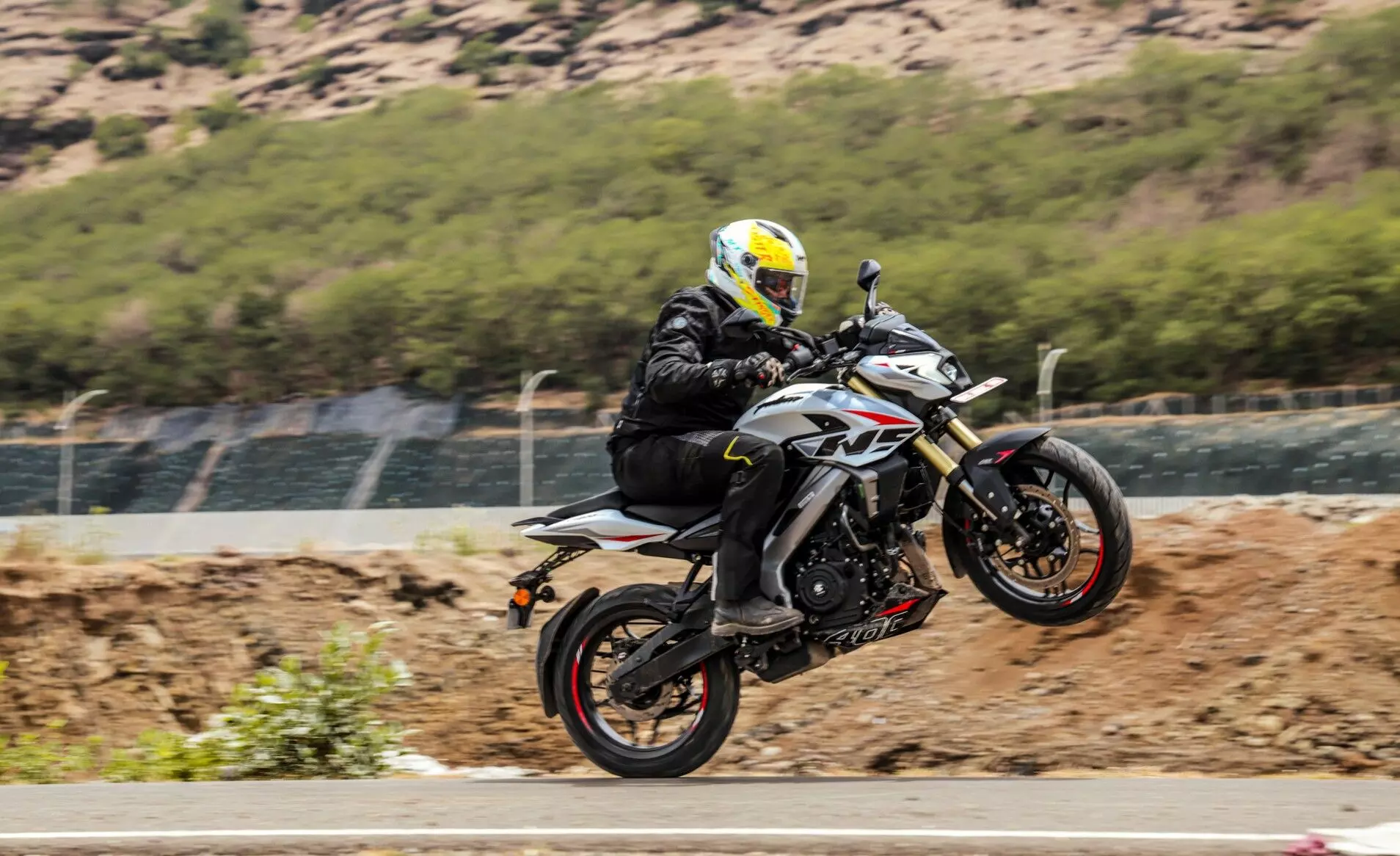
Argue you can, but agree you have to – acche din are here, at least for the sub-350cc two-wheeler segment. Owing to the lower duties now implemented on the segment, bikes have gotten more affordable, and bikes that were previously sitting above the mark are now downsizing to make full use of the benefits.
First, it was Triumph, then it was KTM, and now it’s time for Bajaj. Two of its most popular bikes – the Pulsar NS400Z and Dominar 400 have received the revision. But if you walk into a showroom expecting to see a change, you won’t find one. Keeping R&D costs to a minimum, Bajaj has catered only to what was necessary. And that’s the engine – down from a 373cc engine to a 349cc unit. The result is the same bike, but more affordable, and slightly different to ride. How different? Let’s find out.
2026 Bajaj Pulsar NS400Z and Dominar 400 engine updates
The goal for Bajaj was to ensure a similar level of performance while reducing the engine displacement. The way that has been achieved is by a shorter stroke, down from 60mm to 56.1mm. The most obvious disadvantage of this is a decrease in low-end torque. To counter that, and maintain similar performance as before, the engineers have done several revisions.
The crankshaft and rotor were redesigned to optimise rotational inertia, along with a completely redesigned crankshaft. Even the combustion chamber was redesigned to adapt the original 12.2:1 compression ratio to a 350cc volume. A redesigned camshaft allows for different valve timings, resulting in power and torque outputs suited to this engine. Finally, more aggressive throttle maps combine all of it into a harmonious package.
Similar changes don’t mean both engines perform similarly. As before, the Pulsar is still your affordable, rev-happy streetfighter prioritising performance. The Dominar, on the other hand, remains a sport tourer with a wide power band. The differences are achieved through varying tuning for the two bikes.
Shot by Rohit G Mane for evo India
2026 Bajaj Dominar 400 performance
As for the specs, peak power has gone up from 39.4bhp at 8800rpm to 40bhp at 9000rpm for the Dominar. The torque sees a 1.8Nm drop from 35Nm at 6500rpm to 33.2Nm at 7500rpm. The aforementioned more aggressive throttle maps mean claimed 0-100kmph time of 7.4sec, and claimed top speed of 146.1kmph remain unchanged.
On the road, the Dominar is more or less the same. A 0.6bhp jump and a 1.8Nm drop mean little when you yourself weigh 90kg. The Dominar was, as I remember it – predictable. It’s not really flickable like the Pulsar, but it also doesn’t let its weight hinder a bit of spirited riding. Despite the visual bulk, the Dominar is easy to manoeuvre. The clutch and throttle, too, remain relatively light.
Shot by Rohit G Mane for evo India
2026 Bajaj Pulsar NS400Z performance
For the Pulsar, the earlier model’s 42.4bhp peak power at 9000rpm has gone down to 40bhp at 9000rpm. Torque has seen a similar 1.8Nm drop as the Dominar. What was 35Nm at 6500rpm earlier is now 33.2Nm at 7500rpm. 0-100kmph time has seen a subtle increase from 6.5sec to 6.8sec, while the claimed top speed is down to 156.6kmph from 158.3kmph. As is clearly visible, the performance figures have changed by negligible amounts and for most of us, it won’t make any difference.
What I definitely noticed on the road was a calmer Pulsar. Reviewing the outgoing Pulsar a year ago, I wrote, “Throttle response, especially in Sport mode, is more urgent. The bike feels livelier across the rev range – not peaky or aggressive, but definitely more enthusiastic to climb.” That was because it had gained around 2bhp. Now losing a similar amount, the new engine seems to be calmer. The peak torque comes in at 1000 revs later, and that could be the culprit as to why I felt like I needed to put in a bit more effort to get it going at low revs – more apparent when you have to make an overtake. On the other hand, vibrations are more controlled than before, and it feels easier to handle at low speeds. Last year, I noted, “As for the throttle, it still has some low-speed jerkiness,” and that seems to have been fixed.
Shot by Rohit G Mane for evo India
2026 Bajaj Pulsar NS400Z and Dominar 400 design and chassis
As mentioned before, the wizardry going on underneath hasn’t affected the exterior. Design, features, chassis, drivetrain continue as before. Both bikes offer distinct flavours, and neither should cannibalise the other’s sales, since they both appeal to a different type of rider.
Since the chassis geometry and other components haven’t changed, the core dynamics on both remain similar as well. On the Pulsar, you sit ready to attack. The footpegs are set towards the rear, and the lower handlebars put you in prime position for slicing through corners and traffic. The peppy, flickable nature of the Pulsar NS400Z is still present. On the Dominar, it’s the opposite, you sit like a king with arms extended and body upright. The stable planted feel continues, making it well-suited for long rides and short commutes alike.
Another thing that stays the same, and doesn’t sit well with a lot of people, is the nomenclature. Bajaj has opted to continue calling these 400s, instead of 350s. In my opinion, humble or not, I’m completely fine with it. This is not the first time the name and displacement don’t match, and it won’t be the last. It’s more probable right now that the bike on your bedroom wall also suffers the same fate, and that’s alright. The names are brands in their own right, and missing a few cc’s isn’t going to change a lot. One thing is for sure, though, in no way is it a ‘scam’. Because you get similar levels of performance and money left in your pocket to go ride your bike for that much longer. So while the nomenclature debate can go on forever, I’d rather just enjoy the ride.
2026 Bajaj Pulsar NS400Z and Dominar 400: Should you buy?
Irrespective of the reduced price, both bikes make for excellent all-around packages. The Bajaj badge ensures long-term service and reliability, and the performance is at a level that won’t let you get bored very soon.
By utilising the revised tax bracket, then, the bikes are more appealing. For context, with the previous tax laws, you’re looking at a ₹20-30,000 premium over what Bajaj is asking right now. The price for the Pulsar NS400Z now starts at ₹1.82 lakh, down from the previous known ₹1.93 lakh (pre GST 2.0), while the Dominar now starts at ₹2.04 lakh, down from ₹2.40 lakh, before the GST 2.0 norms were applied this April.
That price difference itself makes losing those 24cc meaningless, the sustained performance specs, then, are the cherry on top.