

We reviewed the Bajaj Pulsar N160 SS
We reviewed the Bajaj Pulsar N160 SS
Bike Reviews
Bajaj Pulsar N160 SS first ride review: The best 160 to get?
Bajaj has updated the Pulsar N160 with a new variant that sits at the top of the line-up with a new engine and features aimed at making it the undisputed king of the segment
- Performance
- Ride and handling balance
- Tech
- Ride mode selection
- Lack of sixth gear for cruising at higher speeds
Bajaj is celebrating 25 years of the Bajaj Pulsar brand this year and as a part of its ongoing celebrations, it has been updating a bunch of products. The latest is the N160, with the addition of the new Pulsar N160 S and SS to the lineup. The Bajaj Pulsar N160 SS now stands as the flagship of the N160 range and it gets a bunch of changes, both on the performance and features front to indicate just that. The 160cc segment is a hotly contested one and to make a mark, Bajaj has pretty much thrown the kitchen sink and then some at the N160, without losing the essence of what made the bike special to begin with. Has it worked, and is the Bajaj Pulsar N160 SS ‘the’ 160cc bike you should be getting? We spent a day with it to find out.
Bajaj has taken the ‘if it ain’t broke don’t fix it’ approach with the N160 SS and that is a good thing
Bajaj Pulsar N160 SS design
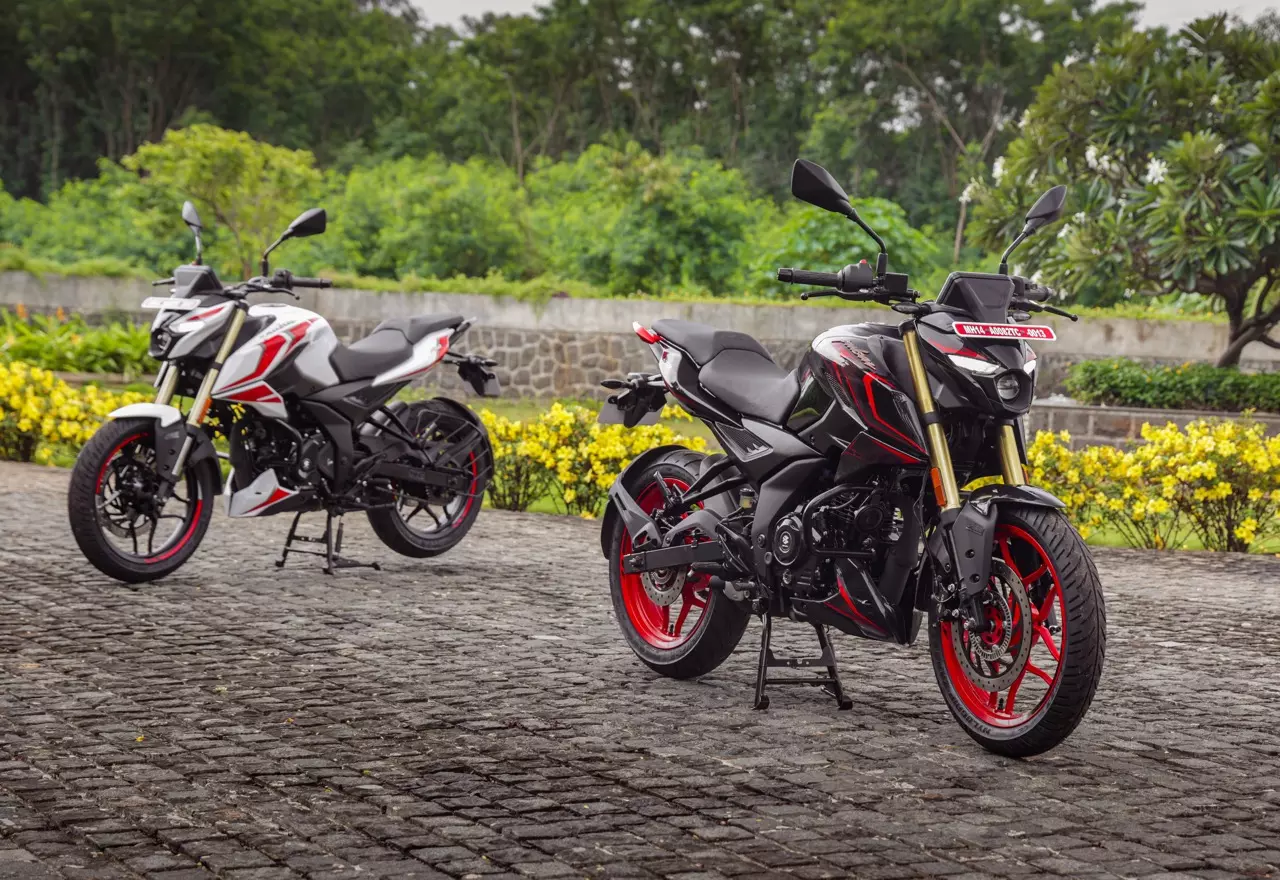
Bajaj has taken the ‘if it ain’t broke don’t fix it’ approach with the N160 SS and that is a good thing in my opinion. The N160, when it first launched, didn't exactly fly off the shelves. While it was a great bike to ride (one of my favourite Pulsars of the time), it took some time for people to truly appreciate what the bike stood for. And appreciate they certainly did, given that Bajaj has been consistently selling close to 25,000 N160s per month. So, on the design front, Bajaj has refreshed the bike for 2026 with a bunch of new graphics including new decals on the tank and other body panels. There are three new colours as well – the black and red combo pictured here, there’s a white and red combo and a blue and orange one too. It looks fresh, a little more aggressive without seeming as sharp as the NS and is still a very likeable design. Things like the red rims, the accent colour-matched grab rails and carbon fiber-esque textured panels on the tank do a good job of making the bike seem fresh.
While the displacement remains unchanged, power has now gone up from 15.7bhp that the 2V produced to 18.2bhp with the 4V
Bajaj Pulsar N160 SS engine and performance
The main thing that sets the N160 S and SS apart from the rest of the Pulsar N160 range is the new four-valve engine. Bajaj has done a major overhaul to not only add two valves to the engine but also to extract as much performance as possible. To that end, the head of the engine is all-new. The combustion chamber and oil cooler are new and optimised as well, and while there are two more of them, the valves themselves are larger. The lower half of the engine – gear ratios, sprockets, clutch and the gearbox remain unchanged. So while the displacement remains unchanged, power has now gone up from 15.7bhp that the 2V produced to 18.2bhp at 9500rpm. The torque has seen a marginal reduction from 14.65Nm to 14.4Nm at 8000rpm.
The engine itself is more eager to rev now with a redline of 11,000rpm. Bajaj didn’t stop there however and have also fitted the engine with an electronic throttle body that means ride-by-wire. This means that the N160 SS has four ride modes and unlike the TVS Apache RTR 160 4V that relies on engine maps for different ride modes, the N160 SS gets true throttle and engine-based ride modes. Speaking of which, the four modes are Rain, Road, Sport and Off-road. The fifth mode, called the Tour mode, uses the mapping of the Sport mode and changes the display on the instrument cluster to display touring related statistics like DTE (distance to empty), AFE (average fuel efficiency) and so on.
You feel the need for a sixth gear if you wish to cruise at higher speeds
Coming back to the performance, even with the extra punch, the N160 S remains refined as always. The N160 was always considered a very tractable machine that didn’t require you to mess around with the clutch and gears too much. To a large extent the same holds true for the N160 SS as well. But the low-end and mid-range are not as potent as on the 2V engine. The 4V head focuses the brunt of the performance to the top-end, making this a very rev-happy engine. This means that you’ll need to plan your shifts to make an overtake and so on. The bike certainly feels faster and has a claimed top-speed of 114kmph. I managed to see 121kmph on the speedometer. But when it comes to settling into a cruise, 80kmph is where it seems to be the happiest because anything beyond that and the engine starts to feel a little stressed – not for a lack of performance, but because of the way the gear ratios are set up. This is when you feel the need for a sixth gear if you wish to cruise at higher speeds which the motorcycle is clearly capable of. But credit where credit’s due, the clutch action and gear shifts are slick and tactile, and you definitely won’t mind rowing through the gears to make the most of the performance on tap. In terms of the ride modes, they are well calibrated and you certainly feel a notable difference between all modes. Bajaj has also added a new ‘crawl’ function which essentially allows you to ride in any gear without giving throttle input and the ride-by-wire will compensate for that and make it very difficult for you to stall the bike – a boon for when you’re navigating stop-go traffic.
The N series of Pulsars weren’t meant to be the outright handling tool in Bajaj’s arsenal, instead these were the most balanced, offering a mix of sportiness and comfortable manners
Bajaj Pulsar N160 SS chassis, ride and handling
The Pulsar N160 SS largely makes use of the same chassis setup as before with the only exceptions being a beefier 37mm USD fork (instead of a 33mm unit), a larger 300mm front disc (replacing the 280mm unit) and a radial rear tyre. Seat height remains unchanged at 795mm, as does the 151kg kerb weight. The weight is the same despite the extra heft of the 4V head courtesy of lighter and stronger chassis tubing used on the SS – a change that we can expect to make its way to the 2V engine sometime later making it even lighter. As before, the ride and handling characteristics are quite sorted. Ride quality is plush and it deals with our roads with ease. Braking performance is solid with a strong initial bite and progressive braking after. The handling feels solid too with the new radial tyre. The N series of Pulsars weren’t meant to be the outright handling tool in Bajaj’s arsenal, instead these were the most balanced, offering a mix of sportiness and comfortable manners. That’s a line that the N160 straddles rather well and the N160 SS is no different. The handlebar has been canted forward slightly which helps with the overall ergonomics, not that it needed fixing to begin with.
At the centre of the feature upgrades on the N160 SS is a new 5-inch colour TFT screen with new switchgear to control it
Bajaj Pulsar N160 SS features and technology
At the centre of the feature upgrades on the N160 SS is a new 5-inch colour TFT screen with new switchgear to control it. The display is bright and easy to read even under direct sunlight and the UI is laid out rather nicely and is very easy to figure out. You get four directional switches on the left switch cube to control it all, very similar to that on KTMs. The major highlight of the screen is the fact that it gets Bluetooth and WiFi connectivity. This means that you get the ability to mirror full-screen Google Maps from your smartphone right onto the bike’s instrument cluster, no need to rely on turn-by-turn navigation alone – a proper segment-first and a true value add feature. Aside from that you can store your license and vehicle documents on the screen directly, you get a lap timer, a 0-60kmph timer and all the other features we’ve come to expect from a connected cluster. While the overall UI is solid, one thing that could be better implemented is ride mode selection. Currently while riding, you need to long-press the top arrow on the left switch cube and then scroll through the ride modes to select the one you want by pressing the select button. This takes longer than it should and I’d much rather just be able to select the riding mode by long pressing the up/down arrow button to select the next/previous riding mode. Apart from that, you also get adjustable clutch and brake levers.
What you get with the Bajaj Pulsar N160 SS for that money is more power, a lot more by way of features and a very well-sorted motorcycle
Bajaj Pulsar N160 SS verdict
The Bajaj Pulsar N160 SS is priced at ₹1.43 lakh, ex-showroom and that puts it at par with the top-end variants of the TVS Apache RTR 160 4V and the Hero Xtreme 160 4V. What you get with the Bajaj Pulsar N160 SS for that money is more power, a lot more by way of features and a very well-sorted motorcycle when it comes to its performance and dynamic abilities. Yes, the lack of a sixth gear is a bit of a miss, but I don’t think the average buyer of a 160cc motorcycle is really concerned with being able to cruise at speeds above 80kmph. The fact of the matter is that the youth these days want as much tech as possible and a well-behaved motorcycle attached to said tech. The Pulsar N160 SS is exactly that and it does so without costing an arm and a leg. While we have a comparison brewing, if you were to get the N160 SS, you certainly won’t be disappointed. The best part is that Bajaj will keep the 2V-engined N160 on sale, and with that, you have the freedom of choice to opt for any of the five different variants of the bike on offer, ranging from the 2V engine to the new 4-valved SS variant.