

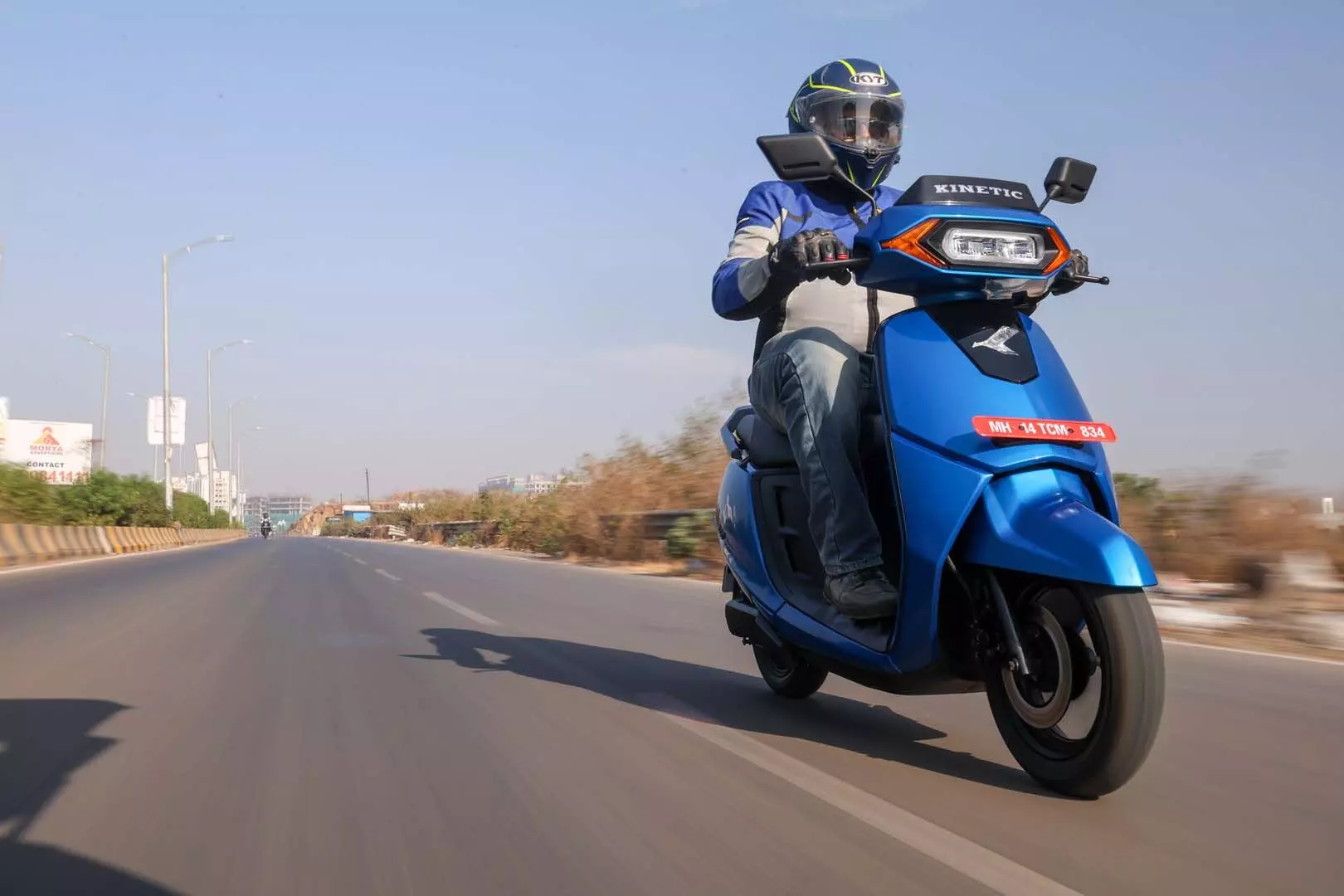
Kinetic DX+ review; photography by Rohit G Mane
Kinetic DX+ review; photography by Rohit G Mane
Bike Reviews
Kinetic DX+ first ride review: does it do what the OG icon did?
The Kinetic DX+ is the latest entrant in the two-wheeler electric space and promises to offer an experience similar to the original Kinetic. Does it?
The Kinetic Honda DX was one of the most revolutionary scooters of its time. From the way it looked, to the features and convenience that it introduced, changing the way scooters were perceived in that era. The modern day Kinetic DX+ attempts to do the same thing but with the ring-ding-ding two-stroke motor making way for an electric battery and motor. The Kinetic DX+ EV launches in a hotly contested space where it really needs to do a lot to make a mark for itself. Does it manage to do that?
Kinetic DX+ review - Photography by Rohit G Mane
Kinetic DX+ design
The design of the Kinetic DX+ EV is one that will immediately remind you of the icon from the 1980s. The lines, the proportions and the quirky design elements are all reminiscent of the Kinetic Honda and that in my opinion is great. It is a little larger than the original, and for modern times, that is a good thing. At the front you have an LED headlamp with a small visor on top that bears the illuminated Kinetic lettering. Below it on the front apron, you have an illuminated Kinetic logo. When seated, you’re greeted by an instrument cluster that has a very similar shape and design to that of the original. But given that it is a modern scooter, you get an LCD screen that displays all the relevant information at a glance. Below that you also get a number pad with which you unlock the scooter, since there’s no key. The switch cubes too are very reminiscent of the OG, but in this case, when you press the red starter button, you don’t get the ring ding ding sound, you get, erm, silence. Because this is the DX+ variant, it gets the onboard charger which is a retractable cable that is tucked behind a panel on the inside of the front apron.
Most of the bodywork is metal and it also incorporates a lot of the creases and cuts that were present on the two-stroker and then when you get to the rear, surprise, surprise, the tail light is again inspired from the OG. The overall design, if I somehow haven’t managed to make it clear already, is very clearly inspired by the original and it ticks all the right boxes, stylistically. The one place it doesn’t tick the correct box is when it comes to the build quality and fit and finish. This is where it leaves a lot to be desired with creaky plastics, panels with inconsistent gaps and a general lack of premiumness at all the touchpoints.
Kinetic DX+ battery, motor, ride and handling
Powering the Kinetic DX+ EV is a 2.6kWh LFP battery pack that sends power to a BLDC hub-mounted motor that puts out 4.78 kW (6.4bhp) of peak output. This combination gives the scooter a claimed range of 105km on a full charge. There are four modes for you to choose from – Range, Power and Turbo. Each range is calibrated rather well where there is a marked performance difference between them and a good enough use case too. Range mode works best when you want to putter around town at a peaceful pace, without draining the battery too much. The performance, thankfully, doesn’t feel very lethargic and you can actually safely use it in the city without being a hazard to the rest of the traffic. It accelerates nicely till about 30kmph and continues to accelerate to 50kmph with ease. Power mode dials up the responses you experience in Range more giving you better throttle response, quicker acceleration and unlocks more speed. Ideal for commuting with a little more pace and power in reserve to make overtakes.
Turbo, as the name suggests, unlocks the full performance and sharpest responses from the motor. Here the scooter feels properly brisk and continues to accelerate with good steam up to 70-75kmph. While it doesn’t feel as fast as an Ather 450X, it does feel around as fast or a smidge faster than something like the Ather Rizta. While the performance is respectable, the calibration of the throttle feels a little odd, with there being a slight delay between you opening the throttle and getting the surge of power. Something that Kinetic should look into rectifying.
Coming to the way it rides the all metal body is suspended off of a telescopic fork at the front and twin shocks at the rear. The scooter rides on 12-inch wheels and gets a 220mm disc at the front and a 130mm drum at the rear. The handling of the Kinetic DX+ is nothing to write home about. It won’t excite you in the way it takes on corners or changes direction. What it feels like is a scooter. It feels familiar in the way that it does everything that you expect a scooter to do. One thing that can improve is the ride quality. While it is acceptable for the most part, if a bunch of undulations are clumped together, the scooter feels quite unsettled and the rear, which is more stiffly sprung, rebounds rather aggressively. Tuning this will go a long way in making the ride that much more comfortable. The brakes too, work as advertised. The front has good bite and feedback, while the rear feels a little wooden.
Kinetic DX+ features and verdict
The Kinetic DX+ gets a bunch of features including the onboard charger, the full suite of connectivity and app-based telemetry features including geo-fencing, find my scooter, unlocking it and controlling parameters like the lights, indicators and such. The charger, the 37-litre underseat storage and the pillion footpegs are all accessed by buttons on the left switchcube. Nifty features, especially the onboard charger, which is something most people getting the scooter will appreciate. Speaking of getting one, the DX+ variant with all the add-ons, most important of which is the onboard charger costs ₹1.17 lakh ex-showroom and at that price, it doesn’t make too strong a case for itself. While it does a few things well, the build quality and ride quality do leave a lot to be desired and the fact that rivals like TVS and Bajaj exist in the similar price range with offerings like the iQube and the Chetak, doesn’t bode well for the Kinetic. It needs a lot of work before it can be recommended over the other two. Yes it invokes a whole bunch of nostalgia, but that’s not always enough.