


Bike Reviews
Royal Enfield Himalayan 440 first ride review: Why should you get one in 2026?
The Royal Enfield Himalayan 440 revives the OG Himalayan, but promises to have resolved all of its shortcomings. Is that the case, and more importantly, does it make sense to get one in 2026?
2016 is the year when the Indian motorcycling scene was changed for the better. Royal Enfield launched the Himalayan 411 and well and truly popularised the adventure touring market. The Himalayan 411 was immediately a crowd favourite for how easy it was to ride and for the enabler that it was. Wanted to explore the great outdoors, take on some dirt along the way and didn’t necessarily possess the skills of a Dakar rider? No worries. The Himalayan 411 with its tractor-like engine would do all the work. That being said, it wasn’t perfect. It wasn’t the most refined on the highways and the lack of a sixth gear meant that it felt like it was being overworked at any speed beyond 90-95kmph. Then in 2023, Royal Enfield bid adieu to the 411 and introduced the ground-up new Himalayan 450. Despite how nice the 450 was, there still was a Himalayan 411-shaped hole in the ADV market. Plus the 250-350cc ADVs benefitting from GST 2.0 tax is certainly not helping. Fast forward 10 years to 2026 and the OG returns in the form of the Himalayan 440. It gets a bigger 443cc heart, some upgrades to the chassis and three new colours. Is the Himalayan 440 then, the ADV for people who don’t want a spaceship with long-travel suspension?
Royal Enfield Himalayan 440: What’s new? What’s the same?
First up, the LS411 has been significantly worked on. The stroke remains the same at 86mm, but the bore has gone up from 78mm to 81mm. This is where the extra displacement comes from with the new engine being 443 cee-cees big. Power has gone up from 24.3bhp to 25bhp at 6250rpm, while torque has gone up from 32 to 34Nm at 4000rpm. These numbers are seemingly inconsequential, but the number that you need to be taking cognizance of is six. As in the six-speed gearbox that replaces the five-speed gearbox. Then there’s the new braking hardware. While the 300mm and 240mm disc, front and rear, remain unchanged, the pistons in the twin-pot front and single-pot rear, respectively, are larger than before. Since the bike is based on the Scram 440, the instrument cluster is lifted off from there as is. Which is a shame because the one on the OG Himalayan was truly unique with its analogue tachometer, speedometer, compass and digital gear position indicator. Then there’s the new LED headlight which you find on the rest of the Royal Enfield range, and as I’ve said before, just doesn’t cut it on our roads. These aside, there are three new colours to choose from. A Sela Black, Mustang Brown and pictured here is the Nelong White colourway.


As far as what stays the same, that would be everything else. Meaning you get the same half-duplex, split cradle frame, the same suspension setup – 41mm telescopic fork at the front with 200mm of travel and a link-type monoshock at the rear with 180mm of travel. The wheel setup continues to be a 21-incher at the front shod in a 90/90 section tyre and a 17-incher at the rear shod in 120/90 rubber. The seat height is the same at 800mm, while the ground clearance is a generous 220mm and fuel capacity is a healthy 15 litres. All of this means that the 199kg kerb weight also remains unchanged. Despite the instrumentation changing, thankfully, the switchgear has been retained. Which means no stupid knob to turn for your pass flasher. The rear ABS disengage switch too remains on the left switch cube.


Royal Enfield Himalayan 440: Performance, ride and handling
Thumb the starter and you’re greeted by a familiar rumble and thump from the exhaust. Something that is absent on the 450. Pull the clutch and if you have any memory of the 411, you will be pleasantly surprised, because the effort required to pull the clutch in is significantly less than before and dealing with stop-go traffic doesn’t require the left half of your body to be shaped like Arnold Schwarzenegger. Get going and everything feels very familiar. The engine is mellow, refined and like before isn’t the kind that loves to be held by the scruff of its neck and flogged to the redline. That said, the only indication that you’re bouncing off the redline on this bike is the bap-bap-bap you will hear and feel because there’s no tachometer here. Like the 411, both you and the bike will enjoy the ride significantly better if you ride in the low and mid-range of the rev range and shift up well before getting close to aforementioned bap-bap-bap. Get out on the highway and immediately, the Himalayan 440 begins to make a lot of sense. Slot it in sixth, roll the throttle to a little less than halfway of its stroke, and you’re at a 100kmph and suddenly everything feels right with the world. To give you perspective, it feels like the J-Series Classic 350 does at 85kmph. Simply sublime. The long-stroke settles into a comfortable rhythm, the chassis is perfectly poised to cope with our highways at this speed, the seat is comfortable and you still have some go left in reserve to make a quick overtake. And if not, you can always go down a gear and as someone from Kurla would say, disappear.


Then when that one random bozo decides to cut across the highway on a whim, you pull hard on the brake lever and the Himalayan 440 actually sheds speed rapidly unlike the 411 where you’d feel like you’re pushing cheese against a searing skillet. The bigger pistons in the callipers do a good job of slowing down all 199kg of the 440. They may not feel as urgent as the brakes on the Himalayan 450, but they’re certainly plenty for the performance on tap. The Himalayan 440 retains all the lovely qualities of the 411 while adding significantly better touring legs. As far as the ride and handling is concerned, everything feels familiar and that’s because everything else is more or less unchanged. The ride quality is as I remember it to be. It is fairly compliant over most surfaces. But it does feel a little busy over concrete highways or a series of undulations.
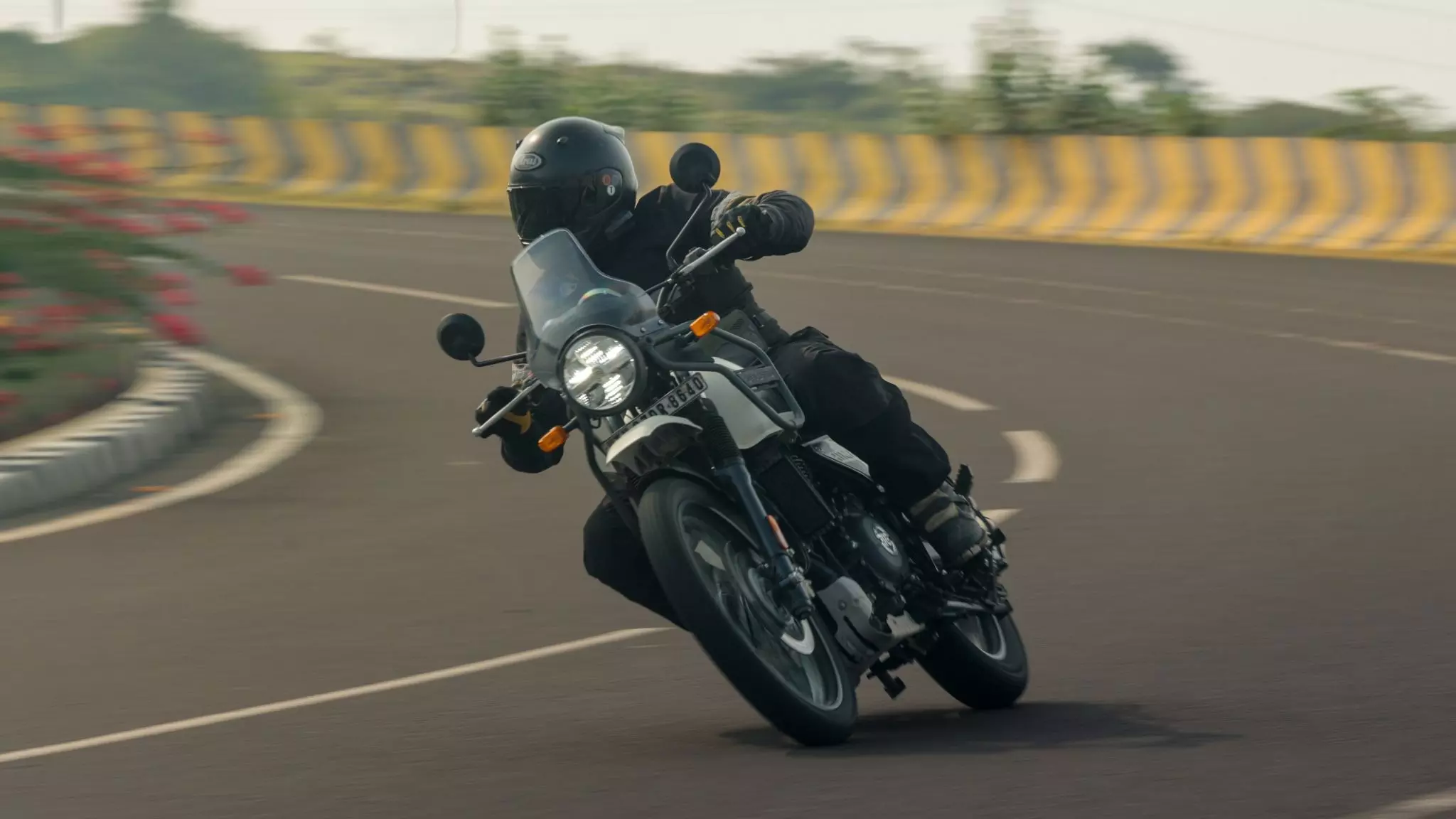

Handling too is predictable but not nearly as sharp as the 450. Show it a series of corners and it will have a good time as long as you’re willing to put a little elbow grease into it. Riding it off-road was a good reminder of why the OG was so special. The tractor-like ability carries on to this as well and that makes it ridiculously easy to ride. The low seat height and low centre of gravity certainly helps. Plus the suspension does a great job of absorbing large single hits like landing jumps. So all-in-all, on the performance and ride and handling front, the Himalayan 440 proudly carries the mantle forward rather well.
Royal Enfield Himalayan 440: Verdict
Royal Enfield has not thrown the kitchen sink at the bike in terms of features. Apart from the Tripper Pod navigation, LED lights and a Type-C charger, the Himalayan 440 is as modern as the 411 was in 2016. That in my opinion is a great thing, because that has allowed Royal Enfield to price the bike at a very attractive price of ₹2.29 lakh, ex-showroom. For perspective, that's the same as the top-end variant of the Himalayan 411 when it was discontinued in 2023. And it’s a whole lot more affordable than the Himalayan 450, prices of which start at ₹3.03 lakh. RE has done a stellar job with the pricing and more importantly has done a stellar job with the motorcycle without actually needing to do a lot. The Himalayan 450 is a great bike but it requires a fair bit of skill to tame. The Himalayan 440, like the 411, on the other hand is the sort of bike that you can ride very peacefully and get to where you want to in great comfort and a mile-wide smile plastered across your face. If pace or tech is what you want, look elsewhere. But if you want a simple, hardy, honest ADV that is genuinely capable and fast enough, the Himalayan 440, is a great place to start.