

E20 Petrol: Are Consumers Right to Be Angry?
The government says it’s about curbing pollution, improving energy security, and saving forex. Consumers say it’s ruining their cars and bikes. So, what really is happening here?
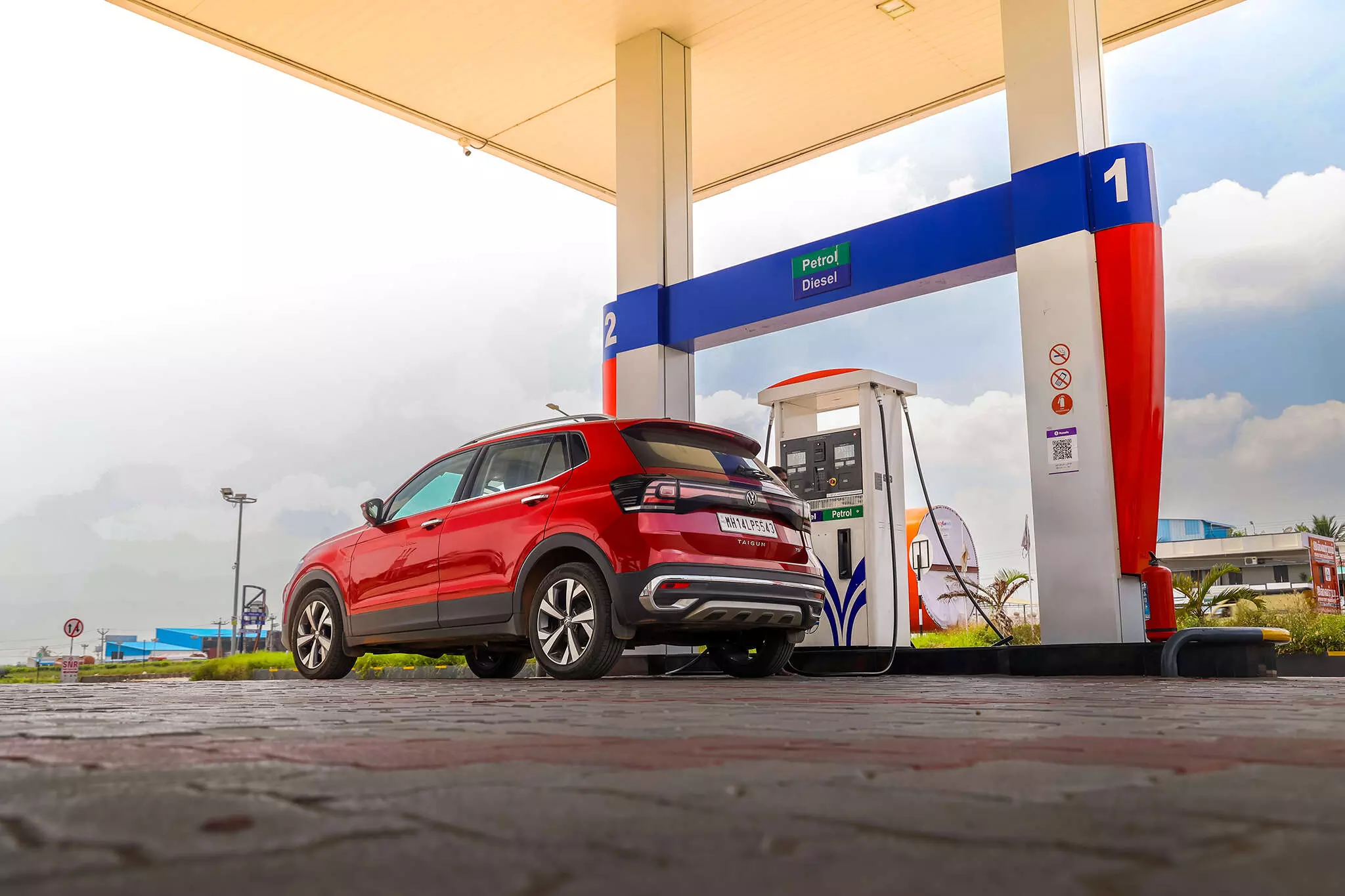
You live in a city with three-digit AQIs, and you use air purifiers and masks. There’s no question that pollution needs to be tackled on a war footing. With lower carbon emissions, ethanol-blended petrol – specifically E20 (20% ethanol in 80% petrol) for now, is the way to go for cleaner air. You take your car or bike to the petrol pump, prices are up, but the range on a tankful has reduced. A quick search on social media tells you that E20 is to blame. Confusion is the order of the day, and you are left angry.
The context: The E20 rollout plan and what’s causing furore
While E20 petrol was making headlines around August-September last year, things had settled down until recently, when the Attorney General used the word “experiment” in relation to E20 petrol at the Supreme Court. With vehicles reporting reduced range since the rollout of E20 petrol as standard countrywide and more than a few owners reporting genuine problems, consumers assumed, rightly or wrongly, that the government is running an expensive experiment at their cost. Many took to social media, and some have hit the streets. Claims and counterclaims are flying in each direction, but the answers remain unclear even now.
What is clear at the moment, though, is how we all got here. Although the anger is new, ethanol-blended petrol isn’t. E5 petrol (5 per cent ethanol mix) has, in fact, been available since 2003, but adoption and awareness were both as good as non-existent. For a good 15 years, nothing happened. Then, on June 4, 2018, the Government of India notified the National Policy on Biofuels. An indicative target of blending 20 per cent ethanol in pure petrol was laid out under the Ethanol Blended Petrol programme. In June 2021, NITI Aayog did a full study to work out a rollout plan. A year later, in 2022, the Government upped the ante by implementing the national rollout of E10 (10% ethanol blend). The plan was to implement the nationwide rollout of E20 as standard petrol by 2030.
Is blended really better? E20 vs Petrol
In the world of whiskies, this may be a tricky one to answer, but there is plenty of evidence to show that ethanol blending is a potentially good thing. From a pollution perspective, it should definitely ease those AQI numbers. An Indianoil pamphlet from 2023 shows that in two-wheelers, compared to regular unblended petrol, E20 registered 50 per cent lower Carbon Monoxide and 20 per cent lower hydrocarbons. In four-wheelers, it registered 30 per cent lower Carbon Monoxide and 20 per cent lower hydrocarbons. The Government says that over 930 lakh metric tonnes of CO2 emissions have been cut.
There is also the potential for huge forex savings. The foreword of the NITI Aayog report, published in 2021, predicts that a successful E20 implementation could potentially result in savings of up to ₹30,000 crore per annum for the exchequer. In fact, the Ministry of Petroleum and Natural Gas has declared that India has saved more than ₹1.9 lakh crore in the last 12 years.
Energy security is the next big talking point for the Government. More than 310 lakh metric tonnes of fossil fuel have been substituted thanks to E20. Finally, the benefit to farmers. The Government says that farmer earnings have gone up by ₹1.6 lakh crore. The Government has even debunked the claim that ethanol production uses an unjustifiable quantity of water.
Industry experts agree that ethanol-blended biofuels are a strategic move. “Ethanol today is much more than a blending fuel — it is a strategic contributor to India's energy security, rural economic development, and sustainability ambitions. Modern grain-based ethanol facilities operate with advanced water management technologies that significantly reduce freshwater consumption, while also creating value for farmers and strengthening domestic energy resilience,” said Anuj Agarwal, founder and chairman of Sunbridge BioEnergy, which contributes to the country’s ethanol blending programme and broader energy transition goals.
Why are consumers angry then?
Trawl the ‘net, and one gets all kinds of answers. Some are complaining about engine seizures and other troubles. Many are complaining about poor fuel economy and the fact that they are paying more than they should. Nearly all are angry with the lack of choice being offered by a Government that seems intent on ramming E20 down the petrol tanks of everyone’s car or bike. To properly clean things up a bit, let’s try to deal with one thing at a time.
Is E20 directly causing engine seizures and component failures in vehicles? Unlikely. If that had been the case, then far greater numbers of vehicles would simply cease to operate than what is currently being reported. That is not to undervalue the issues that owners are really facing, and this is likely linked to the very nature of ethanol, combined with the maintenance of storage facilities at the petrol pump level. Ethanol is extremely hygroscopic. Any contact with water or moisture, and beyond a certain threshold, it is likely to separate from pure petrol and settle at the bottom as a corrosive sludge. This phase separation happens in E10, which was standard grade petrol from 2022 to 2025, but obviously at a higher threshold. If phase separation happens in the petrol tank for any reason, then, given that the fuel lines to the engine start at the bottom of the tank, it is this sludge that will get sucked in. This is a far likelier cause of the problem than E20 itself.
Is there a fuel economy drop with E20? Yes, there is. Even in its report, NITI Aayog conceded that E20 used in cars meant to run on pure petrol but calibrated for E10 and cars meant to run on E10 but calibrated for E20 would result in a minor drop in fuel economy. In the real world of engine loads, varying road conditions, driver behaviour and even ambient temperatures, the variation will be much greater. In the same way, the consumer actually rarely gets the fuel economy rated by ARAI when he or she purchases a vehicle. The real world isn’t the world of tests. What is undeniable is that everyone has experienced a drop in fuel economy and, therefore, range. By how much is debatable since all the evidence is anecdotal.
Is E20 degrading key components in the vehicle? The NITI Aayog report says two things. First, the material of piston rings, O-rings, piston heads, seals and fuel pumps needs to change for E20 compliance. All cars produced after 2023 feature this material compliance. For cars produced earlier, a study had revealed that while metal components were largely protected from any degradation, elastomers and certain plastic components showed signs of additional wear and might need to be replaced earlier than normal. The study was done jointly by ARAI, the Indian Institute of Petroleum (IIP) and Indian Oil as early as 2014-15.
Three essential things from the report, however, have been ignored by the Government in its implementation of a biofuel policy that is actually good for the nation in the long term.
First, back in 2021, the Indian auto industry had made a critical suggestion. It had been said that, given the scale of conversion required for vehicles already plying on the road, the Government should consider retaining E10 at the petrol pumps as protection grade fuel for these older vehicles. Vehicles manufactured from 2008 onwards and up to 2023 are materially compliant with E10.
Secondly, it recommended that E20 be made available at pumps at a price lower than regular E10 petrol. The roadmap envisioned coopting the consumer instead of coercing the consumer. Incentivising E20 was the recommended approach.
Lastly, there was a plan to conduct a concerted awareness campaign about the benefits of blended petrol ahead of the rollout. In the absence of these three critical aspects of implementation, the rollout four years ahead of schedule has run into deep trouble. Consumers are angry at the lack of choice, savings or clear answers to their queries. They are paying more than ever to travel fewer kilometres and are surrounded by a cacophony of two opposing camps – one anti-E20 that is painting the fuel as a villain, and the other that is portraying it as a saviour of our country. The truth, of course, is somewhere in the middle.
So, what can the angry customer do?
For now, until the Government changes its stance and rolls back on the policy (there are some rumours, but let’s leave those aside), if you badly want ethanol-free petrol in your car or bike, then you need to switch to 100-octane fuels like XP100 or Speed 100. The catch is that these premium fuels are quite expensive and not available at all dispensing stations.
Get an EV and be rid of this issue entirely. They are much cheaper to run as well when you factor in the cost of electricity and barely any servicing costs. On the flip side, while there are far more EV options than before, they’re still not a patch on ICE choices across the price range.
Finally, there are conversion kits. There are some imported ones available at an average cost of around ₹40-50,000, but there are no locally made ones at the moment.
That doesn’t mean you’re absolutely helpless and must watch your car die. Choose your petrol pump carefully when you’re refuelling. Company-owned, company-operated (COCO) pumps are your best friend, unless there’s a specific, reliable pump that you go to. Don’t leave the car or bike stagnant for long periods since this increases the chances of water contamination and phase separation. Regular use means fewer chances of that happening. If your car is older than 2023, check with the authorised service centre if they can upgrade the relevant engine components for E20 compliance. On the fuel economy factor, you will take a hit, but you can reduce the impact by regularly monitoring tyre pressures, planning your routes to avoid traffic as much as possible and driving with a light foot. And on the days when you want the thrill of driving? There’s always a premium fuel for you.
