

Car Reviews
2026 Mahindra XEV 9S first drive review: The electric XUV700!
The Mahindra XEV 9S is a new seven-seater SUV based on the all-electric INGLO platform. Can it draw more buyers in to the electric fold?
- Features list
- Price
- Second row
- Third row
- Floaty ride
- No powered tailgate
The Mahindra XEV 9E has been turning heads as more and more of them make their way to our streets, but its no secret that the coupe-roofline and big lightbar isn’t to everyone’s taste. Mahindra is well aware of this and has had the traditional SUV based off the INGLO platform right from the day it was announced. While the BE6 and 9E have been doing strong numbers, the XEV 9S has now joined them in the spotlight — with more traditional styling and 7 seats. And while it might look like an electric XUV700, and certain elements of the body shell are shared with the XUV, it is based on the electric INGLO platform like the 9E. It should allow Mahindra’s EV spread to appeal to a far wider swathe of people, not just by adding the practicality of the second row, but also with the more sober styling.

2026 Mahindra XEV 9S styling
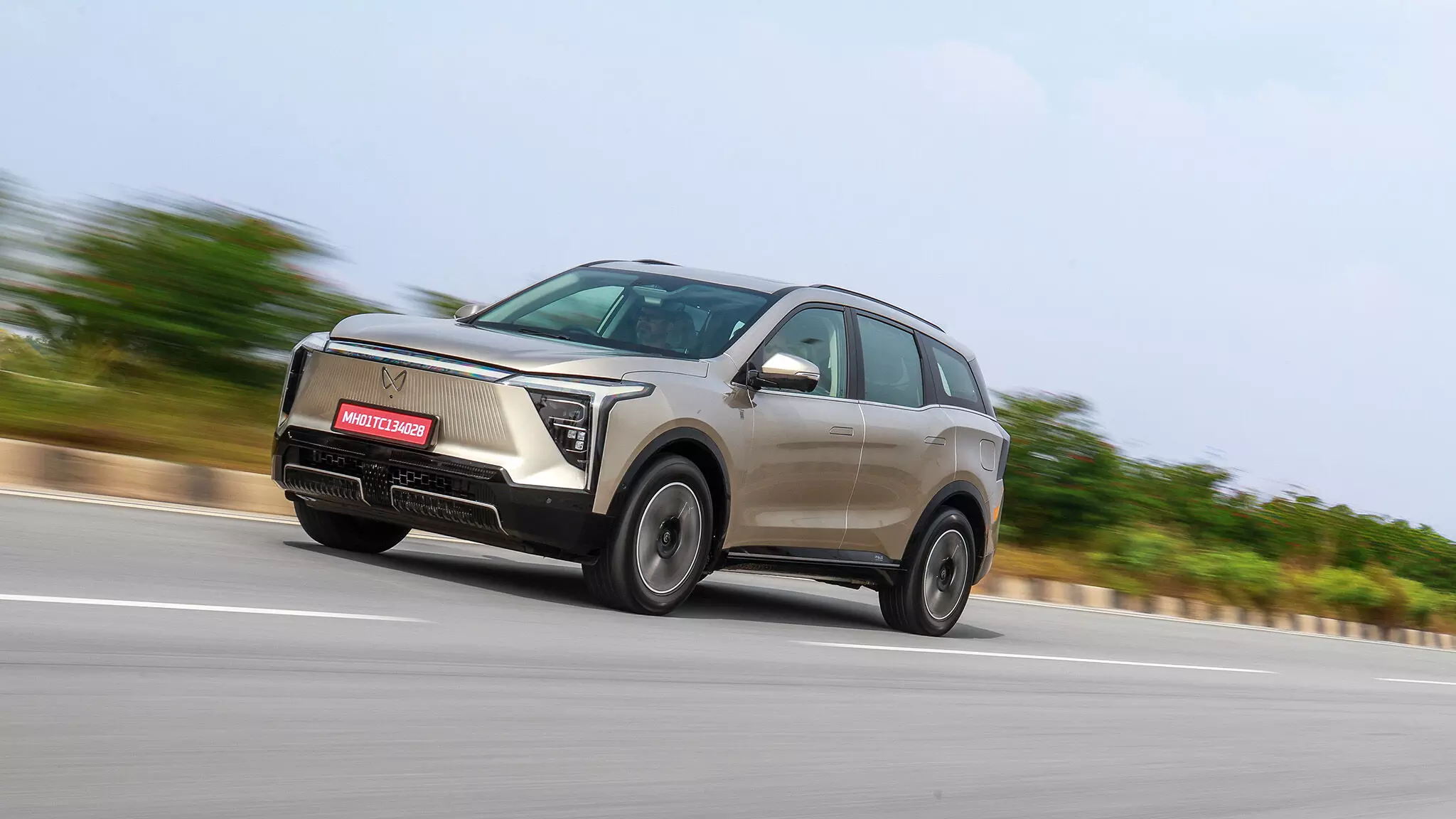
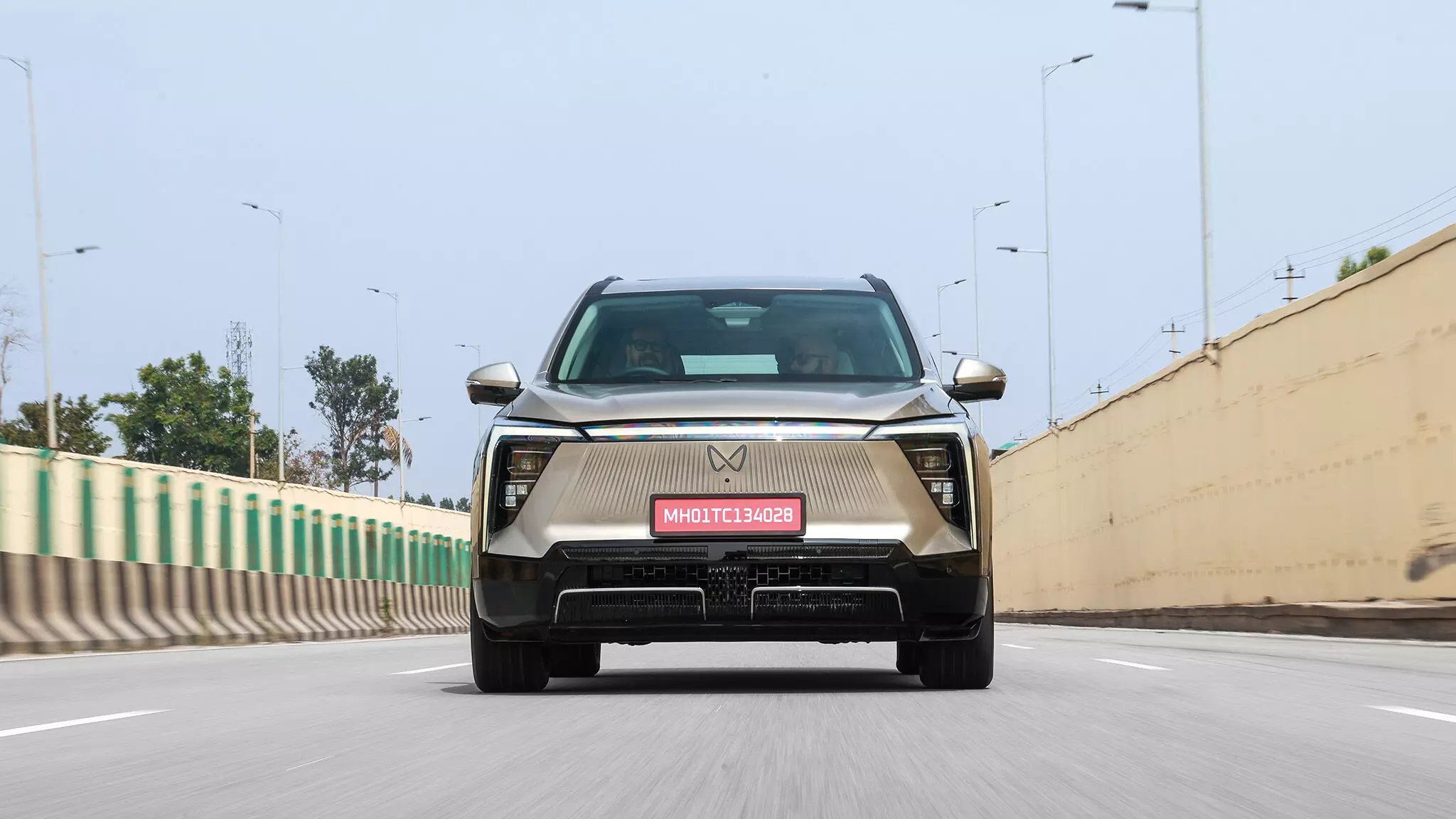
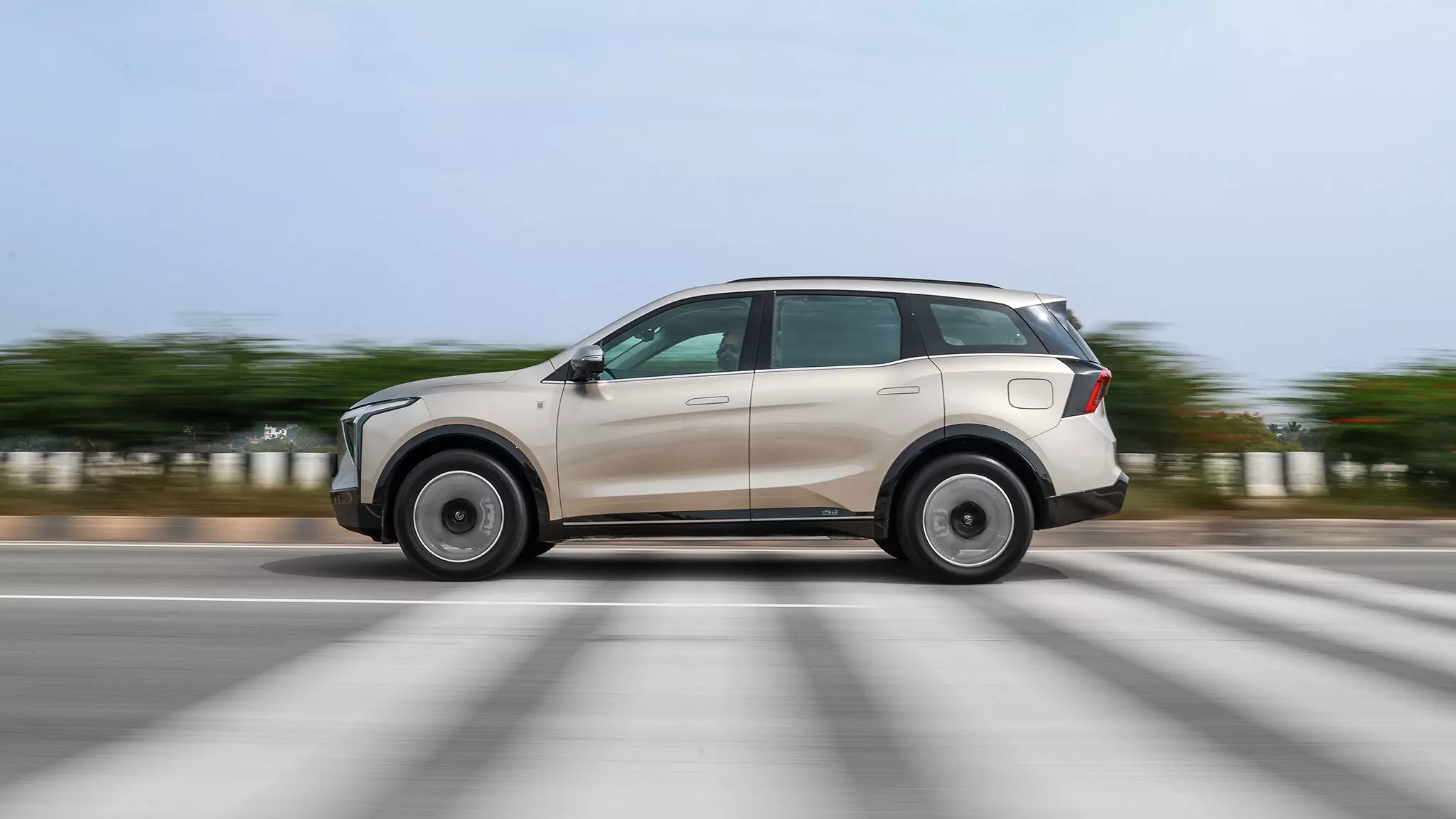
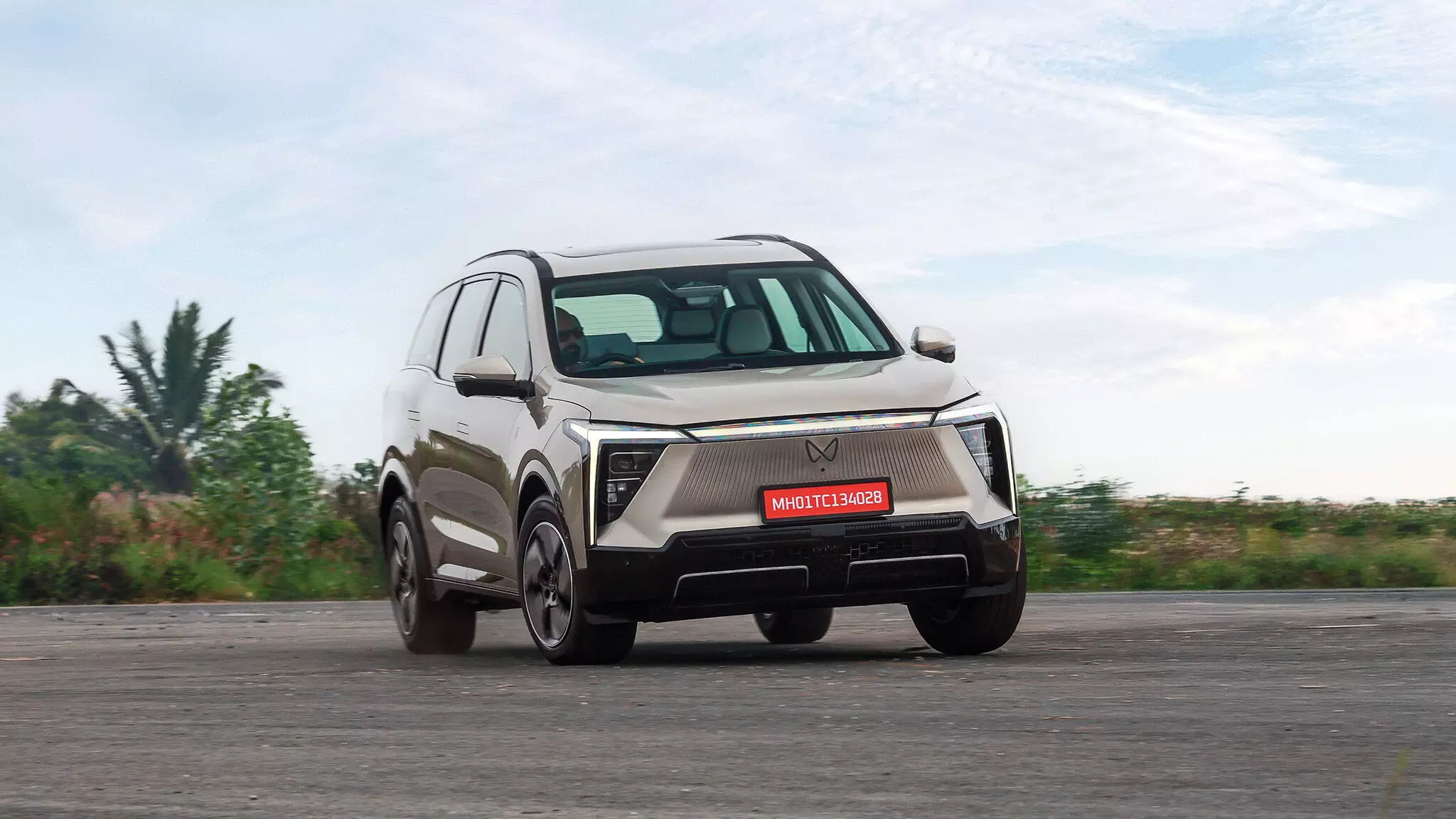
This is like a mash up of Mahindra’s greatest hits. From the front, it is clearly XEV while from the side and rear, it is more XUV. But this is no copy paste job — the front end has been tweaked and refined. The lightbar is more chunky than the XEV’s, as are the gloss black elements in the bumpers. Of course, being an EV it get the blanked out grille. It is subtle, but it makes a difference, making this 9S look more chunky and muscular. The big difference is in profile. Gone is the swooping roofline and in comes the more traditional, boxy SUV roof. The side has strong hints of the XUV as well with the kink in the shoulder line. This is intentional — the top hat is from the XUV, after all. However, interestingly, the wheelbase isn’t the same as the XUV or XEV 9E. At 2762mm, it is somewhere in the middle. The wheels are 18-inchers, a size down on what you get in the 9E — ride quality taking precedence over stance here, clearly. From the rear, it is more traditional than the 9E. Gone is the lightbar and what you’re left with are tail lamps that are reminiscent of the XUV700’s. This could hint at how the rear of the facelifted XUV700 could look. Overall, its a lot more conventional than the last two EVs from Mahindra’s stable, and I suspect this styling will have a wider appeal too.

2026 Mahindra XEV 9S interior and features
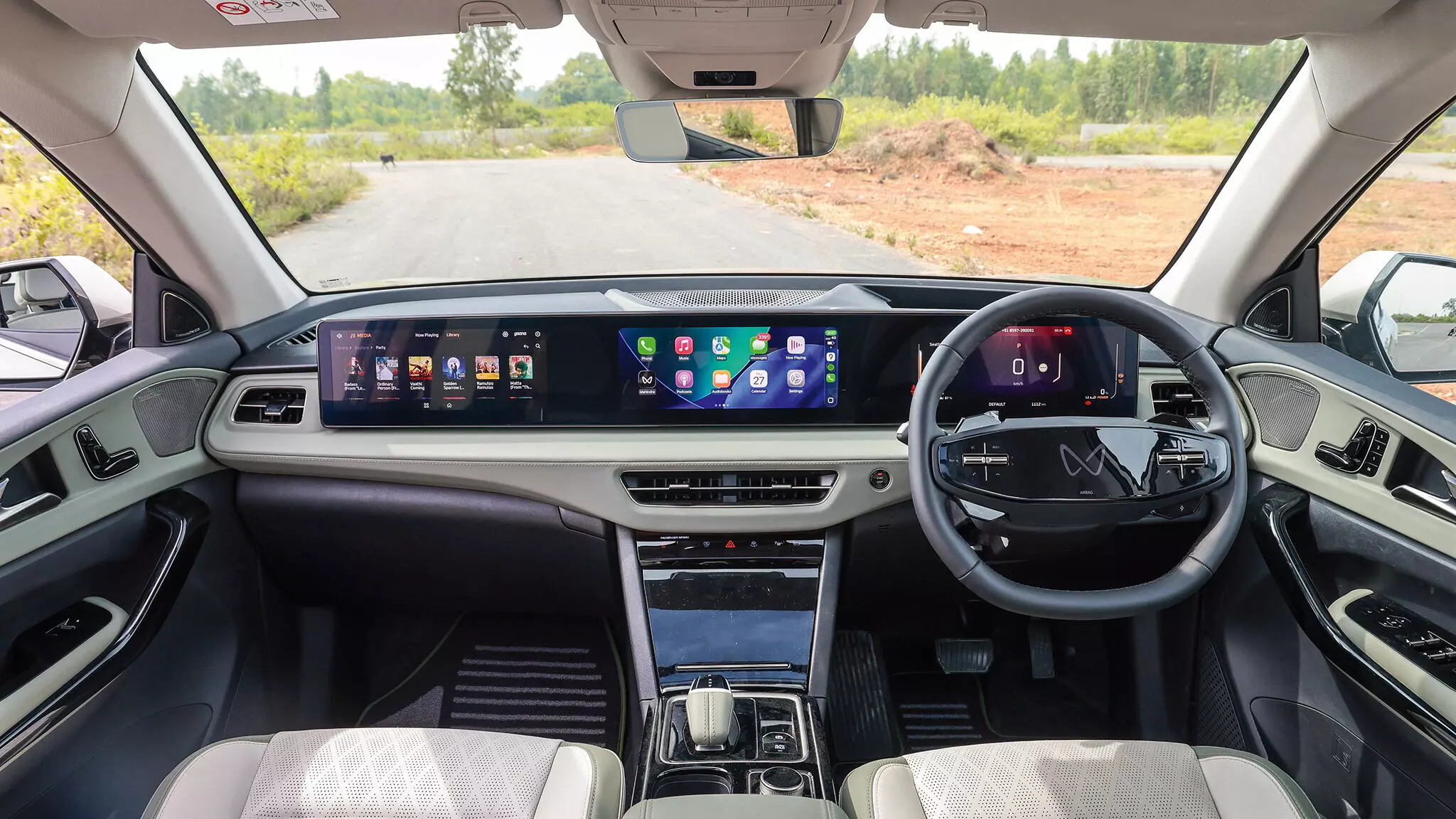
The XEV 9S is dripping in kit. The triple screen and (now retractable) panoramic sunroof is standard — right from the entry level variant. Wild. Mahindra is clearly attempting to appeal to the aspirational customer and sway them with headline features at unbeatable prices. Move up to the top-end variant and the list is seemingly endless. Wireless phone chargers, 360-degree camera and dual-zone climate control are almost hygiene now. It also gets a 16-speaker Harman audio system, with Dolby Atmos. The co-driver’s seat is now power adjustable. It gets an air purifier, ADAS, a head-up display with augmented reality, memory driver’s seat and even acoustic glass. I could go on, but you’re better off picking up the brochure…
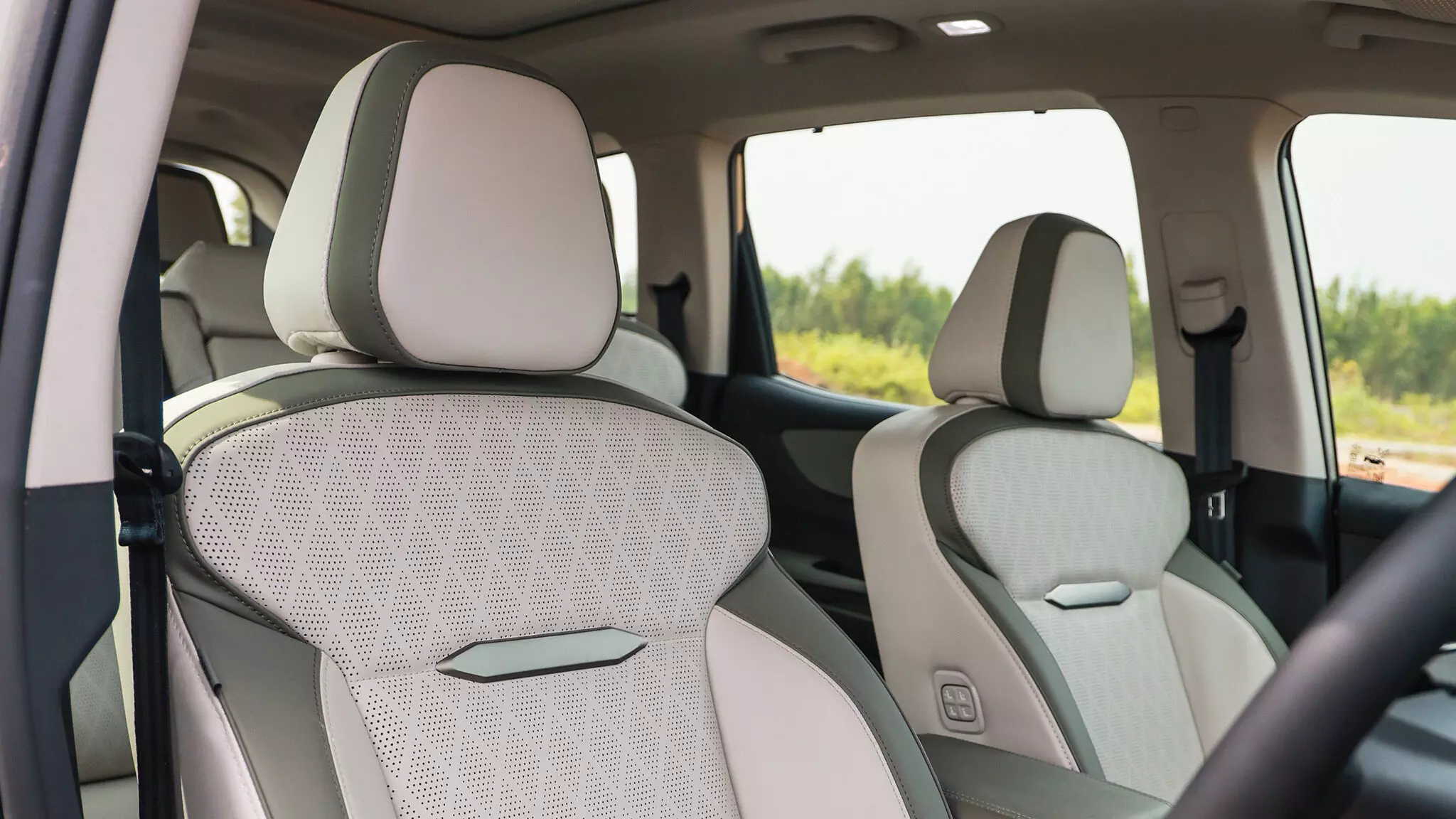
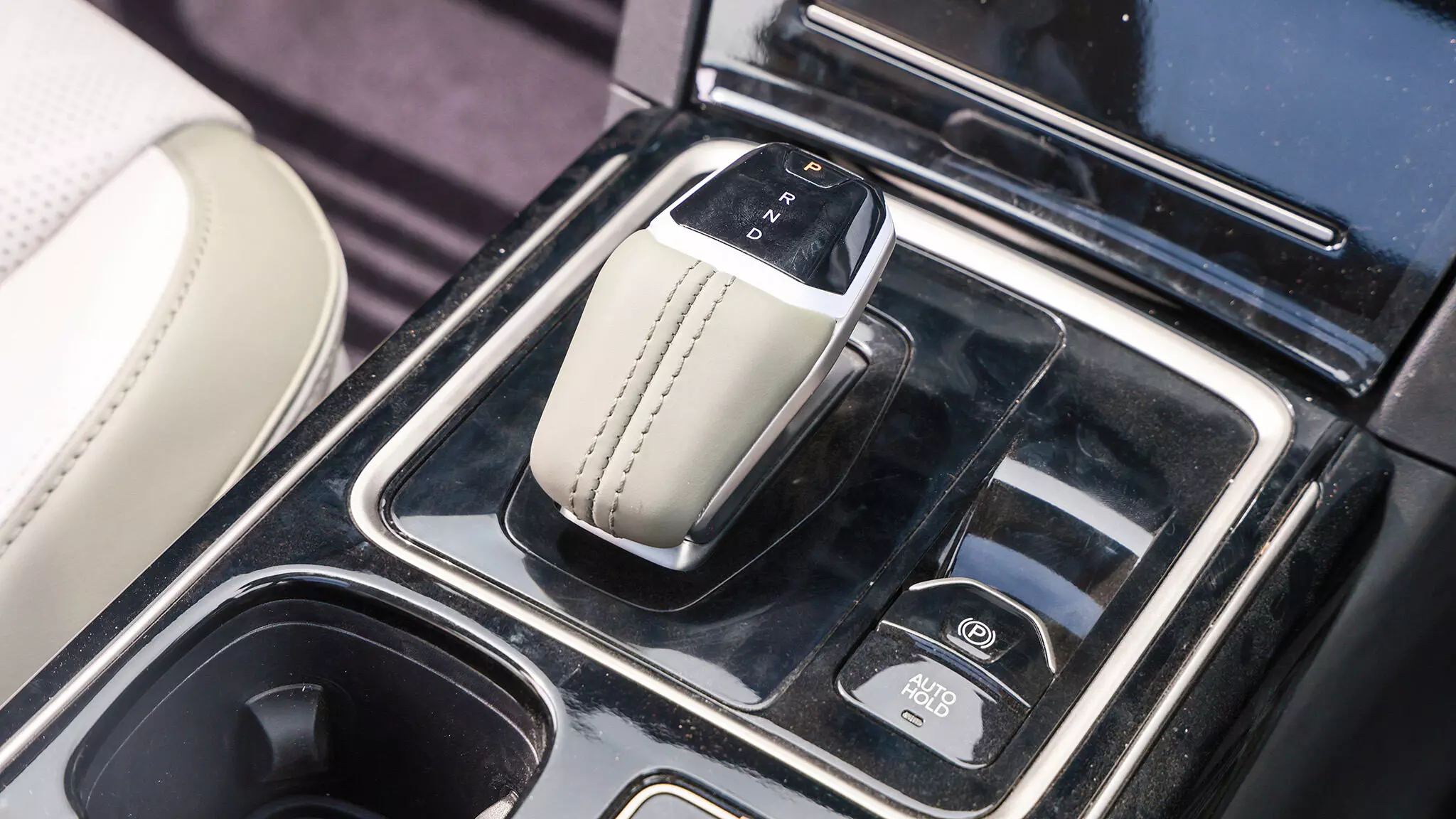
If you’ve even in the 9E, the cockpit is a familiar space. Same steering wheel, same three screens staring you and your co-passenger in the face, and quality and materials are to the same level. The interiors get a beige and sage green theme. The beige may be prone to stains but its very likely a new variant or alternative interior trim will address this at a later stage. That said, I’m not a fan of the large piano black panels used on the centre console. Neither am I a fan of the fact that oft-used controls like the AC and ventilated and in the screen.
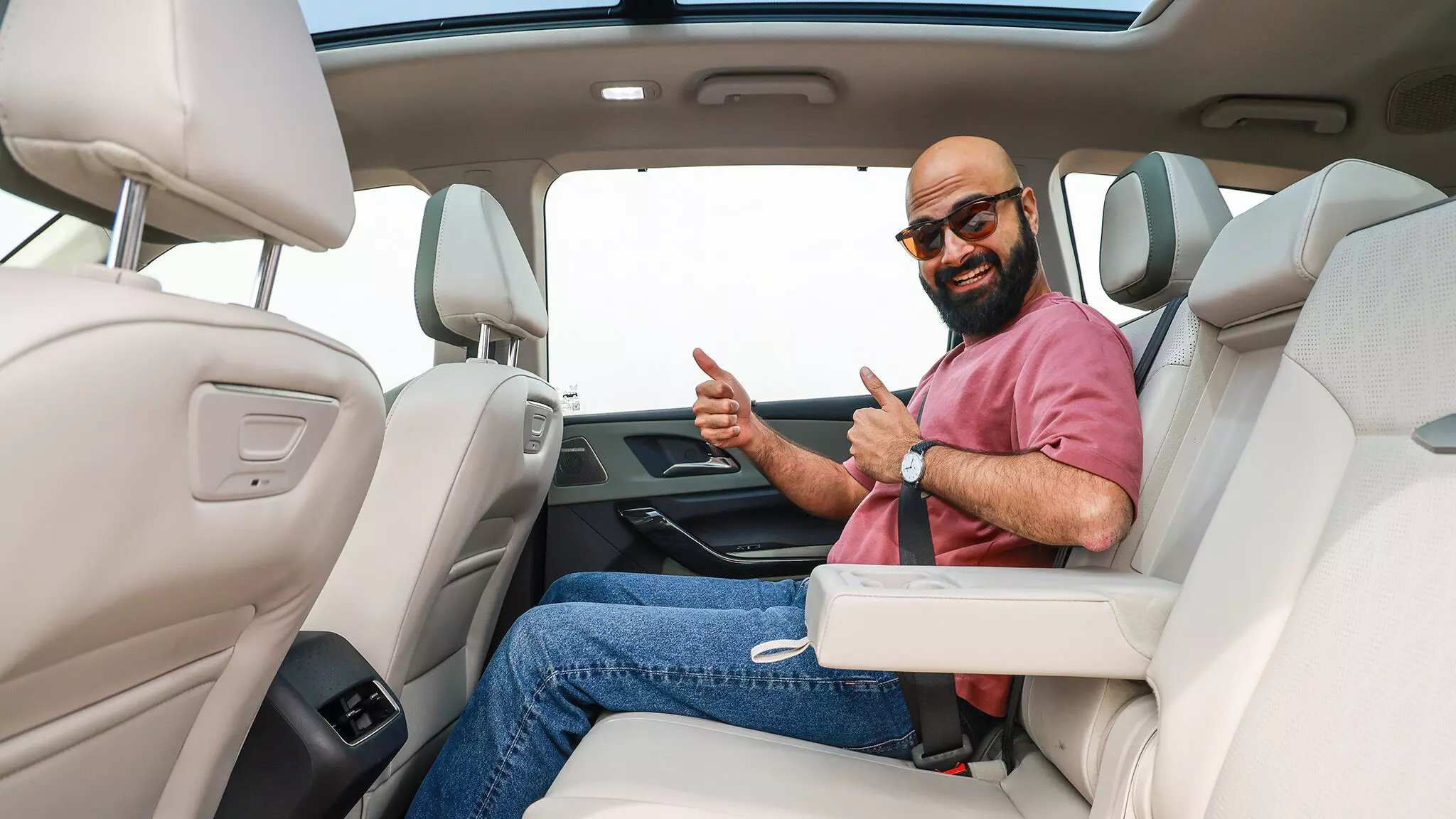
The second row is where the real party is. You get generous amounts of space — both kneeroom and headroom — and loads of kit. Mahindra has now added seat ventilation to the second row, you also get sun blinds, a tray table, a wireless phone charger and a dock for an entertainment screen. The bench slides and reclines as well, and this does add to comfort but also allows for some amount of flexibility when you have people in the third row. Interestingly, despite the batteries being in the floor, you don’t feel a major lack of under thigh support either
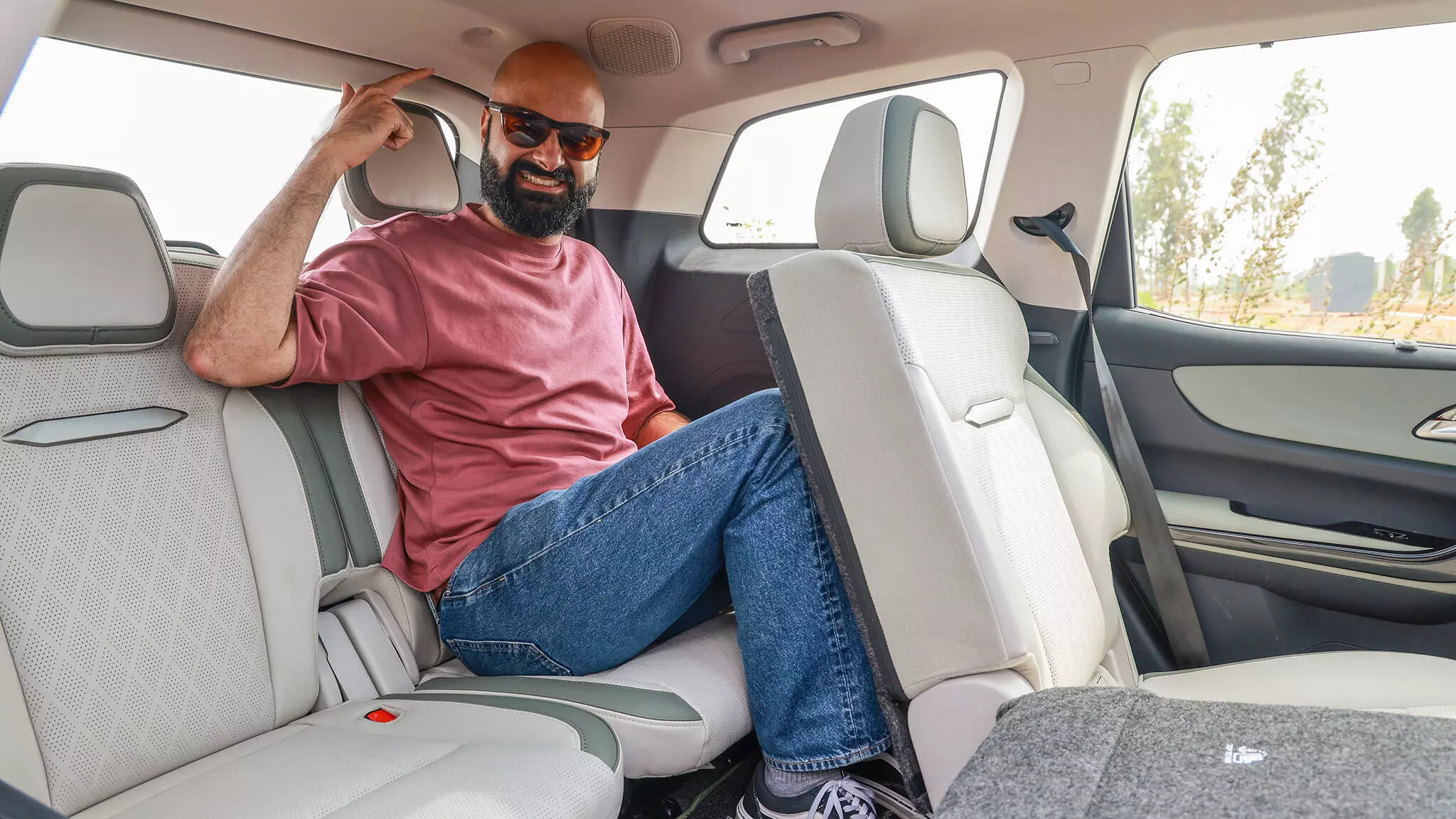
The third row isn’t the most comfortable. Sliding seats in front allow you to free up knee room, but you’re sat in a knees-upright position that isn’t very comfortable and headroom is limited. With my 5-foot-10 frame, my head was touching the roof if I sat upright. Its best left for children or emergencies, this row.
2026 Mahindra XEV 9S powertrain and performance
The XEV 9S gets the same powertrain options as the 9E — a 59kWh battery option and a 79kWh battery option, but there’s also a new 70kWh battery option on the Pack 2 Above variant. We were driving the top-of-the-line Pack 3 Above version with the 79kWh battery pack. This variant comes exclusively with a single motor on the rear axle, again like the 9E, making 281bhp and 380Nm. Performance is rapid, as you would expect. The Race mode dials it up to the max, and does have serious grunt. I did feel that it didn’t have that thump off the line that you’d generally associate with EVs and the initial pick up felt more linear, though that could also be us getting desensitised to the performance of these EVs. Honestly, you’re never going be left wanting for more real world performance. Range is generous too — a claimed 679km, which in the real world should translate to around 450km of useable range. Our XEV 9e long-termer realistically delivers up to 470km in the real world, so this should be no problem. There are regen modes that are well sorted, and even a one pedal drive mode.
2026 Mahindra XEV 9S ride and handling
Initial impressions of the 9S is that of comfort — there’s a sense of plushness to the way the XEV 9S in the way that it rolls down the road. It soaks up potholes and breakers confidently and rounds off the edges of sharp bumps really well. However, spending more time with the car revealed that this soft set up also has a downside. Over constantly undulating roads, the softness translates to a bounciness that doesn’t want to settle. There’s a fair bit of vertical movement in the cabin and it can get a little unnerving.
We didn’t drive the XEV on winding, twisty roads to be able to really push its handling but in the confines of a highway, it did feel confident. The steering wheel weighs up nicely at speed and seems to be heavier than previous Mahindras. There’s also a sense of connectedness and directness off centre, which is pleasant. With the batteries low down and the centre of gravity low, it should hold its own in the corners.
2026 Mahindra XEV 9S rivals and verdict
The XEV 9S sits in an interesting space. Prices cover a vast spread — from ₹19.95 lakh to ₹29.5 lakh ex-showroom. There is some overlap with the Kia Carens Clavis EV at the bottom end and with the BYD eMax 7 at the upper end — the other two 7-seater EVs in this price range. Compared to them, the XEV is very well endowed — in terms of performance, tech, features, space, size and range. But Mahindra isn’t stopping at the EVs. It is trying to draw in buyers who would traditionally go for an Innova Hycross as well. An ambitious feat, but its got the glitz on the inside to covert some fence sitters. With its more traditional styling and more aggressive pricing compared to the 9E, it will appeal to a wider audience than its more radical siblings. Factor in the cost savings compared to an ICE SUV, and you’ve got a sweet deal on your hands.