

2026 Tata Tiago first drive review: King of the hatchbacks?
The updated Tiago gets a sharper design, improved cabin quality and meaningful chassis upgrades while retaining its cheerful driving manners
- Ride comfort, modern cabin, pricing
- Piano black elements, iCNG variant boot space
Small hatchbacks today exist in survival mode. Every year, they lose buyers to compact SUVs, which ultimately leads to manufacturers not paying attention and these slowly fading into the background. In the current market, they can even be considered products built merely to hit a price point. The Tata Tiago has somewhat managed to avoid that fate. Even in its outgoing form, it felt like a hatchback engineered with some sincerity behind it. Tata Motors paid due attention, and throughout, we got to see updates and feature upgrades that enticed buyers. Now, though, we have one of the biggest changes in the Tiago.
Truth be told, the 2026 Tiago is not a ground-up new car, but the scale of changes underneath and inside makes it feel far more significant than a routine facelift. There’s a redesigned exterior, a noticeably more premium cabin, updated electronics, structural revisions to the platform and improvements to refinement and ride comfort. More importantly, Tata Motors has managed to do all of this while keeping the Tiago accessible. So then, is the Tiago one of India's most value-for-money cars?
2026 Tata Tiago design
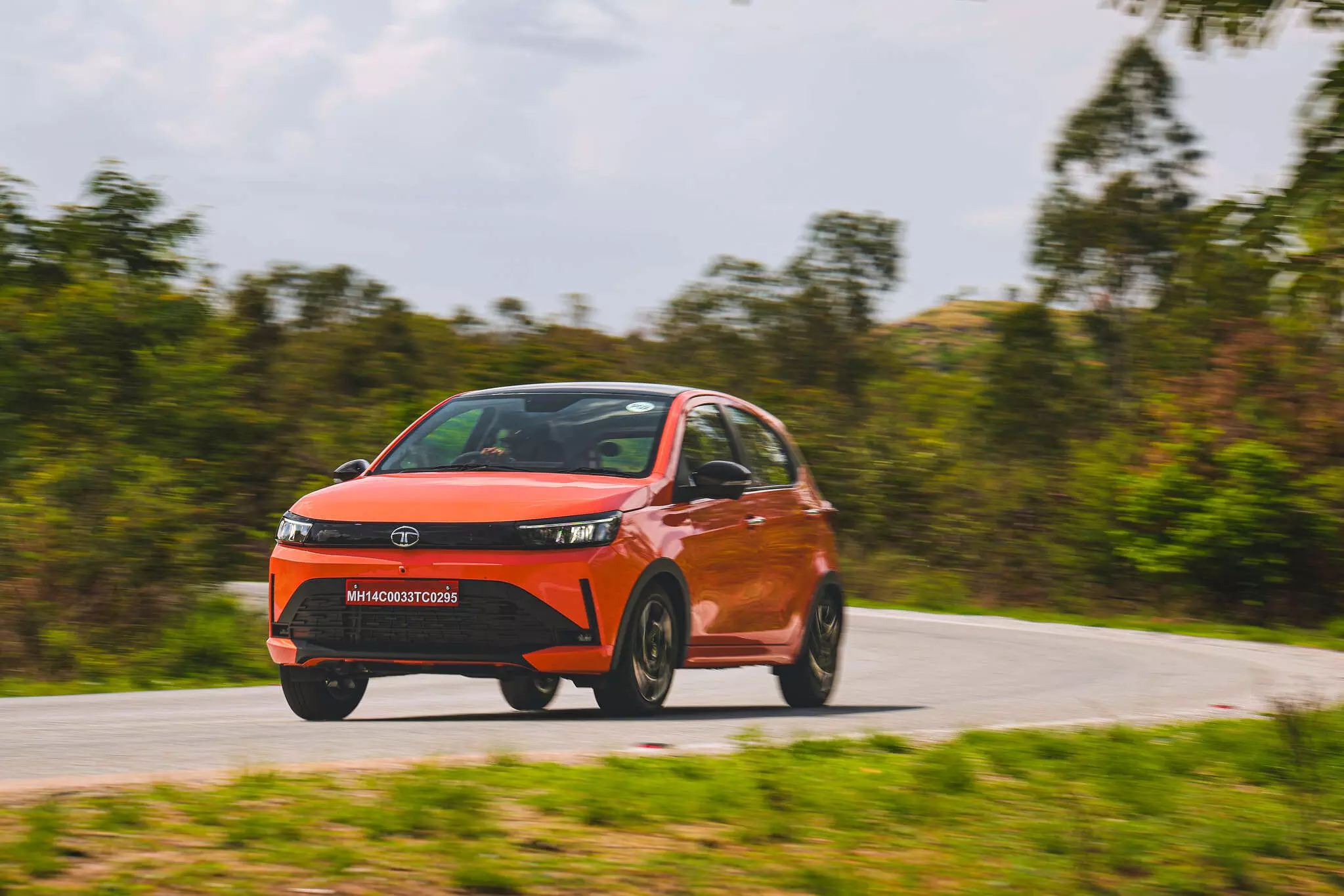
The overall silhouette has remained unchanged, but Tata Motors has heavily redesigned the exterior to give the Tiago a much more modern and sharper appearance. As far as recent designs go, the new Tiago manages to look modern and distinctive without trying too hard. What works for me is the contrast. The black grille and wheel arches paired with the brighter exterior shades give the hatchback a lively character, and despite being a small car, it definitely stands out in traffic. If you go for the higher variants, you even get a blacked-out roof, adding even greater appeal to the design.
New LED headlamps with integrated DRLs help modernise the front end further, while at the rear, it sports a connected tail lamp housing stretching across the width of the car. The centre section itself does not illuminate, functioning more as a styling element, but all in all, it still manages to look somewhat edgy and cool.
Unlike the EV, the standard Tiago continues with 15-inch alloys with a fresh design, and they fill the arches rather well. The proportions feel more balanced as a result. Dimensionally, there are minor revisions. Ground clearance stands at 170mm, which Tata claims is the segment’s best, along with a 19-degree ramp-over angle and 28-degree departure angle.
2026 Tata Tiago interior and comfort
The cabin sees a similarly comprehensive redesign and feels noticeably more premium than before. The black and grey dual-tone theme works well and gives the interior a cleaner, more mature appearance, like that of a segment above.
Material quality is as you would expect for the segment. Tata Motors continues to use a combination of fabric upholstery and hard plastics, but with added texture on both, no part of the cabin comes across as cheaply built. One thing I did notice was some brown spots on the fabric, suggesting these will attract dust, and you will need to work hard to keep them clean. In addition to the wheel arches, several of the interior parts are also made out of recycled materials, which adds a touch of sustainability.
The seats themselves have been revised with better contouring and added thigh support similar to what we first experienced on the new Punch. The fabric overall has a touch of firmness, which makes sure you don’t move around a lot. Another good addition is the height adjustment. With that, you sit in the car, and it helps if you are going to push this car hard. The added support works wonders and makes longer drives noticeably more comfortable.
Ahead of the driver sits a new floating 5-inch digital instrument cluster, while the infotainment system continues with the freestanding layout seen in last year’s update. With both screens now getting the floating design, the interior looks more uniform, though on rumblers, the screens shake quite violently. I also wish the cluster had a cleaner layout. Compared to the overall interior, that’s the only cluttered space and looks quite dated.
One area where the ICE Tiago differs from the EV is the trim finish. While the EV receives satin-finished surfaces across several elements, like around the gear selector, door card, and steering, the petrol and iCNG versions only get the satin treatment on the steering wheel. The rest of the piano black panels around the cabin continue to attract fingerprints rather easily, which feels like a missed opportunity considering how much cleaner the satin surfaces look and feel. On the other hand, the ICE variant offers a wireless charger and rear USB ports, both of which are missing on the electric variant.
One feature that I personally really love is the addition of rear AC vents, which have now made the rear seat just a tad bit more livable. Space in the rear isn’t all that good, but keep in mind that this is a hatchback and the chassis dimensions haven’t been changed. The cabin itself has received better insulation. Road and wind noise are reasonably well controlled for this segment, making the cabin feel quieter and more refined than before, especially at highway speeds.
What you should be mindful of is the boot space. For those going with the iCNG variants, there’s a slight issue of space. Despite using twin-cylinder technology, the Tiago’s smaller overall dimensions mean luggage capacity takes a substantial hit compared to the petrol version. The compromise is far more noticeable here than in larger Tata models like the Punch or Nexon. Realistically, you’re looking at enough room for one cabin-sized suitcase and perhaps a camera bag. The difference feels even more substantial when you see both petrol and CNG variants side-by-side. The petrol-only version features a 242-litre boot, while the figure for iCNG variants hasn’t been revealed.
2026 Tata Tiago platform and safety
While the basic underpinnings remain familiar, Tata Motors says the platform itself has undergone substantial revisions. Borrowing learnings and electronic architecture from cars like the Altroz, Tata now refers to the updated structure as the X-Alfa platform, effectively combining elements of the older X0 architecture with the Alfa platform.
The chassis has been further optimised for crash safety with revisions to the A-pillar structure, reinforced roll cage elements and greater use of high-strength steel. Torsional stiffness has also been improved, which contributes to the car’s more planted and refined feel over rough roads – more on this later.
2026 Tata Tiago features and technology
On the equipment front, the Tiago has taken a meaningful step forward. Six airbags, ABS and EBD are now standard, while higher variants additionally receive ESC. Tata Motors has also added features such as a 360-degree camera, blind-view monitor, auto-folding ORVMs and an auto demist function that automatically detects fogging on the windshield and redirects airflow accordingly. The camera quality isn’t all that great, but it’s going to help manoeuvre this car around.
Underneath, the car now benefits from a significantly upgraded electronic architecture. The system now runs on Android 13, bringing improved computing and graphics performance along with smoother system responses. During our drive, we didn’t notice any lag in the systems.
2026 Tata Tiago engine and performance
Mechanically, the Tiago remains unchanged. The 1.2-litre three-cylinder petrol engine continues to produce 85bhp and 113Nm in petrol guise, while the CNG version develops 74bhp and 95Nm – both offering AMT and MT options.
This is not an enthusiast-focused car. But the petrol version is definitely the more performance-friendly. With the manual gearbox, it's reasonably responsive and injects just enough character to keep things entertaining. It does get a bit loud at high revs, but not deal-breaking.
Switch over to CNG and performance naturally takes a slight hit, though in everyday driving, the difference isn’t nearly as dramatic. On the other hand, the iCNG option remains cost-effective, and if you are using this car for commuting, that’s the better pick. Even with CNG, though, it still feels adequately peppy for regular city duties. It’s only when you push beyond half throttle or start revving the engine harder that the petrol version clearly feels quicker and more relaxed. As seen before, you can start and run on CNG power alone. Transition is easy too – one click is all it takes to switch between fuels.
Talking about the gearbox, both work respectably well. In case of the AMT, the expected pause between shifts is alive and kicking, but once you get used to it, it stops bothering you, and you enjoy the convenience of an automatic. If you like a bit more involvement, you can go for the manual gearbox. The shifts aren’t the smoothest, but you can extract a much livelier response from the engine.
2026 Tata Tiago ride and handling
Ride quality remains one of the Tiago’s standout strengths. Tata Motors has revised the suspension tuning to account for the added weight, except that there is no change in the drivetrain.
Like before, the Tiago feels impressively solid over poor roads. The suspension absorbs most bumps and undulations with genuine composure, with only really bad patches getting through. Tata Motors has significantly improved ride quality across its recent products, particularly the new Punch, and the Tiago benefits from that same maturity.
Handling remains predictable and confidence-inspiring. The Tiago feels planted through corners, and its compact footprint makes it surprisingly enjoyable to hustle around urban roads. It’s definitely not the sharpest, but there’s a certain fun factor to throwing a hatchback around corners.
The steering is expectedly lighter, considering this is more of a city runabout. Like the handling characteristics, it isn’t the sharpest, but on the flip side, it makes city driving a convenient affair.
2026 Tata Tiago verdict and price
Perhaps the most impressive part of the update is the pricing. Despite the comprehensive redesign and added equipment, the Tiago remains aggressively positioned. Prices for the petrol manual range start at ₹4.69 lakh and go up to ₹7.29 lakh, while the iCNG range starts at ₹5.79 lakh and extends to ₹7.99 lakh, marking a marginal increase in prices.
When you factor in the improved design, more premium cabin, upgraded safety package and genuinely impressive ride quality, the Tiago continues to make a very strong case for itself. The petrol version remains the more enjoyable car to drive, while the CNG variant offers a compelling balance between running costs and everyday usability, provided you can live with the reduced boot space. At a time when entry-level hatchbacks are slowly disappearing from the market, the Tiago feels like one of the few small cars that still delivers a sense of substance beyond just its price tag.