

Has Honda done enough with the Elevate facelift?
Honda has added some usable features like rear ventilated seats to the Elevate, to make this package more compelling. Is that enough for today’s mid-SUV buyers?
- Engine refinement
- Space, comfort, seats
- New usable features
- Lack of powertrain options
- Overall feature list
When the Elevate was first launched three years ago, it was meant to plug a big hole in Honda’s Indian portfolio. The mid-SUV segment, had fast become the most sought after category to be in, swelling to become the single largest segment of cars in India. Today every mass brand worth their salt has a presence in this segment – Hyundai, Kia, Renault, Nissan, Maruti Suzuki, Toyota, Tata, VW, Skoda, Citroen and soon to join the frey will be Mahindra. This list gives you an idea of how competitive this segment is, and each brand is doing everything in their power to woo buyers towards their product. Standalone, the Elevate is a solid product radiating Honda’s engineering prowess, but thus far it has only found itself a small section of buyers, many of them being die-hard Honda fans. With the facelift, Honda intends to increase Elevate’s appeal and be more competitive in the segment.
What’s new in the Honda Elevate 2026
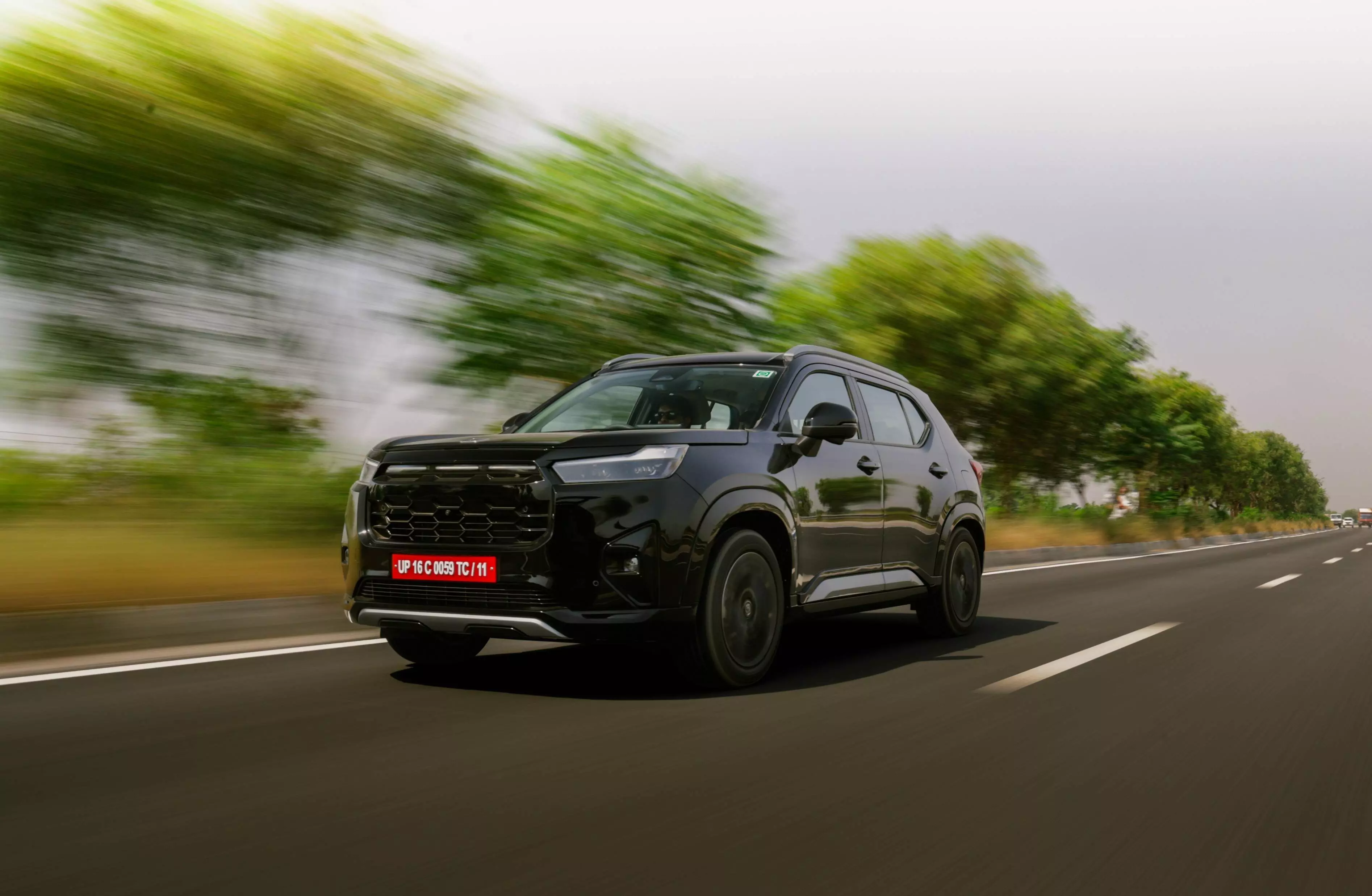
Following the design trend that everyone’s hopping on, Honda has now given Elevate connected front and rear DRLs. The grille is new too, to give it a more imposing presence on the road, along with black garnishes on the fenders and the lower parts of the bumpers. These small design changes refresh its look without making the car look very different from before. The visual updates are much lighter than what Kia and Hyundai have gotten us used to, but that does not make this a bad thing – true to Honda’s more subtle approach, this is still a fairly handsome car.
Inside too the visual changes are minimal, with a new upholstery colour called Ivory Black, more soft touch leatherette materials on the dash and a new orange colour for the ambient light. The major change is in the addition of some key features. The most important one of those is ventilated seats for both front and rear – making this the only car in the segment to offer this. The rear seat gets the real deal with ventilation on the back and the base of the seat (unlike the Syros). The other changes are the inclusion of rear disc brakes, 360-degree camera, front parking sensors, a low-speed follow feature for the adaptive cruise control and an auto-clean function for the air quality in the cabin. All the added features are useful and add to the daily convenience of the user.
What remains the same in the Honda Elevate 2026
The good bits remain the same. The packaging within the 4.3m length and the 2.65m wheelbase have always been impressive, with a good amount of leg and head room in the rear and the 220mm ground clearance is the highest in the segment. The screens are the same too – a 10.25-inch infotainment screen and the part digital cluster with a 7-inch TFT. In a world that loves panoramic sunroofs, this car still offers a single pane sunroof – something that will turn away a fair amount of buyers.
Driving the Honda Elevate 2026
It still inherits its engine and platform from the Honda City – which by no means is a bad thing. The 1.5-litre naturally aspirated engine makes the same 119bhp and 145Nm with the option of being paired with a 6-speed manual or a CVT. It is a creamy smooth engine known for its refinement and its willingness to rev. Hardly any vibrations creep into the cabin, though it gets loud on the inside at higher revs. Though, that sound adds to the driving experience rather than become a noise. Because we are used to turbo-petrols with the competition, this engine feels like it lacks the punch, but by NA standards, this has more than adequate grunt, even though you have to contend with the CVT’s rubberband effect.
The Elevate still does a solid job of handling Indian roads. The low speed ride is highly absorptive, and soaks up the bumps without breaking a sweat. There’s plenty of stability and control on vertical movement as well at high speeds and the car remains well in control whether on corners or when it dips into a bump at high speed. The steering feels just the right amount of weight and imparts very accurate feedback. Point the car to where you want it to go and it holds its line surprisingly well.
Should you buy the Honda Elevate 2026?
The Elevate starts at the same price as before of ₹11.8 lakh and now goes up to ₹18.3 lakh for the top end CVT variant. You have to shell out another ₹10,000 for the black colour you see in the photos. This puts it right in the midst of the competition’s price levels with the Creta topping out at ₹17.3 lakh and the Seltos at ₹19.8 lakh (ex-showroom). While it’s appreciable that Honda has made design updates and added usable features, the major letdown for the Elevate is its powertrain options, or the lack of it. Most of the competition offers NA, turbo-petrol and diesel options, with everyone now racing to get hybrids as an option too. Honda is sticking to a single engine option – not a wise strategy for this segment, especially considering globally, hybrids are a Honda speciality. What Honda instead plans is to bring a 0 Alpha based EV SUV to India soon to increase their powertrain footprint. Standalone, the Elevate is still a strong car and its buyers will fall in love with it; in the company of its competition, it falls short on powertrain options and an overall feature list.