

Mahindra XUV 7XO first drive review: A smoother and sharper take on a familiar favourite
The XUV700’s successor arrives with more tech, sharper styling and “world-first” DaVinci dampers that promise to change the way it rides and handles
- DaVinci dampers
- Powerful engines
- Coast-to-coast three screen display is standard across all variants
- The range starts from AX now, instead of MX
- No physical air-con controls
- Light coloured upholstery can get stained easily
- Lack of paddle shifters
- Petrol engine has poor fuel-efficiency
The Mahindra XUV 7XO is the popular XUV700’s successor. With this facelift, the car not only gets a host of changes and upgrades, but also addresses multiple issues that were present in the XUV700. First, let’s talk about the name. The addition of the ‘X’ in the car’s name is no longer new to us because we’ve seen this before. The Mahindra XUV300’s facelift was renamed the XUV 3XO, and similarly, the XUV700’s facelift has now been renamed XUV 7XO. I think it’s a smart move because it makes communication and understanding very simple for everyone.
In terms of changes, the XUV 7XO gets bigger 19-inch wheels, new colour options, ADAS Level 2+, sharper front and rear fascias, and a host of new features and tech inside. The biggest change is the new “world-first” DaVinci dampers, which claim to make the ride and handling much better. What remains the same are the powertrains – the 2-litre mStallion turbo-petrol engine and the 2.2-litre mHawk diesel engine. Overall, it’s a comprehensive update and while the wheelbase and chassis remain unchanged, most of the other things have evolved. Is it for the better or worse?
Mahindra XUV 7XO styling
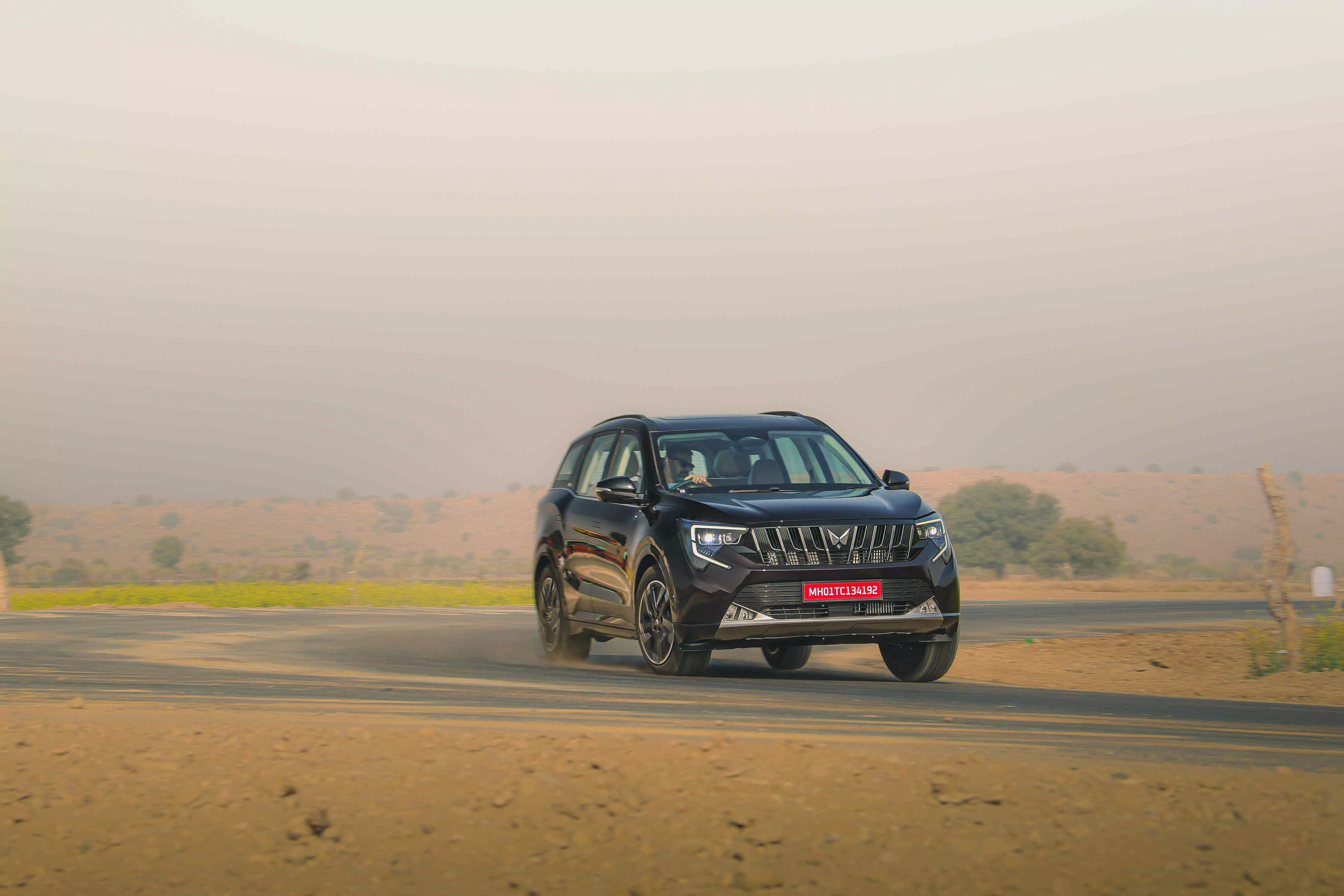
The Mahindra XUV 7XO’s exterior has been revamped to make the car look sharper than before. The front bumper looks sportier and leaner compared to the XUV700 and it also gets ice-cube fog lamps which look really cool. The C-shaped LED DRLs continue, but now feature a different design that looks leaner and sharper. The headlamps get a bi-LED projector setup and work well when there’s low light outside. That said, I would also like to point out that they are not as effective when there’s a lot of ambient light, such as bright street lamps or city lighting, and visibility could be a concern in heavy downpour or foggy conditions.
From the side, it’s hard to tell whether you’re looking at the older model or the facelift. The wheelbase, panels, doors, door handles, ORVMs – everything remains the same as before. What has changed are the wheels and the cladding. Instead of the 18-inchers you got earlier, there are now 19-inch wheels with a new design. We had posted some photos and videos on our Instagram a few days ago, and many people commented that they don’t like the new wheel design and that it looks very EV-like. The other change on the side is the cladding. From black plastic, you now get piano black trim. It definitely looks better than before, but it is prone to scratches. During our shoot, we spotted two to three scratches on it already – proving our point further. While the pop-out door handles remain the same, they now get a proximity sensor. When we were testing the car, the proximity sensor worked randomly at times, showing that it still needs better tuning. However, you can now simply tap the three dots on the handle and the car locks or unlocks depending on its current status.
Moving on, I think the best angle to view the Mahindra XUV 7XO is from the rear three-quarter. That’s because I’m still not entirely convinced about the front-end design – it may take time to grow on me – but the changes at the back make this car look absolutely stunning and sportier. You now get smoked tail lamps with a new design, and a piano black panel that stretches across the entire width of the car. The badges have moved from the right side to the centre, and it looks good. The bumper, which earlier looked fairly basic with a grey skid plate, now appears far more premium. It gets more grooves (Mahindra calls them “jewel-like elements”), better-integrated reflectors, and a redesigned skid plate.
Mahindra XUV 7XO interior and features
The Mahindra XUV 7XO’s biggest changes lie inside the cabin. The interior has been completely revamped, and I have mixed opinions on this, which we’ll get to in a bit. First, let’s talk about what’s new. As soon as you step in, the first thing you’ll notice is the steering wheel. Instead of the three-spoke wheel from earlier, there’s now a new two-spoke steering wheel – the same one you see in the Mahindra XEV 9S. Here, it gets a proper physical Twin Peaks logo instead of the backlit logo in the XEV 9S. There’s also a two-tone leatherette wrap that matches the seats and dashboard, and the wheel can be adjusted not just for rake but also for reach. That said, some may find that the seat base sits a little too high and doesn’t go as low as they’d like. I’m short, so that wasn’t a problem for me, but what did bother me was the steering column height. Even at its lowest setting, the steering wheel still feels mounted too high – an issue I had with the XUV700 as well. It doesn’t take away from how well the car drives, but it is something you notice every time you get behind the wheel.A major feature that it missed out on is paddle shifters!
Earlier, with the XUV700, we had complained about how the white upholstery got dirty easily, and Mahindra has addressed that. Now there’s a Lumina and Chestnut Brown upholstery (white and brown) on the seats, dashboard, door cards and steering wheel. During our test, I still spotted several black smudges on the white roof headliner, and I would have personally preferred a full tan or brown interior instead. The XUV700 received front ventilated seats as a mid-life update, but in the XUV 7XO, you get four ventilated seats right from launch. The electrically adjustable seats with three memory functions for the driver continue, and now even the co-driver gets an electric seat. The seats are the same as those in the XEV 9e and XEV 9S, and you also get an electric boss mode function for the co-driver seat.
Moving on to the biggest visual change: the dashboard now gets a coast-to-coast display with three 12.3-inch screens for the instrument cluster, infotainment system and passenger display. This is the same unit as in the XEV 9e and XEV 9S. You get wireless Apple CarPlay and Android Auto (which works from the start) along with built-in internet for streaming content. In fact, you can even use the car as a mobile hotspot. During our shoot, I wasn’t getting any internet connection from my service provider, so I connected my phone to the car’s hotspot – and just like that, I had an active internet connection, with which I even posted two reels. The camera resolution has gone up as well. Not only is the footage sharper, but there’s also a 540-degree camera view – this adds a virtual image of the underbody, also known as transparent bonnet view. It also gets ADAS Level 2+, with features such as lane-keep assist, adaptive cruise control and automatic emergency braking. The radar’s detection range has increased from 170m to 250m. There’s also 3D visualisation of surrounding objects in the instrument cluster (similar to Tesla Vision), and it can even detect animals like cows, along with scooters. The older 12-speaker Sony audio system has been replaced with a 16-speaker Harman Kardon setup with Dolby Atmos, which significantly enhances the in-cabin experience. Unlike the XEV 9e, which has a standard passenger display, the XUV 7XO gets privacy protection glass, so the third screen does not distract the driver.
The air-conditioning controls, which were physical earlier, have now been shifted entirely to the touchscreen. This is a bad thing because to go through menus on the screen to adjust the air-con is distracting and can be a serious safety concern too. This frees up space in the centre console for extra storage and a wireless charging pad with a cooling fan. The interesting part is that all variants – from the base AX to the top-spec AX7 L – get the triple-screen layout as standard. However, what the lower variants (AX5 and below) offer might actually be more appealing to some buyers. These versions get black seats with brown piping, the older three-spoke steering wheel, and physical air-conditioning controls. Both the new AC interface and the new steering wheel are things I’m not particularly fond of, and judging by comments on our posts and reels, many seem to agree. Strange, right? We might actually see higher demand for the lower variants of the XUV 7XO than for the AX7 and AX7 L.
In the second row, you get retractable sunshades, a wireless charger and a three-point seatbelt for the middle passenger. The third row, which is often criticised for being cramped and suitable only for kids, isn’t too bad here. The second row gets a one-touch tumble feature, making ingress and egress easy, and the third row itself is fairly spacious. Aninda Sardar, a colleague who is almost six feet tall, said he found the third row comfortable enough for himself.
Mahindra XUV 7XO engine and performance
The Mahindra XUV 7XO follows a strategy of “don’t fix anything that ain’t broke.” The powertrains have been the silent backbone for Mahindra’s SUVs, and that didn’t need any change. The 2-litre mStallion turbo petrol four-cylinder engine makes 197bhp and 380Nm, and can be mated to either a 6-speed MT or a 6-speed AT. The 2.2-litre mHawk diesel four-cylinder engine makes 182bhp and 450Nm, and can be mated either to a 6-speed MT or a 6-speed AT. Both engines are strong performers and can even give Toyota’s 2.8-litre Fortuner engine a run for its money. The diesel engine in the XUV 7XO also gets three drive modes – Zip, Zap and Zoom.
In traffic, the diesel’s torque delivery remains strong and effortless, making the big SUV easy to drive without constantly working the gearbox. On the highway, it feels relaxed at cruising speeds, yet always has enough in reserve for clean overtakes. It continues to feel planted at triple-digit speeds, with good straight-line stability and confidence through long, sweeping corners. The petrol engine in the XUV 7XO is arguably one of the best engines in the segment currently in terms of performance. There is a lot of power always on tap, the gearbox works seamlessly in sync with the engine and shifts are always smooth. While we do have to rev out the diesel engine if you want to go fast and that engine does become slightly vocal after 2,000rpm, that’s not the case with the petrol engine. The petrol engine idles at just 800rpm, and has very less vibrations. The petrol is the faster and more enthusiastic engine from both the options, but if you’re looking for great fuel-efficiency then the diesel engine should be your pick. We tested the diesel manual variant and drove it from Jaisalmer to Jodhpur, covering 280km. On this drive, I recorded an average fuel efficiency of 12.8kmpl, which was slightly lower than expected. Fuel efficiency, especially of the petrol engine, has been a long-standing concern, with many owners reporting city figures of just 6–7kmpl. Since there are no changes on this front, these numbers are likely to continue.
Mahindra XUV 7XO ride and handling with the new DaVinci dampers
On the road, the XUV 7XO immediately feels more composed than the outgoing XUV700, and much of that comes down to the new DaVinci dampers. In simple terms, the suspension is softer over smaller imperfections and then firms up as loads increase, which means broken roads feel more rounded off without the body becoming floaty. Sharp bumps are absorbed with less harshness, yet there’s strong body control at highway speeds. You feel more calm through the cabin, better vertical control over undulations, and a reassuring robustness when the road quality deteriorates. It doesn’t turn the XUV into a magic carpet, but it does make the ride more settled, more confidence-inspiring and more polished than before, without diluting the engaging character that has always defined the XUV.
Beyond the suspension, the XUV 7XO feels very familiar in the best way. Over speedbreakers and badly patched roads, there’s a clear improvement in how the car deals with sharp edges – there’s less crashing through bumps and far less of the hollow thud you sometimes experienced in the older XUV700. Even if you hit a breaker a bit quicker than intended, the body settles quickly without excessive pitching or kicking at the rear.
Mahindra XUV 7XO price, rivals and verdict
Finally, coming down to what everyone’s first question always is, “Kitne ki hai?” The Mahindra XUV 7XO starts at ₹13.66 lakh, and goes up to ₹24.92 lakh. The older XUV700’s pricing started at ₹13.66 lakh only for the MX variant, and the XUV 7XO gets the same starting price but instead of the MX variant, they are offering the full-blown AX variant with six airbags, three screens, cruise control, AdrenoX connected car tech, and more.
The Mahindra XUV 7XO rivals other SUVs like the Tata Safari which starts from ₹13.29 lakh, Tata Harrier from ₹12.89 lakh, MG Hector from ₹12 lakh, Hyundai Alcazar from ₹14.49 lakh, and the Kia Carens Clavis from ₹11.09 lakh.
Finally, moving on to the verdict. Now, the XUV 7XO isn’t a ground-up reinvention, but it is a thoroughly well-judged evolution of what was already one of the most compelling SUVs in its segment. The styling updates sharpen its presence, the cabin feels more premium and tech-laden than ever, and the new DaVinci dampers genuinely elevate the driving experience, especially on Indian roads. Yes, there are a few irritants – the high steering position, the fully touchscreen climate controls, and fuel efficiency that still demands restraint – but none of them dilute the core strengths of this car. It remains quick, comfortable, engaging to drive and now more refined in how it goes about its business. For anyone considering a three-row SUV that blends performance, features and road presence with real-world usability, the XUV 7XO is the perfect car for it.The whole package even gets sweeter because you get tonnes of features and kit even from the base AX variant.