

Car Features
Anantara Concorso Roma 2026: The meeting place of legendary machines from Le Mans and more
70 rare and iconic Italian cars gather in Rome for the inaugural Anantara Concorso Roma 2026
It was a pinch-me moment, never did I imagine I would be standing in front of the original Lamborghini Countach or Miura, Ferraris from the ’60s and ’70s, or even the Testarossa. Some of the rarest Italian cars ever made were right there, in the open air, close enough to touch. All this was made possible by the Anantara Concorso Roma 2026, hosted by the Anantara Palazzo Naiadi Rome Hotel. Over a century ago, Rome witnessed its first-ever concours; in 2026, what better way to celebrate than gathering 70 of the finest historic Italian automobiles from Ferrari, Lamborghini, Maserati, Alfa Romeo and Lancia to celebrate La Dolce Vita delle Automobili.
Walking in felt like being a kid in a candy store – except a very expensive candy store. Seventy cars, worth millions, from various parts of the world, made me thank my stars for being in the same postcode! The chances of standing in a place like this twice in a lifetime are slim, and I knew it the moment I walked in. Some of these cars exist in just a handful of examples. Others, in just one. The air was thick with the scent of high-octane fuel and aged leather, a sensory cocktail that pulled you back decades without warning. Standing among them, you could almost hear the rhythmic clatter of hammers on hand-formed aluminium panels, the sound of another era, the one that built things by hand and got every inch of it right.
The setting could not have been more Italian: the Casina Valladier, a villa perched at the top of the Pincio hill, with Rome spread out below it and a very particular sense of occasion that only this city seems to pull off naturally. As the sun began its descent, casting a warm, honey-hued glow over the marble statues and manicured gardens, the silhouettes of the cars became even more dramatic. Neoclassical stone and mid-century steel side by side. The combination should not have worked. But it absolutely did. The city and the cars were in conversation with each other, and both had something to say. There was a moment, standing between a Maserati and a Ferrari with Rome stretching out in the distance, when the sheer weight of what I was looking at had me gobsmacked.
This was not just a show for collectors or die-hard enthusiasts. It was for anyone who ever had a poster on their bedroom wall, a matchbox-sized toy version on their shelf, or sat watching these cars roar across on a movie screen. I was all three of those people and being there felt like every one of those memories arriving at the same time. The 70 cars were grouped into 16 classes, covering a century of Italian automotive history, from pre-war icons of the 1920s to grand touring, race-derived machines, signature coachbuilding, and outright performance, all competing for class wins and the Best of Show. The judges moved with surgical precision, white-gloved and carrying clipboards, inspecting every weld, every stitch and every engine note for the slightest deviation from the factory ideal, while owners watched and showcased their prized possessions.
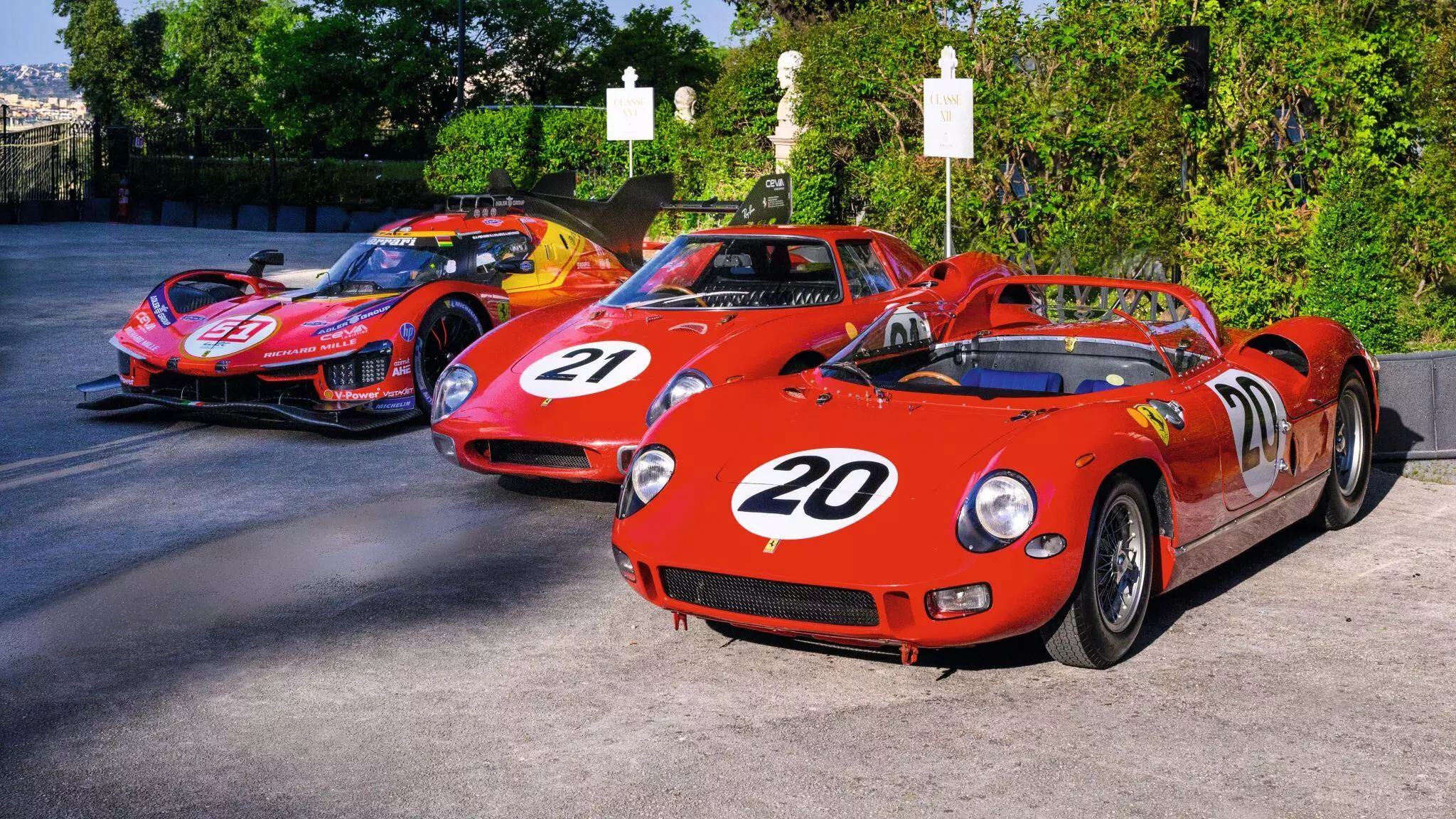
The individual stories were staggering. The 1938 Alfa Romeo 8C 2900B Cabriolet Stabilimenti Farina was first owned by Nino Farina, the first Formula 1 world champion. Only eight Alfa Romeo Giulia TZ2s were built between 1965 and 1967. The 1951 Ferrari 340 America Barchetta Touring pair had not been seen together since Le Mans over 70 years ago; now they shared the same patch of Roman grass as if no time had passed. The Ferrari 275P Fantuzzi, which won Le Mans in 1963, was joined by two more veterans: the 1964 Ferrari 250 LM and the 2023 Ferrari 499P, past and present in the same frame, separated by six decades and united by the same obsession with winning. Then there was the 1986 Testarossa Spider, the only factory-built open-top Testarossa ever made, created personally for Gianni Agnelli, then-president of Fiat, and fitted with a Valeo semi-automatic gearbox which can be operated in both manual and automatic mode to accommodate a leg injury. Owner Anil Thadani brought his 1963 Ferrari 250 GT California passo corto, one of only 56 built. “For me, it’s Ferrari versus other cars,” he said, and left it at that. There was nothing more to add. The Ferraris, in their varying shades, seemed to pulse with an inner life. Each engine start was a symphony, raucous and visceral, that vibrated in the chest of everyone standing nearby. These were not museum pieces. They were built to be driven hard, and they remembered it.
In frame: Ferrari 275P Fantuzzi, the car which won at the 1963 Le Mans – Photography by Anantara Concorso Roma
One car stopped you dead in your tracks. The 1968 Lamborghini Miura that opened The Italian Job – winding through the Great St Bernard Pass in that iconic first scene – was right there, in the flesh. An owner’s car, brought to Rome by someone who clearly understood exactly what they had. Paramount had requested an orange Miura for the shoot, and only this particular car was available. It is the finest work of designer Marcello Gandini and engineer Giampaolo Dallara, who mounted the sonorous V12 transversely to deliver racing-like performance in something you could theoretically drive to the shops. Seeing it in person, the low-slung silhouette and those iconic eyelashes around the headlamps looked even more radical than in any photograph. The orange paint caught the afternoon light in a way that made it look as if it were already moving. Two 1989 25th-anniversary Countachs stood nearby, each one proof that Lamborghini once built cars that seemed to belong to a decade that had not arrived yet. Those iconic Lamborghini scissor doors remain objects to lust after even today. (Lamborghini Miura photographed by Lamborghini)
The moment that belonged to Lamborghini alone, however, did not come from any owner. To mark the 60th anniversary of the first supercar, Lamborghini chose Rome and the Anantara Concorso Roma 2026 as the stage to unveil a 1972 Miura SV, fully restored and certified by Lamborghini Polo Storico. Three years of work went into getting every detail back to exactly where it was in 1972. The car was finished in Luci del Bosco with a Senape interior, and even the Bob-type exhaust tips were reinstated, named after Bob Wallace, the Kiwi test driver who pushed these cars harder than anyone on the roads around Sant’Agata and knew every one of their secrets. The deep, metallic-brown paint shimmered in the Roman sun, catching flecks of gold as you moved around the car. The interior was as supple as the day it left the factory, and you could almost smell the care that went into every stitch. Standing next to it, knowing what three years of work looks like when it is done this well, was quite overwhelming.
Among the Maseratis, the 1970 Ghibli SS turned heads throughout the day. Designed by Giorgetto Giugiaro, who was just 28 when it debuted in 1966, it carries the effortless authority that only a handful of cars ever manage. But the most extraordinary story of the entire weekend belonged to the 1932 Maserati V4 Sport Zagato. Known as The Sixteen Cylinder or Sedici Cilindri, it carries a four-litre V16 that set a world speed record in 1929, averaging over 246kmph on an unpaved road. One of only two ever built, rebodied by Zagato as a roadster, its history reads less like a logbook and more like a novel. When the Germans invaded during the war, the Dutch owner dismantled and hid the V16 engine in his bedroom for five years rather than let it fall into enemy hands. Five years, living with a world-record engine under the same roof, waiting for it all to blow over. That engine now sat in the Roman sunshine, back in this city for the first time in 90 years. Building a V16 in 1932 is almost impossible to get your head around. The engine alone is worth the trip to Rome.
One of my personal favourites was the only Bugatti at the show: the EB110 GT. It was the first modern supercar of the 1990s, featuring a quad-turbo V12, active aerodynamics, and a carbonfibre chassis built by Aérospatiale, the same firm that built the Concorde. That last detail took a moment to fully land. An aircraft manufacturer, responsible for the fastest passenger jet ever to cross the Atlantic, building the bones of a road car. The EB110 GT revived Bugatti under Romano Artioli and was unveiled in 1991 to mark Ettore Bugatti’s 110th birthday, quietly laying the groundwork for everything the Veyron and Chiron would become. Sitting low to the ground, its wedge-shaped profile and iconic horseshoe-shaped grille looked nothing like the flowing Italian classics around it. Away from the judging, people just talked. Italian wine and champagne flowed, strangers bonded over a specific chassis number or a particularly beautiful gear lever, and the stories behind the cars turned out to matter just as much as the cars themselves. Sometimes more. There is something about being in the presence of objects this significant that makes people want to share what they know, as if keeping the knowledge to themselves would somehow do the thing in front of you a disservice. After evaluating all 70 vehicles, the winners were announced. Notable class winners included the Alfa Romeo Giulia TZ2, Ferrari Testarossa, Lamborghini Miura P400, Ferrari 275 GTB and Bugatti EB110 GT.
In frame: 1932 Maserati V4 Sport Zagato, 'Best of Show' – Photographed by Anantara Concorso Roma
The Best of Show went to the 1932 Maserati V4 Sport Zagato, and nobody who had spent the day with that car was surprised. When the announcement came, a roar of applause echoed at the Casina Valladier. The owner guided the car gently through the crowd, the V16 idling smoothly, its presence commanding everyone’s attention. When it finally fell silent, applause lingered and cameras flashed, everyone eager to capture the moment. As I walked away from the Pincio hill, the city lights beginning to twinkle below, the sound of those engines stayed with me. All roads lead to Rome, and on this particular weekend, all the greatest roads in Italian automotive history led here too.