

Car Features
Bentley Torcal Passenger Seat Impressions
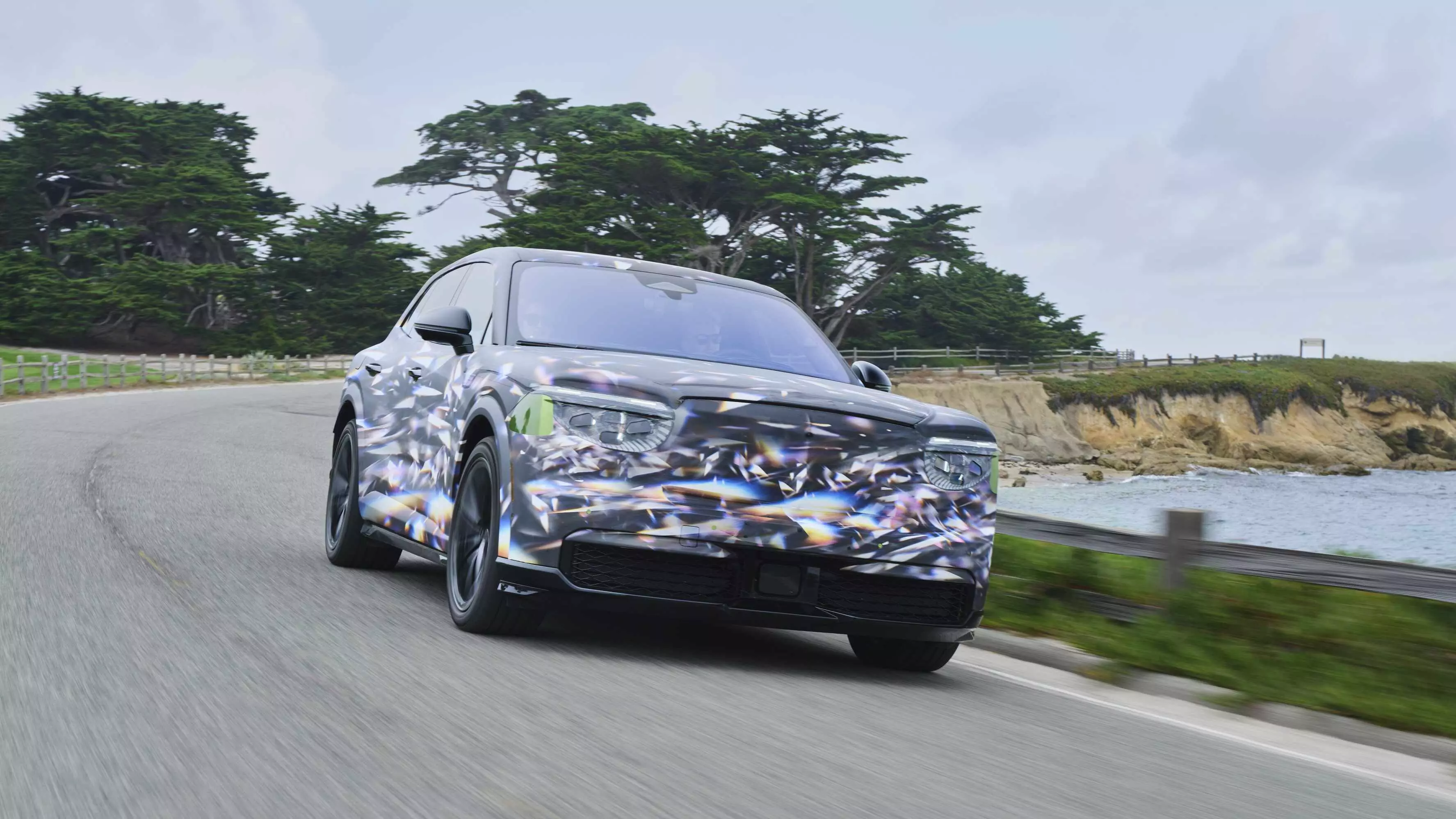
Before the first all-electric Bentely gets unveiled we slide into the passenger ride to get a feel of the Torcal
Thumb the starter and the Bentley Torcal fires into life with a strident whump, except the Torcal doesn't fire up anything apart from a bunch of electrons. This is Bentley's first full-electric vehicle, the most powerful Bentley ever, and it arrives in an uncertain market for luxury electric cars – hence the doubling down on perceived emotion. And what fires up your emotions better than appropriately strident noises?
The sound is one of the more interesting things about the fastest Bentley ever, but first the name. Torcal is derived from El Torcal de Antequera, a dramatic limestone landscape in Andalusia in Spain — but is also a nice riff on torque, of which, Bentley assures, the Torcal “will have enough, an unrelenting wave which is a historic pillar.” We're deep into an era where every new EV comes with a headline four-figure horsepower count .
Torcal is not a Bentayga on batteries
The Torcal sits on the VW Group PPE platform – Bentley calls its variant PPE-41C – which is also used by the Porsche Cayenne. This is the fourth model in the Bentley line-up and takes the brand into a new segment, that of a sport SUV. Bentley now offer their customers the “luxury of choice,” with full ICE, hybrid and now the EV, which is not an electrified Bentayga.
Rear seat knee and head room is generous (though the cabin feels more hemmed-in than the Bentayga), and the rear seats themselves are adjustable. Smaller footprint, same room – that's the packaging efficiency of a dedicated EV platform doing what it's supposed to do.
The sound of an ’80s V8
Bentley benchmarked the Torcal's sound profile against its own heritage fleet, specifically the Continental R from the 1980s, the longest-serving V8 Bentley ever built, chosen for its deep burble. To recreate that character authentically, rather than synthesising the soundtrack, Bentley had musicians play the rhythm of a V8 on drums, deliberately keeping the natural imperfections of a human performance rather than smoothing them into something mathematically perfect. That imperfection, Bentley argues, is what makes it feel real rather than manufactured.
It's not just theatre, either. The sound is mapped to torque demand from the motor rather than to road speed, which Bentley says is fundamental to understanding the physics of what the SUV is actually doing underneath you. There's a practical case for this beyond emotion: sound tells you when you're approaching the limit of adhesion. Switch it off and that feedback disappears. You lose a sense you didn't know you were using. Bentley also points to something less obvious: a silent cabin can make car sickness worse, so the sound isn't purely indulgent.
Three modes govern it – the standard Bentley setting where the sound is on by default, Sport mode that's noticeably more in decibels and throbs, and the option to switch propulsion sound off entirely. Tip into the throttle and there's a sense of the car waking up; at a steady cruise, it settles into something subtle rather than overwhelming. Even the indicator has had thought put into it – Bentley describes the sound as evoking a craftsman hammering leather, which is either the most Bentley line I've heard all year or exactly the kind of detail this brand has always obsessed over.
Screens are not luxury
Bentley's interior philosophy hasn't wavered for this car, and if anything it's been reasserted more forcefully now that the default industry answer to premium is a giant screen stretching from pillar to pillar. The Torcal doesn't go that route. There's no passenger-side screen at all, a conscious decision, Bentley says, because true luxury is the right blend of tech and analogue, and that means keeping things tactile. Physical buttons remain for HVAC, volume and ADAS controls. There's no organ-stop style air vent though; the Torcal uses air-vectoring technology and the vents themselves get digital adjustment in an (infuriating) manner as Porsche.
There is a curved vertical screen, and at a glance it looks like a shared part with the Cayenne – same platform family, after all, and Bentley doesn't hide that some hardware is shared. But Bentley insists the construction is different: a single-plane design unique to this car, not the two-plane Porsche component. At the centre of it all sits what Bentley calls the curation controller, described internally as the heartbeat of the car, the physical anchor point in an interior that could easily have gone all-digital and chose not to.
The wing motif, Bentley's oldest and most recognisable design cue, has been reworked and carried through the cabin, and the overall brief was clearly to make sure this reads as unmistakably Bentley first, with technology underpinning that identity rather than leading it. The cabin also keeps Bentley's traditional cocooning architecture, and unlike most EVs you will notice there's no flat floor.
One detail Bentley volunteered without much prompting: they've invested in neuroscience research to choose the colours used across drive modes. Sport is blue rather than the conventional red, because Bentley's research suggested blue energises rather than simply signalling aggression. Comfort mode leans into warm ambers – a fireside, cosy feel – while Refresh mode goes green, meant to evoke a connection with nature. Whether you buy the science or not, it's a level of deliberation most manufacturers don't bother explaining.
Porsche chassis with a Bentley character
Underneath, there's a fully active 800-volt suspension system with independent control at all four corners and no physical anti-roll bars. Two-chamber air springs keep the body level and occupants cosseted. The stated aim was a wide spread between comfort and dynamics with a quick transition between the two. Bentley benchmarked the comfort character against the Flying Spur and the dynamic character – pitch and roll specifically – against the Continental GT. The intent is that despite being an SUV on an EV platform shared with Porsche, the way the Torcal rides and corners should still feel recognisably and familiarly Bentley.
Rear-wheel steering is standard, at 5 degrees, and under-thigh support was flagged as a specific strength. Bentley could apparently make the Torcal corner flat if it wanted to, the technology allows it and Porsche has demonstrated it on the Nürburgring Nordschleife, but Bentley has deliberately chosen not to smash the Ring, engineering a degree of body movement that suits the car's character rather than eliminating it entirely. At a steady state there's proper isolation, with no head toss, which matters as much for a car like this as outright grip does.
Is the Torcal a proper Bentley?
I was sitting in the back seat, not behind the wheel, so this is far from a verdict on the Torcal. What I will venture is that there's an overwhelming sense of a company that has thought about what it stands to lose by going electric, and then spent enormous effort engineering that loss away. The V8 burble with imperfections built in to feel more natural. The tactility that isn't screens. The body control that isn't flat. Bentley decided early on which parts of its identity were non-negotiable and refused to let the powertrain change dictate the rest of the SUV.
Whether that effort translates into something as emotionally satisfying from behind the wheel as it appears to be from the passenger seat is the question I'm most looking forward to answering.
