

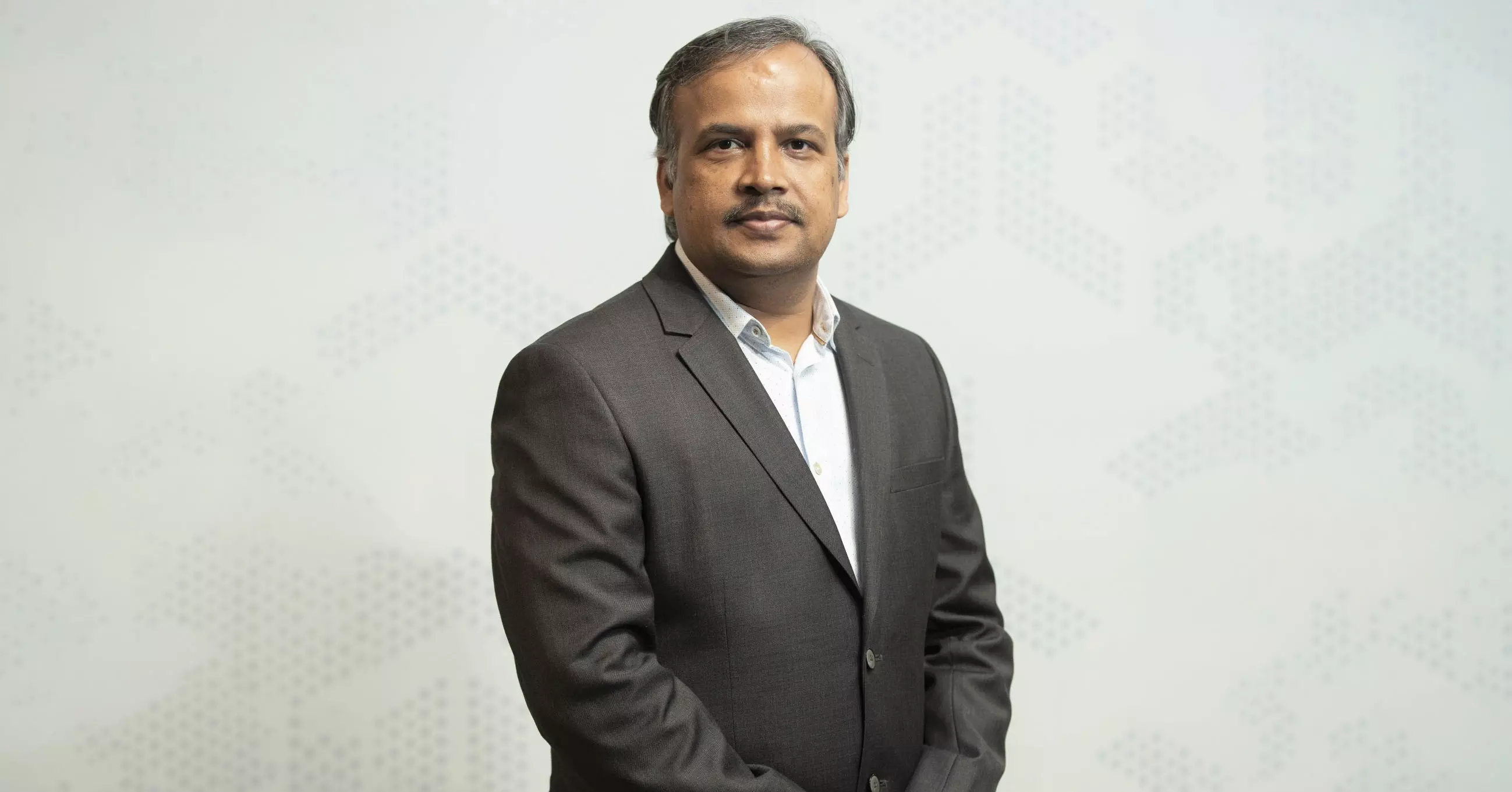
In conversation with Anand Kulkarni, Chief Products Officer, Head of HV Programs and Customer Service, Tata Passenger Electric Mobility
Interviews
“There was some feedback that we certainly have worked on,” says Anand Kulkarni on the Tata Punch EV facelift
In conversation with Anand Kulkarni, Chief Products Officer, Head of HV Programs and Customer Service, Tata Passenger Electric Mobility on the sidelines of the Tata Punch EV facelift launch
Tata Motors has launched a facelifted version of the Tata Punch EV, and the electric compact SUV has now received some cosmetic updates, with a majority of the update being focussed on the battery packs and electric powertrain. The Punch EV now comes with larger battery packs – 30kWh and 40kWh, as opposed to the earlier 25kWh and 35kWh options – and these batteries are also claimed to be more energy dense and efficient thanks to the use of prismatic cells. To gain more insights on the Punch EV facelift, we had a conversation with Anand Kulkarni, Chief Products Officer, Head of HV Programs and Customer Service at Tata Passenger Electric Mobility, on the sidelines of the SUV’s launch.
When asked about how long was the development process of the Punch EV facelift, Kulkarni said, “With the kind of content that we have improved on the car, it's a part of a regular product cycle and therefore some part of it started significantly earlier, but then there is some part of the car which probably started about a year back, and that's what we've been able to get to this programme. We usually don't specify the exact development times, but what I can tell you is that some part of it which is long lead started a little earlier and then there were some small lead parts that started about a year back.”
Kulkarni also spoke about the incorporation of customer feedback on the Punch EV with this facelift. “We launched the Punch EV almost about two years back and therefore we have a large number of customers who are happy with the cars. When we collected feedback from what was happening and how people were using the cars, there was a certain section of people who wanted to use this as the only car in the family, and that meant that they would have to drive the car longer distances, because most of the times people will use the car in the city – that's about 50-60 kilometres of daily driving. But for that once in a few months instance where they would either visit family and friends or they would go out on a vacation, they needed a car that could give them higher range. When you try and do that, you need to have better battery capacities, you need to have a car that is efficient, but more importantly you also need to have the ability to fast charge the battery so that when people stop for a quick pit stop, it becomes possible for them to get their car charged reasonably (quickly) to continue on their journey and therefore this was one of the primary motivations.”
The Tata Punch EV also gets changes to the powertrain, with the use of prismatic cells for the battery packs and the use of what Tata Motors refers to as the eTXV tech, and Kulkarni offered insights on both of these aspects. “eTXV stands for the electronically operated thermostatic expansion valve. It essentially is continuously monitoring on a real time basis what is the need for cooling, because in an electric vehicle, cooling is required both for the battery as well as for the passenger compartment. And when you look at these two areas as primary cooling requirements, how do you distribute the refrigerant or the cooling capacity between these two spaces becomes important. Because if you send everything to the battery, then there's a likelihood of discomfort in the cabin and vice versa. We don't want batteries to be under thermal stress, but at the same time you want a comfortable climate within the passenger compartment. The eTXV does exactly this, because it is continuously regulating, monitoring and altering the refrigerant flow between both these areas. It leads to more consistent battery temperatures and a comfortable temperature inside the cabin also and that's what people would want. When you maintain batteries at a more stable temperature it means enhanced life, enhanced longevity.”
Speaking about the need for this tech, Kulkarni explained, “Whether we like it or not, temperatures in our country can hit 45-50 degrees centigrade in peak summer. When you've driven for a certain time and the cells have warmed up to a certain extent and you are then trying to put a charger and charge at higher C rates, you need to make sure that the cells can be able to absorb or accept the level of fast charge that we would want, and therefore the eTXV becomes a very effective tool to be able to do that and that unlocks a significant condition for our customers.”
Kulkarni also spoke about the battery packs, which now make use of prismatic cells. “We have used a prismatic cell in this battery, and because of the higher energy density as well as the higher energy capacity of the cells, it's been possible for us to package extra battery capacity going to 40 kWh on this car, without having to expand on any other dimension. By virtue of this, the 10 per cent extra energy density, 15 per cent extra space and we've also optimised, as I said, with the cooling system or with some other parts within the battery, it's become possible for us to integrate a higher energy density, higher energy capacity battery into the car.”
The Punch EV is based on the Acti.ev platform, and when asked about the possibility of the Tiago EV also getting this platform in the near future, Kulkarni explained, “We have been on a multi-generational approach. The Punch.EV was the first vehicle to have moved on to the Acti.ev and therefore it has unlocked a certain benefit for us in terms of being able to manage and improve on battery capacities. The Tiago EV is a Generation 1 approach. It is a car that is doing exceedingly well in a segment. Therefore, while we may be able to do it, it might change the use cases because then it will clash with what is being offered here, and therefore you have to be able to look at what that product does for you in that particular market. So while technically possibilities abound, whether we do it or not is a matter of further deliberation.”
As our conversation drew to a close, Kulkarni also touched upon quality issues being addressed. “We've looked at all the issues that our customers might have faced and while from a performance and range perspective, there weren't too many issues to really take care of, there was some feedback that we certainly have worked on in terms of the BMS, in terms of the delta T and the delta V of the battery pack and certainly in cases of some erroneous conditions of intermittent can that would have happened and all of those are resolved now. everything is perfectly done so you shouldn't have any issues with the car,” he said.