

Interviews
Continental Tires India: Why the German tyre giant sees India as its next big growth story
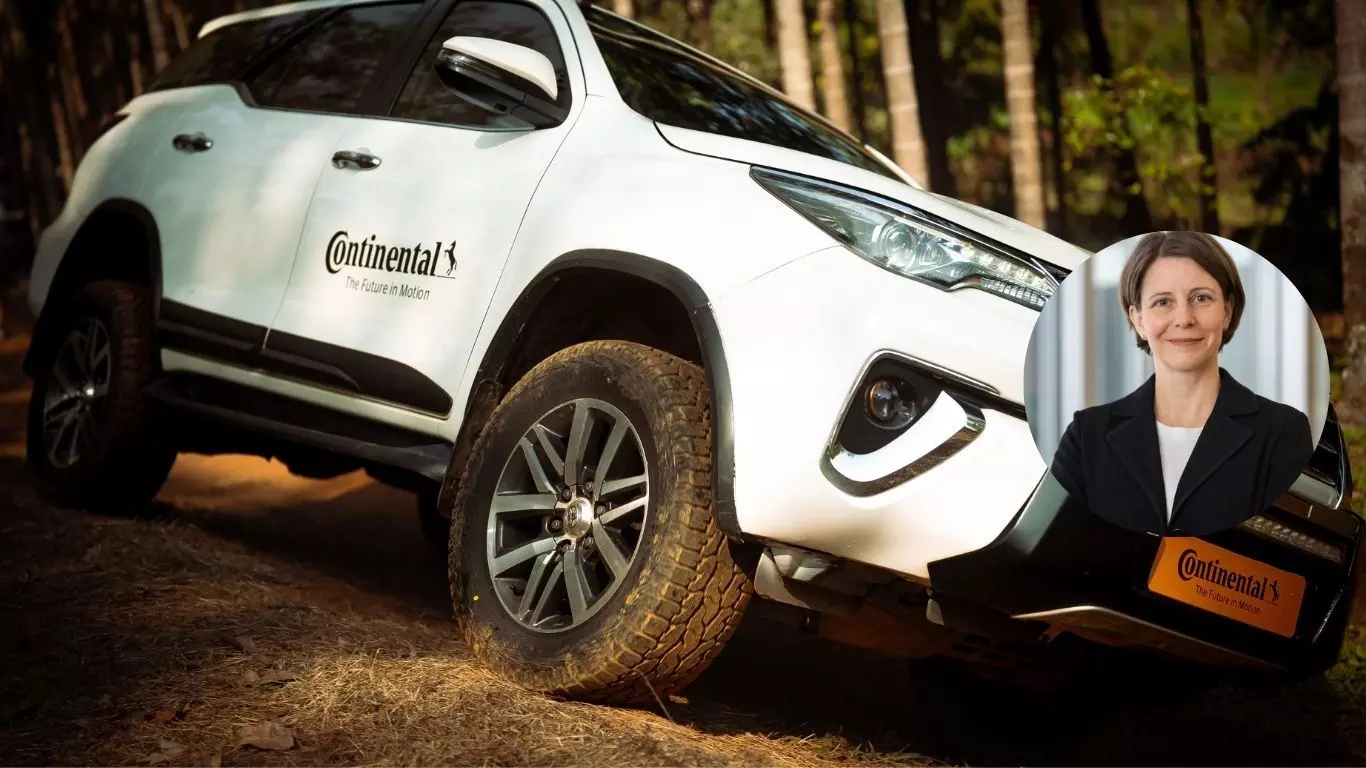
We caught up with Nevin Aslan-Özkan, the newly appointed Managing Director of Continental Tires India, and spoke to her about the tyre industry, the Indian market and their plans for India
When most enthusiasts discuss upgrading their cars, conversations usually revolve around power, suspension or styling. Tyres, despite being the only contact patch between a car and the road, often remain an afterthought. But that is changing rapidly in India, and Continental Tires believes the country is approaching a major turning point in tyre awareness.
From SUVs and adventure-focused vehicles to EV-compatible touring tyres, the German tyre manufacturer is betting heavily on India’s evolving automotive landscape. And with newly-appointed Managing Director, Nevin Aslan-Özkan at the helm, Continental says India is no longer just another market, it is becoming one of the company’s strategic global focus regions.
Continental’s current tyre range in India
Continental’s passenger vehicle portfolio in India currently revolves around three core product families – ComfortContact, UltraContact and PremiumContact tyres. Alongside these are the company’s CrossContact products aimed at SUVs and vehicles that regularly venture off-road.
The latest addition to the line-up is the CrossContact A/T2, an all-terrain tyre that Continental globally introduced with India playing a key role in its launch strategy. The company currently caters to wheel sizes ranging from 13-inch to 20-inch applications, allowing it to serve everything from hatchbacks to premium luxury SUVs.
For Indian buyers, this wider portfolio reflects how quickly the market itself has transformed. Passenger vehicles are getting larger, heavier and more sophisticated, and tyre requirements are evolving just as rapidly.
India’s SUV boom is changing the tyre market
“I find it very interesting compared to other markets. Most of the numbers are SUV, crossover or 4x4s. These cars obviously by definition come with certain requirements.” - Nevin.
According to Nevin, nearly 60 to 65 per cent of new vehicles entering the market now fall into SUV, crossover or 4x4 categories. That shift has fundamentally altered the type of tyres Indian consumers require. SUVs demand tyres that can deal with additional weight, higher ride heights and varying terrain conditions while still delivering refinement, stability and comfort. At the same time, buyers are increasingly expecting premium driving experiences, especially in higher-end segments.
Continental also sees significant opportunity in India’s growing luxury car market. While still relatively small in overall volume, the premium segment is expected to grow steadily over the next few years, bringing with it customers who are more informed about tyre performance, safety and refinement.
“India is no longer a future market. The change is already here.” - Nevin
Having previously worked across markets like Germany, Turkey, China and the UK, Nevin describes India as one of the most dynamic automotive markets she has experienced.
What stands out most, according to her, is not just the speed of growth, but how rapidly consumer behaviour is evolving. She believes Indian buyers today are far more aware of the relationship between a car and the tyres fitted to it. That awareness is especially visible online. Buyers researching replacement tyres are increasingly comparing specifications, understanding tyre categories and evaluating products based on driving style rather than simply choosing the cheapest available option. For Continental, this growing awareness creates an opportunity to position itself as a premium, technology-focused brand instead of competing purely on price.
Why India got the CrossContact A/T2 first
Perhaps the clearest sign of India’s importance to Continental was the global debut of the CrossContact A/T2 in the country earlier this year.
“We as a team are super excited and super proud that we have launched the CrossContact A/T2 at the beginning of the year in Goa on our special trip day” - Nevin.
The tyre is designed for customers who split their time between highways and trails – owners who use their SUVs during the week for commuting but also head out on weekend adventures. Continental says India was chosen because the market perfectly reflects the growing global trend of “adventure-led driving”.
The target audience for the A/T2 is fairly specific: SUV owners between roughly 25 and 44 years old who want versatility without sacrificing daily usability. These are buyers who treat their cars as lifestyle tools, equally capable of office commutes and weekend escapes.
How Continental decides which tyres India gets
For a global company, deciding which products make sense for India is a balancing act between worldwide technological strengths and local market realities.
Continental says product planning starts with analysing how Indian driving habits and vehicle trends are evolving. Instead of simply pushing global products into the market, the company studies consumer needs, road conditions and category growth before deciding which tyres to introduce locally. The company also stresses that Indian-market tyres must retain Continental’s “German technology DNA” while being engineered specifically for Indian requirements. That means adapting products for varying climates, rough road surfaces and the country’s unique mix of urban and adventure driving.
What Indian tyre buyers actually care about
According to Continental, today’s premium tyre buyer is no longer looking at tyres as a basic replacement item. Instead, the focus is shifting towards value, performance and driving experience.
Safety remains the biggest priority, particularly braking performance and grip in wet conditions. Continental says these are among the strongest selling points across its product range.
Comfort is another major factor, especially with the rise of EVs and premium SUVs where cabin insulation and tyre noise become far more noticeable. Continental emphasises that all its tyres are EV-compatible, with low rolling noise and refined driving characteristics becoming increasingly important to customers.
Performance-oriented buyers also pay close attention to steering feel, cornering stability and overall driving precision – areas where Continental believes its engineering expertise helps differentiate the brand.
And then there is durability. Indian road conditions remain demanding, and buyers still expect long-lasting tyres that can withstand rough use while offering good value for money.
Continental’s India plans: more reach, more premium tyres
Continental currently operates more than 200 CPD stores across India, but the company says expanding its sales and service footprint remains a major priority.
The company is also investing heavily in local manufacturing. Last year, Continental announced a €10.5 million investment into its Modipuram plant aimed at enhancing its ability to manufacture higher-end tyres, including products up to 23-inch sizes.
Production capability upgrades and capacity expansion are expected to continue over the next 18 to 24 months, with Continental indicating that future investments will depend on how quickly the Indian market evolves.
Sustainability and the future of tyre manufacturing
Tyre manufacturing is often criticised globally for its environmental impact due to high material and energy consumption. Continental says sustainability has therefore become a core part of its long-term strategy.
The company’s approach revolves around what it calls the “magic triangle” of reduce, reuse and recycle. This includes reducing raw material usage without compromising tyre performance, reusing recycled materials like carbon black and even incorporating recycled PET bottles into tyre manufacturing processes globally. Continental is also actively exploring recycling and retreading solutions, especially in commercial applications.
In India specifically, Continental says its manufacturing operations do not use coal for energy generation. Instead, the company relies on biomass and solar energy solutions while also working with sustainably managed rubber suppliers globally.
The bigger picture
“It's not a market that is changing. It's a market that has come to an inflection point where we see how it has changed, and we see positive momentum going forward. We want to serve the market with our German technology, with a strong focus on safety, comfort, and performance” - Nevin.
For Continental, India’s tyre market is no longer simply about chasing volume. The company believes the country is entering a new phase where buyers are becoming more informed, vehicles are becoming more sophisticated, and tyres are finally being recognised as a critical part of the driving experience. And as SUVs, EVs and adventure-oriented vehicles continue to dominate Indian roads, the battle for premium tyre buyers is only just beginning.