

“India is strange, India is not growing,” says Federico Foschini, chief marketing and sales officer at Lamborghini
Adding to Lamborghini’s frustration with Indian taxation is the India-EU FTA that excludes hybrids, as Federico Foschini, chief marketing and sales officer at Lamborghini explains
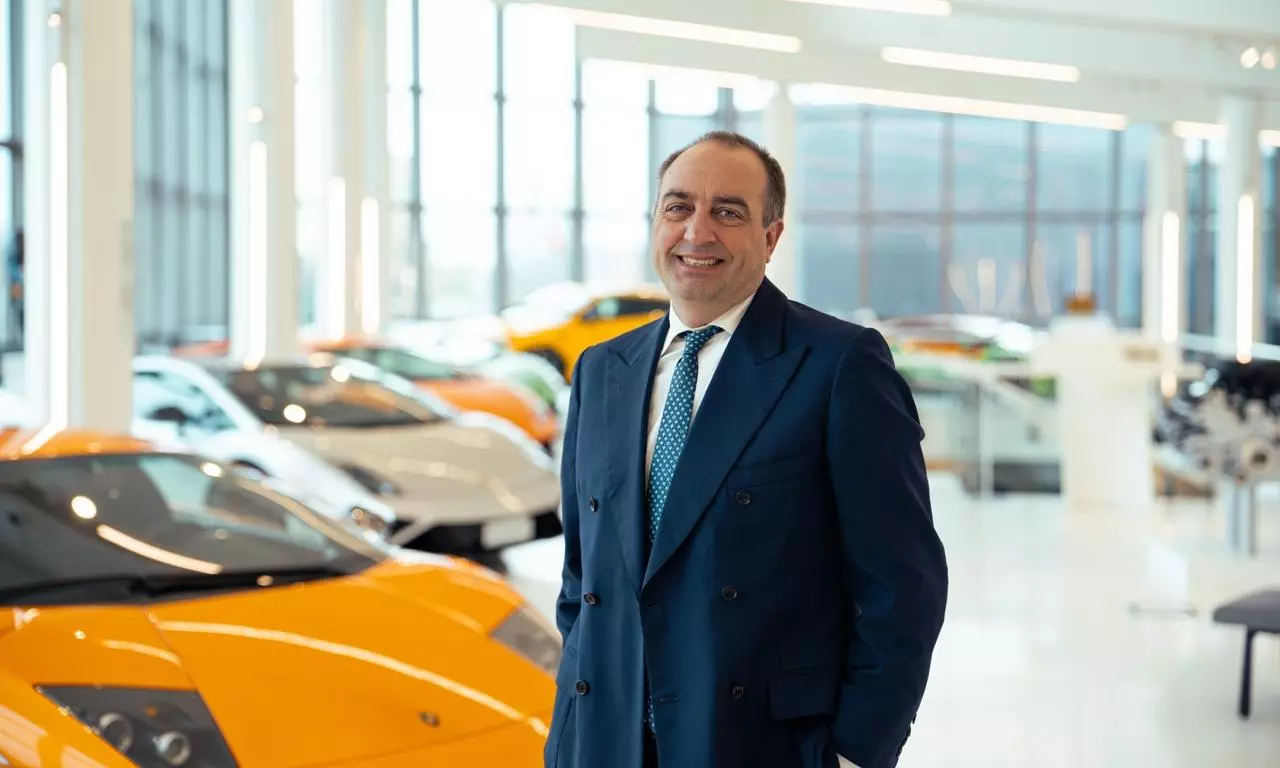
In conversation with Federico Foschini, chief marketing and sales officer at Lamborghini
In conversation with Federico Foschini, chief marketing and sales officer at Lamborghini
The India–UK FTA brought down prices of Range Rovers, Aston Martins and Bentleys, and the India–EU FTA is set to bring about a similar correction to cars imported from Europe. But both FTAs exclude electric vehicles and hybrids – a serious complication since everybody is moving to hybrids for their gains in performance and reduced emissions. Lamborghini is hit the hardest with its entire portfolio moving to PHEVs, the entire range out of the ambit of the FTA. We caught up with Federico Foschini, chief marketing and sales officer, Lamborghini who clarified India won’t, “Have the same growth we had last year.”
Lamborghini is hit the hardest with its entire portfolio moving to PHEVs, the entire range out of the ambit of the India-EU FTA
It is a threat
“The difference that will be created by this new policy [EVs and hybrids out of scope of India-EU FTA] is the 40 per cent [price gap] between ICE that can get the incentive against BEV and PHEV. In a market that’s already challenging for taxation this is creating an unfair competition between brands and between products. Since we [Lamborghini] have moved to PHEV, that is creating a big disadvantage. We need to reconsider what the market is able to do based on this kind of premise.”
The transition to PHEV and higher performance is driving higher prices
“It's a matter of understanding the value of the car more than understanding the price of the car. When you consider the Temerario at the apex of the segment, it's not a matter of price, it's a matter of value. If someone is thinking of it as a follow-up to the Huracan, that's not the case, as the Revuelto is not just a follower of the Aventador. For the Urus, we did a major step in terms of performance, in terms of driving technology and so at the end of the day it is just pricing.”
No dealer expansion with this kind of taxation
“It doesn't make sense to increase the number of dealers. We were looking for another opportunity [dealer] but this was a couple of years ago when we overcame the 100 cars [annual sales milestone] for the first time. We were looking for an additional 4 cities, but now I don’t see it worth expanding the dealer network unless there’s clarity on taxation.”
For us electrification is hybridisation
“Hybridisation is a way to better performance. At the moment we don't have [EVs] in our medium-term radar. I'm not disclosing a long-term strategy but we have decided that in 2030 we will still see Lamborghini with maybe four models, with the fourth model being a GT 2+2, without a BEV. All will be hybrid.”
"In proportion to market share that we have in the rest of the world, it was much bigger in India," says Federico Foschini, chief marketing and sales officer at Lamborghini
We were there [in India] since the beginning
“We were the one that maybe did the biggest growth in the last few years. Also in proportion to market share that we have globally, it was much bigger in India thanks to the Urus. It's clear that the other point of India for super sports cars is also the quality of the roads. In some cities it's difficult to drive one but the Urus is suitable for this kind of terrain.”
We are always waiting for this explosion [in growth]
“It's been 10 years that I'm waiting for an explosion that’s not coming, and if I look at other segments of luxury, I see that the number of retail points are not as big as I'm expecting from a country of such potential. In Mumbai and Delhi there are just two selling points of Louis Vuitton and Chanel. It's strange because if you go to Tokyo there are 50 points just in the city of Tokyo for Gucci. There is a correlation between automotive luxury, fashion and watches.”
"We were waiting for something that was reducing the [tax] load on us, on the brand, and after we found something increasing the disadvantage, I think it's not fair," says Federico Foschini on the India-EU FTA
We are always pushing on India
“With 100 plus cars, we have at least 3 people dedicated [to India operations]. The point is that this taxation which was already an issue at the start is now creating a lot of, let's say, upsets. We were waiting for something that was reducing the [tax] load on us, on the brand, and after we found something increasing the disadvantage, I think it's not fair. If the logic is protection against foreign automakers, this is something we have to live with, but for sure we have to reconsider the market and how it reacts. We cannot be competitive going under a minimum level of profitability.”
