

Interviews
“It's very important that products are true to the brands. People buy brands.”
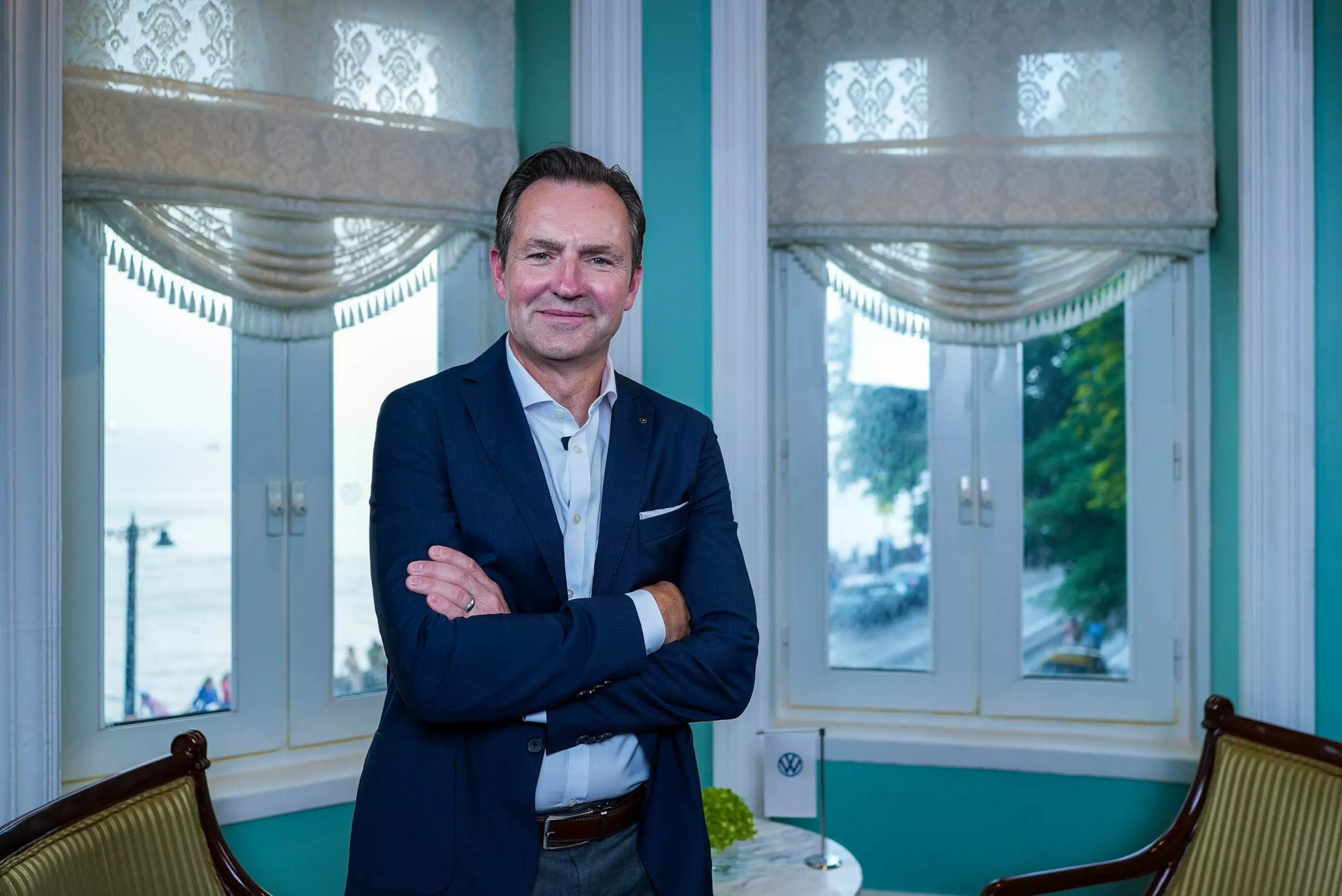
A conversation with the CEO of Volkswagen Group, Thomas Schafer, on Volkswagen’s upcoming cars and the roadmap for India
Looking back at the last five years, India 2.0, do you view it as a success? What are your views on it?
“I got to see it from two companies' perspectives. I was still with Skoda five years ago, running Skoda and then changing four years ago to Volkswagen. I must say it was a bold move at the time, a significant investment and bringing two brands together. Wow, when I first got into the project, I thought that's going to be quite something for India, but the team delivered fantastically and success was there in the market. Something great to build upon going forward.”
When does Volkswagen’s ‘Kylaq’ come out?
“Happy to report that we finally made the absolute necessary decision to bring a sub 4-metre compact SUV. It will arrive next year. A fantastic car, true Volkswagen, something that I think India can look forward to. I'm very excited to finally bring it to the market.”
Why is it coming so late?
“Yeah, look, in business you always have to make decisions based on your investments to see when is the best time to bring it. Skoda ran a little bit ahead with their product and now it's time for us to come to the market. There's room to play domestically, but also for export. We're going to use that to the best.”
How will you differentiate the Kylaq from your subcompact SUV?
“It's very important that products are true to the brands. People buy brands. They don't buy a group product. They buy a Skoda or a Volkswagen or whatever from the brand, from the group. At the end of the day, you've got to focus on the brand, what the brand stands for, and then that has to also reflect in the design of the car, in the product. You mustn't save too much on investment and not differentiate enough. In the long ago past, you might have done that, but to give you a good example, in Europe we just launched the European compact car family, an electric car family. Fantastic four cars for three brands, totally different, the Id Polo, the Coopera Valta, the Skoda Epic, for example. They share 80% of the components, but in front of the consumer, touch and feel, user experience, drivability, totally different cars, which are exciting for each of the brands. That's the way to go. That's the same way we're doing it now globally, if we ever share bases and platforms.”
Will the subcompact SUV and the next generation of Taigun and Virtus have the same approach?
“Absolutely. You've got to be differentiated enough. Absolutely share costs to make it affordable for the consumer, but at the same time be brand specific.”
What's your electrification roadmap for India?
“Electrification is gaining momentum in India, which is fantastic to see, especially lately. Obviously, a little bit driven also, not only by policy, which is good, but also served by the conflict in the Middle East, the cost of petrol and so on. At the same time, you have interim developments of CNG, of flex fuel, of diesel that's coming back in the play. The question is, where do you fit this all in and what is the right plan for the next five years going forward? That's what we're working on at the moment. Good news is we've got it all somewhere. Flex fuel, for example, we are super successful with it in South America, plenty of models all available, so not finished yet, especially lately in the last three months. It's been dynamic in the Indian market that needs to be observed carefully.”
Is there a future for a localised electric platform that you all use here in India?
“There must be. If you want to comply going forward in CAFE and so on, you need to localise. The question is, what needs to be localised? What kind of platform it is? You've got to be cost efficient in the competitive market that we are in. At the same time, if you do something like this, we usually do it for the group. We localise and share it between brands because it's a high investment to get an electric platform into the country. It better have volume.”
Does CNG feature on Volkswagen's roadmap over the next few years?
“We are looking at the moment into CNG to see if it makes sense. It was something that almost moved to the back of our head for a while. It's come back because of obvious reasons. We are investigating and to see if we find an OEM fitted solution for it, but not quite finished with it.”
What about diesel?
“Will it come back in sizable numbers or will there be opportunities to bring certain models with a diesel drivetrain every now and then? FTA (Free Trade Agreement) would be a fantastic vehicle for that. If Europe and India FTA comes into play, you can add certain models to the play to offer it to the consumers to localise it, see if by the time you localise it, the market is still there for it, if it's a business case.”
What is your strategy with the FTA?
“It has two aspects. The one aspect is we will further our really good production base in India. We have a great setup here. We're going to strengthen R&D further. India can benefit from the FTA. First of all, from export opportunities. We've exported successfully from India to over 40 markets in the last couple of years, even to automotive countries like Mexico, we've exported cars and both benefited from it. So there's a huge opportunity for India in that sense. At the same time, for the Indian consumer, you can bring in niche models, contest the market. In the showroom, you have a better visibility of a portfolio and you can present your brand even better. I'd say both cases win-win for the Indian consumer going forward.”
Will we see more of the GT and GTI products coming into India?
“It's legendary. We celebrate 50 years of GTI this year. It's a worldwide phenomenon. When we brought the GTI as a few cars here to India, it was sold out in minutes. There's an appetite for it. Just got to get it and do it right now that it arrives here and it's also feasible. That's why we work in Europe very strongly now in our cost base. We have to face the competition globally and make sure that we are cost competitive. I know that we're technologically competitive, but we also need to be cost competitive going forward in this game that's playing out at the moment.”
Plans for local partnerships
“I said earlier, India is super important for us from a market, from a potential going forward, using the human capital that is so fantastically prepared for IT, R&D. Do much more in this country. Lowers our cost base. Fantastic. At the same time, we have room to grow in India as a brand and as a group and then with that, you explore relationships. We do that at the moment. It's not true, but we're not finished with it. We're in good discussions. It has ups and downs. You share the costs, but you also share the profits. You need to balance it, see what we can do. We've been successfully doing joint ventures in China for 40 years. It's given us market leadership. It's something to explore.”
What do the next five years for the Volkswagen brand look like in India?
“The first steps are done. The sub 4-metre compact SUV, and the FTA going forward. Now we're working on an electrification strategy. What's next in this? I think we're going to see growth, which is necessary, and get the organisation to a level that we can all be proud of. We have this strong India organisation that's becoming a global player for us in many more senses than today.”