

Motorsport Features
The Buddh International Circuit hosts an F1 car after 13 years with Karun Chandhok
The grandstands at the Buddh International Circuit echoed with the shrieks of an NA V8 F1 engine
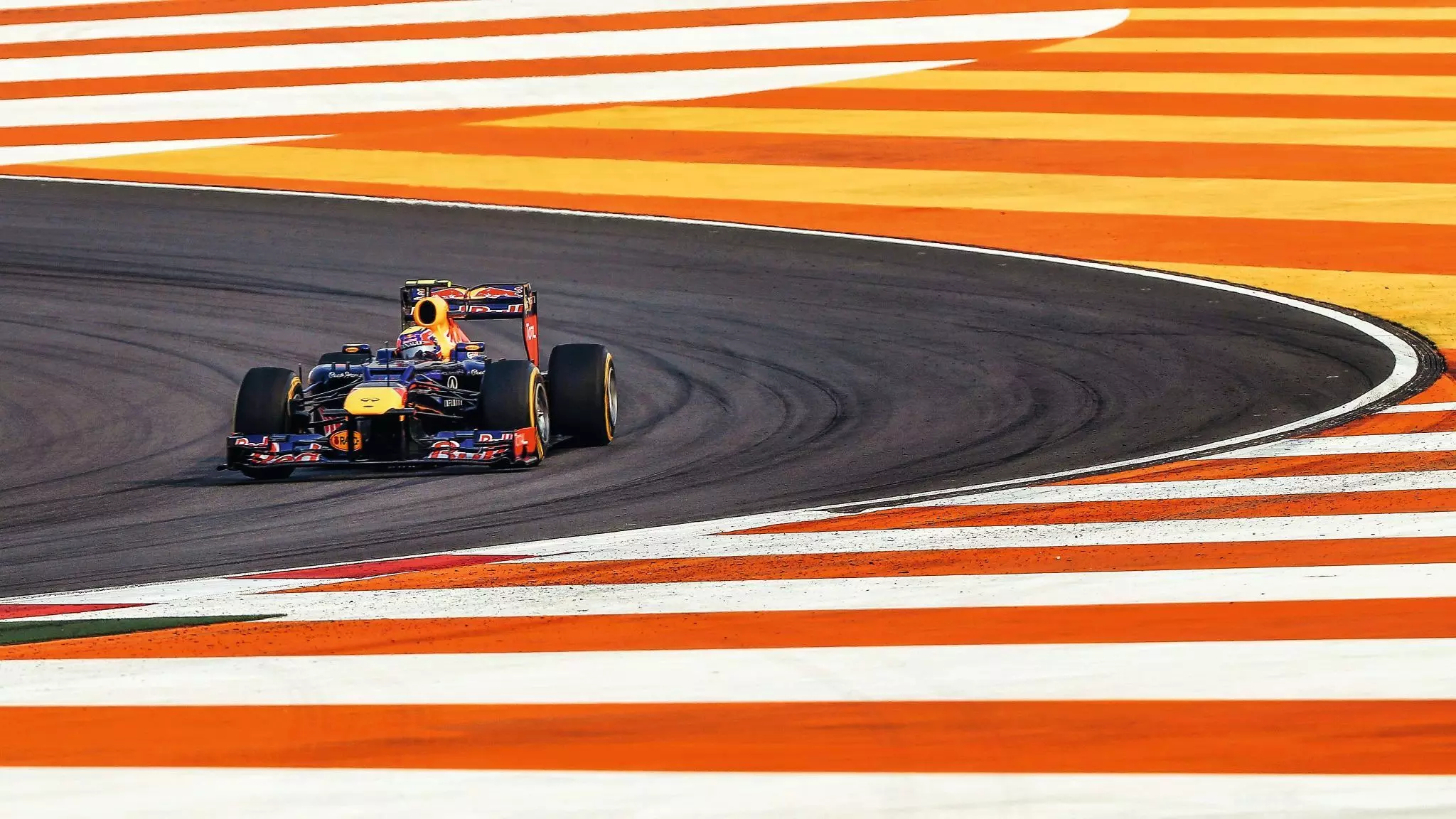
“I am personally engaged in bringing Formula 1 back into India, and I think India has a lot of potential, there is a lot of following in Formula 1 from India.” These were the words from Karan Adani, speaking at the 70th Foundation Day of All India Management Association (AIMA). This reverberated in the ears of all Indian F1 fans. The Adani Group is the front runner to take over the troubled Jaiprakash Associates Ltd (JAL) – the flagship company of the Jaypee Group, which currently owns the Buddh International Circuit (BIC). Trust the Adanis to make sure their balance sheet does not carry dead assets, which BIC had become for JAL. We witnessed the return of Red Bull Racing’s RB8 F1 car with Karun Chandhok behind the ’wheel.
F1 car back in India
As if by divine intervention, the same week that Karan Adani made his statement, a 2.4-litre naturally aspirated F1 V8 was fired up in the pitlane of the BIC. This was the first time an F1 car will be driven at the BIC since F1’s unceremonious departure from India after 2013. You will remember the iconic visuals of Sebastian Vettel bowing to his RB9 after securing the race win and the driver’s world championship at the Indian GP. This made Noida only the 35th city around the world where a F1 driver’s title was decided, since its inception in 1950.
Bringing things back to the present, this wasn’t the RB9 that won in 2013, but the RB8 that won the race at BIC (and the championship) in 2012. It might not look familiar, but that’s because it has been wrapped in the Racing Bulls livery for Arvid Lindblad, who is of half-Indian descent, to pilot at the Red Bull Moto Jam. However, before he takes the ’wheel, the last Indian driver to race in F1 will give the car a proper go at the BIC.
“The sport has changed a lot, the cars have gotten bigger, heavier, much more complex with the hybrid systems in particular. But there’s no doubt, the sound of a V8 or a V10, it gets people excited, right?” said Karun Chandhok as we chatted in the pitlane. He wasn’t wrong. The Renault engine behind the RB8 revs to a ear shattering 18,000 revs. The moment the engine fired I was instantly transported back 14 years to my time as a track marshal at the Indian GP. My skin prickled – a physical reaction to the sheer adrenaline and the raw, melodic violence of the engine note. Even from the pitlane, the car’s roar followed it around the entire circuit, a trait unique to an F1 car in this circuit. As it screamed past on the pit straight at full throttle, the ground shuddered beneath my feet and my ears reached their breaking point; it’s the kind of sound that doesn't just fade – it echoes in your mind for days.
Even with Karun keeping things “sensible” in this modern trackside atmosphere was transformed. Exiting the corners, you could still hear that iconic, gravelly ‘bag of nails’ rasp – the unmistakable signature of the infamous blown diffuser. “I got three runs (around the track), I think we got to 307kmph down the back straight without DRS. What people maybe don’t realise is F1 cars don’t work if you drive slow. The tyres don’t work, the brakes don’t work, nothing works. I was driving sensibly, you know, it’s not flat out, but in a way that you want to enjoy it,” shared Karun, possibly relieved that the car was still in one piece.
The RB8 F1 Car
Back in 2012 though, Sebastian wasn’t driving the RB8 to enjoy it – he was driving to win. And winning in the RB8 proved to be a harder challenge than initially expected. The 2011 RB7 turned out to be a dominant car in the hands of Seb Vettel, with the hot blowing of exhaust being used to give the car added downforce. This also required Red Bull Racing to work with Renault to ensure the release of hot gases even when the driver was off throttle. Together they managed to keep it just within the FIA’s ever changing rules and Sebastian wrapped the championship even before they came for the Indian GP. 2012 was a different matter.
For 2012 the regulations were announced that greatly restricted where the exhaust could be placed. So Adrian Newey, the legend responsible for car design at RBR, worked with Reanult to find new ways of positioning the exhaust to try and get the gas to flow down in the area by the rear tyre. This downforce effect was so powerful that Adrian simply did not want to let it go. So they launched the RB8 with a Coke bottle shape and a benign exhaust position that did little other than blow the beam wing a bit. The plan was to introduce new, wider aero parts by the end of the last testing session, which would reduce the overall downforce. But Adrian reckoned that the extra downforce they would get with ‘exhaust on’ for traction out of the corners would outweigh the loss.
The RB8 F1 car was a beast which was hard to tame, but Vettel used its innate resilience to last through the 2012 World Championship
The transition was far from smooth. Vettel found the RB8 inconsistent. During testing it was evident that Red Bull had lost its pace advantage to McLaren and Ferrari. But with newer parts through the year, the lost pace started coming back. But reliability issues began plaguing the team – specifically recurring alternator failures that Newey attributed to a lack of work from Renault and Magneti Marelli. As the season entered Round 14 in Singapore, Vettel had only won one race and trailed Fernando Alonso by 39 points.
Then, the momentum shifted. Vettel mounted a legendary charge, winning four consecutive races in Singapore, Japan, Korea, and India – his last win of the year. Despite starting from the pitlane in Abu Dhabi to finish third, the title fight pushed to a rainy Brazilian finale. Entering the race, Seb was only 13 points ahead of Alonso. As per form, the Interlagos climax was pure chaos. On Lap 1, Vettel was hit and spun, facing the wrong way with a crushed exhaust pipe and a broken radio. In a mangled car, he fought through the field in treacherous conditions. While Alonso finished second, Vettel’s gritty P6 was enough to secure his third world title by a narrow three-point margin. The RB8 wasn’t the most reliable or dominant car Newey ever built, but its resilience defined an era.
The Indian GP
“You have to rewind a little bit, because I think it goes back to 2002, when we first met Bernie. And he was keen on expanding Formula One to Asia. So it started in Malaysia, in 1999. And then he was like, okay, what do we do about India?” said Karun, reminiscing how the India F1 story came to be. This might come as a surprise to you but Vicky Chandhok helped in getting a TV rights deal to get F1 races broadcasted on Doordarshan. “We had to buy two hours of advertising to put that on TV. It was crazy. I remember they cancelled one race because they wanted to show Amar Akbar Anthony again,” Karun laughed. Bernie Ecclestone was keen on having an F1 race in India and met with some people in Bangalore, Chandrababu Naidu (then CM of Andhra Pradesh), but he somehow sensed seriousness with the Jaypee Group – because they outright paid the rights fee for two years. And that was the first time somebody had done that. Can you imagine, it only took a money deposit to convince Bernie? Dig deep into his life, and you will find money to be the single largest factor of his attention.Karun Chandhok with the RB8 F1 Car in its Visa Cash App RB (VCARB) F1 Team livery
Coming back, the F1 circuit project was underway on the outskirts of Noida. “It was a huge job, teaching everyone there, they were an infrastructure company, they had no idea we had to recruit 1100 people. They had no idea about the cost of all of that stuff. They had no idea in terms of commercial deals, we had to get very involved in negotiating on their behalf with that one,” said Karun, with wrinkles forming on his forehead, like they probably did in those days.
At the time Karun was racing in GP2 (what has transformed into F2 today). Little known fact is that Karun actually started his GP2 career with Red Bull racing (2007-08). Between him and Vicky, they visited the under-construction BIC almost every three weeks to monitor the progress. Building a ‘Grade A’ race circuit is a huge task on its own, it’s larger when the promoter (or the country in question) has never done anything like that before.
“I remember once with my dad, Bernie’s right hand man, Pasquale (Lattuneddu), had come to visit. And the Jaypee guy said, we don’t have any of our own hospitality to commercialise, what do we do? “So in those days, it was before WhatsApp and FaceTime and stuff, we had Skype. We called Bernie from the grid. And he looked up at the top of the grandstand, and asked, ‘What are those?’ We said, they’re the commentary boxes.
“And he says, ‘No, not anymore. They’re your hospitality.’ So until now, my commentator colleagues and friends have not forgiven me because they were moved to an underground bunker with no windows next to the kitchen for the commentary,” Karun laughed as he recollected the conversation. Alas, after three years of running, the Indian F1 contract was cut short due to differences between the government and Formula One Management about the taxes, prize money and similar money related issues.
Red Bull F1 in India
Red Bull F1 racing team is undisputedly the most successful F1 team in India. In all the three races held in India, RBR and Sebastian Vettel have stood on pole and won the races. And they do not let the fans of F1 forget it either. Of the brands in F1, it has to be said that Red Bull has done the most of all to keep connected with F1 fans in India. Sure Mercedes shows off an F1 car every two years at the Auto Expo (they didn’t even do that at the last iteration), but it is Red Bull who have done a few show runs including the famous drive at Khardung La and at the Bandra-Worli Sea Link in Mumbai.
In frame: Vicky Chandhok (L) with Bernie Ecclestone (R)
Karun driving the 2012 Indian race and championship winning car at the BIC tops it all. But it has not been just about the car. Red Bull Racing has one of the most sought after young driver programmes that has already seen Seb and Max Verstappen as champions and has also produced multiple race winners. Among Indians, Karun Chandhok and Jehan Daruvala have also been a part of the programme with Arvid Lindblad now being the latest to make it to an F1 seat. No other team on the grid has a stronger link to Indian drivers.
F1 to return to India?
The hype is real. While we’ve heard similar rumours a few times since 2013, the timing finally feels right. The current government is aggressively courting foreign investment in future-facing industries, and within the automotive world, no platform is more forward-thinking than Formula 1. Beyond the sport, it offers billion-dollar brands direct access to India’s massive market while acting as a catalyst for tourism, infrastructure, and local economic growth. To add fuel to the fire, the current geo-political circumstances mean the three races in the Middle East are currently in doubt, at least for the 2026 season. F1 needs to spread its wings to other countries in Asia to divide its eggs and it needs the Asian countries to be able to make it happen. Karun breaks down what’s needed for the GP to actually take place in India. “First is, for anything to happen of this scale, you need will, you need someone who wants to do it. Someone who has a passion for it and a willingness.
“Then you’ve got basically four blocks that you need to sort out. One is, first is who’s going to pay for it? What’s the funding model? Is it government funded? Is it privately funded? Is it joint venture, private public sector like Singapore? So first you need to sort out who’s paying for it. “Second, you need to sort out the legislative side. How’s it going to work with customs, clearances, visas, tax – the historical taxation issues need to be resolved. We need to make sure it doesn’t happen again. There’s a whole load of work on the legislative side. “Third is the infrastructure. You know, I was at BIC, the track itself, as you can see from the onboard, looks great. Like the actual ribbon of asphalt, I think is fine. And there’s no real problems there. A little bit of maintenance. But the facilities will need to be upgraded. “F1 has got 24 races right now. It’s in high demand. There are other countries queuing up. So how are you going to get a slot on the calendar? So that’s the four blocks of this puzzle that need to be put together.” Karan Adani, over to you.