

Motorsport Features
Racing! The AI Way: 2025 Abu Dhabi Autonomous Racing League
Pushing the limits of AI, fully autonomous AI-powered cars race again at the Yas Marina Circuit for the 2025 Abu Dhabi Autonomous Racing League
Last year, I wrote that the Abu Dhabi Autonomous Racing League represented a seismic shift in motorsport — and that wasn’t an exaggeration. Since then, autonomous racing teams from across the world have spent 19 months refining their AI, algorithms, and code to go faster and smarter than 2024. A cumulative 3000 laps, nearly 10,000km, and petabytes of data later, the evolution is staggering.
Before going any further, let’s settle a misconception: autonomous race cars aren’t here to replace Formula 1 or any human-driven championship. They aren’t meant to dilute emotion, instinct, or the heroism of racing. Instead, A2RL exists to push the boundaries of artificial intelligence in one of the most complex environments known to engineering: motorsport. If AI can master high-speed racing, imagine what it could mean for autonomous Dakar racers, robotic agriculture, or defence tech. Even Formula 1 teams like McLaren and Williams already work with AI partners, which shows how deeply autonomy is starting to influence racing.
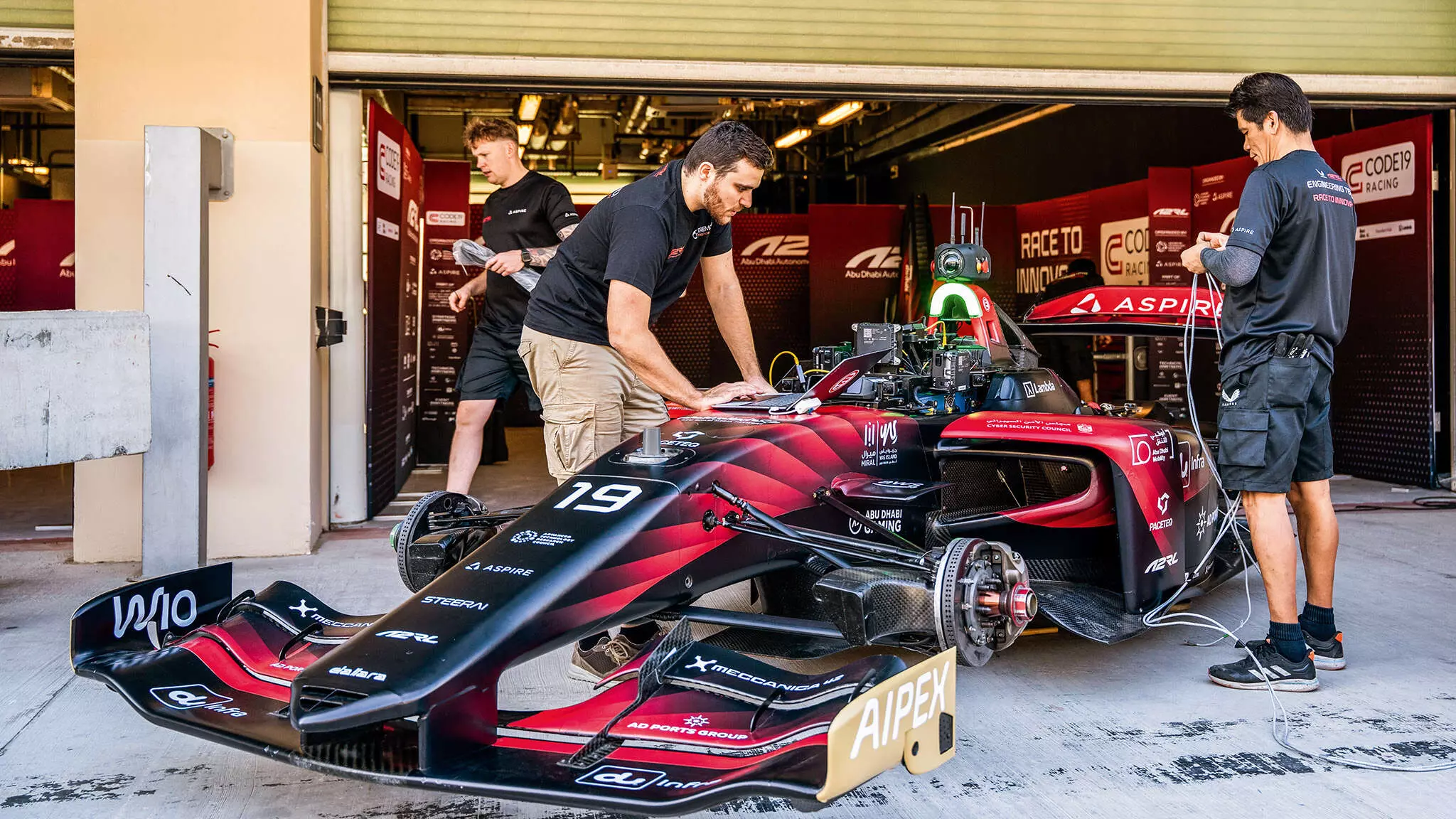
Teams run thorough checks of their autonomous stack before sending the autonomous car on track — Shot by Spacesuit Media & A2RL
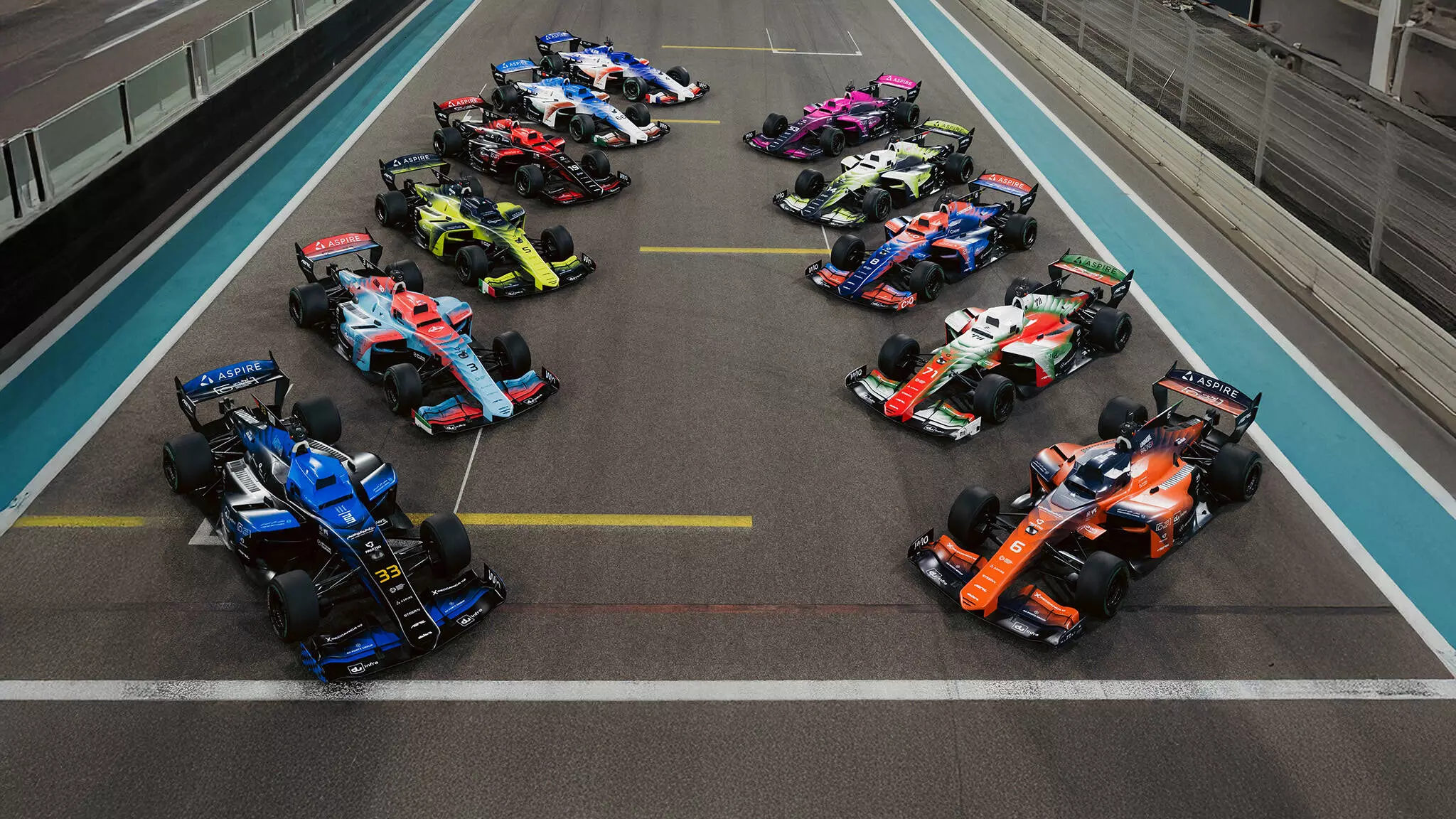
A2RL is a spec series where all 11 teams run the same car: the EAV 25, based on the Dallara Super Formula SF23 platform. The cockpit has been redesigned to house the complete autonomous stack, replacing every driver input with actuators. Instead of pedals, a wheel and a seat, the car carries a computer, CPU, GPU, and sensors: seven Sony IMX728 cameras, four ZF Prowave radars, three LiDAR sensors, 5G antennas, and an 8K onboard camera.
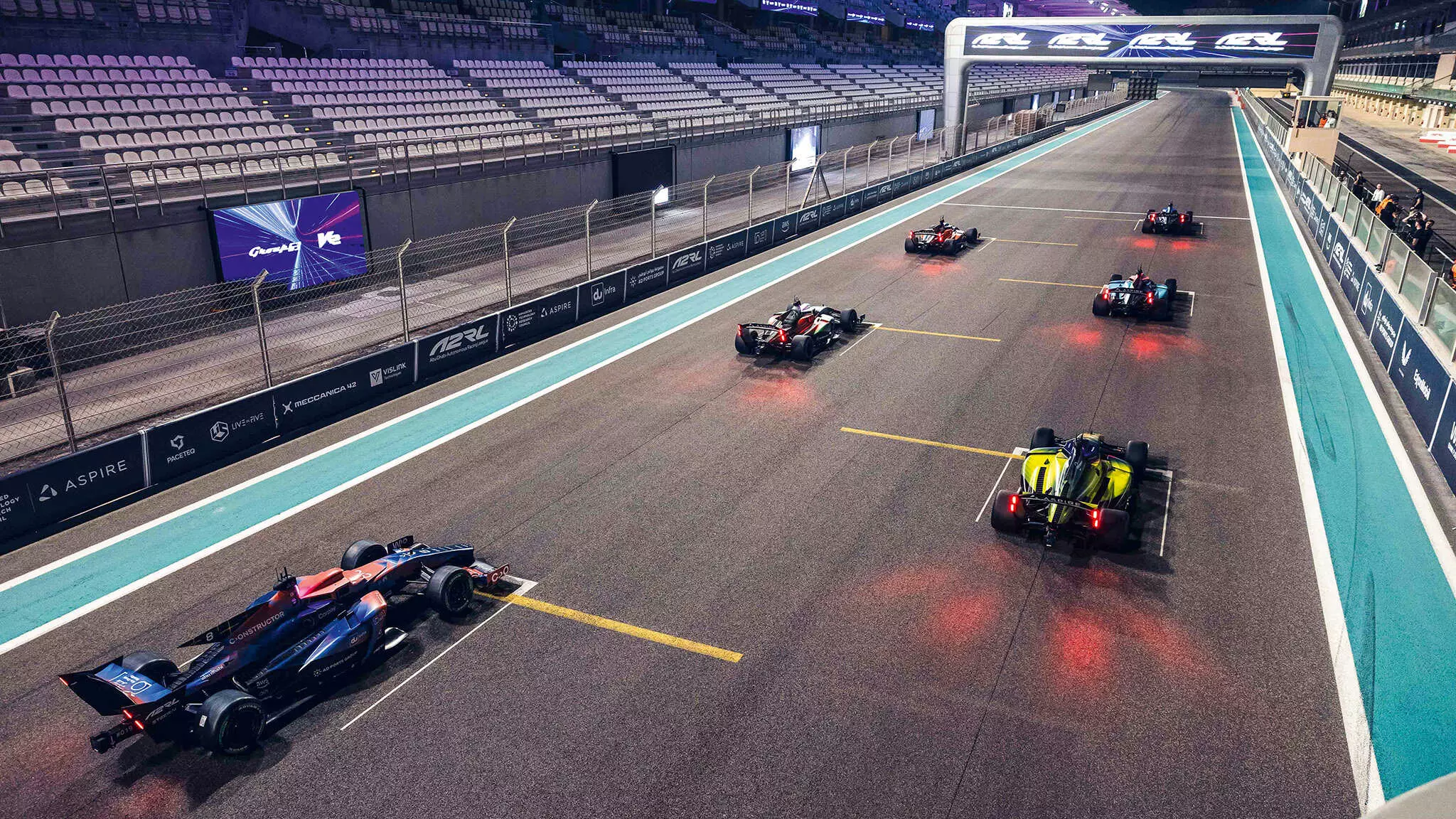
For the first time ever, six fully autonomous AI-powered cars raced at the Yas Marina Circuit, Abu Dhabi — Shot by Spacesuit Media & A2RL
Power comes from a 4 Piston Racing 2.0-litre turbocharged K20C1 engine producing 460bhp and capable of touching 300kmph. The chassis uses carbonfibre and aluminium, with bio-composite and carbonfibre bodywork, weighing 690kg, Yokohama Advan tyres, and Brembo brakes. All racing this year took place on the North Circuit at Yas Marina.
The hardware may be identical, but the racing isn’t. Performance is dictated entirely by software, the AI each team trains and evolves. Every AI has its own name, identity, and behavioural model shaped through months of simulation and testing. The AI algorithm handles racecraft, overtakes, tyre management, and decision-making at over 250kmph. During practice, engineers monitor thousands of parameters and tune the algorithm and AI, but on race day, they become spectators. No remote control, no human intervention — just pure autonomy.
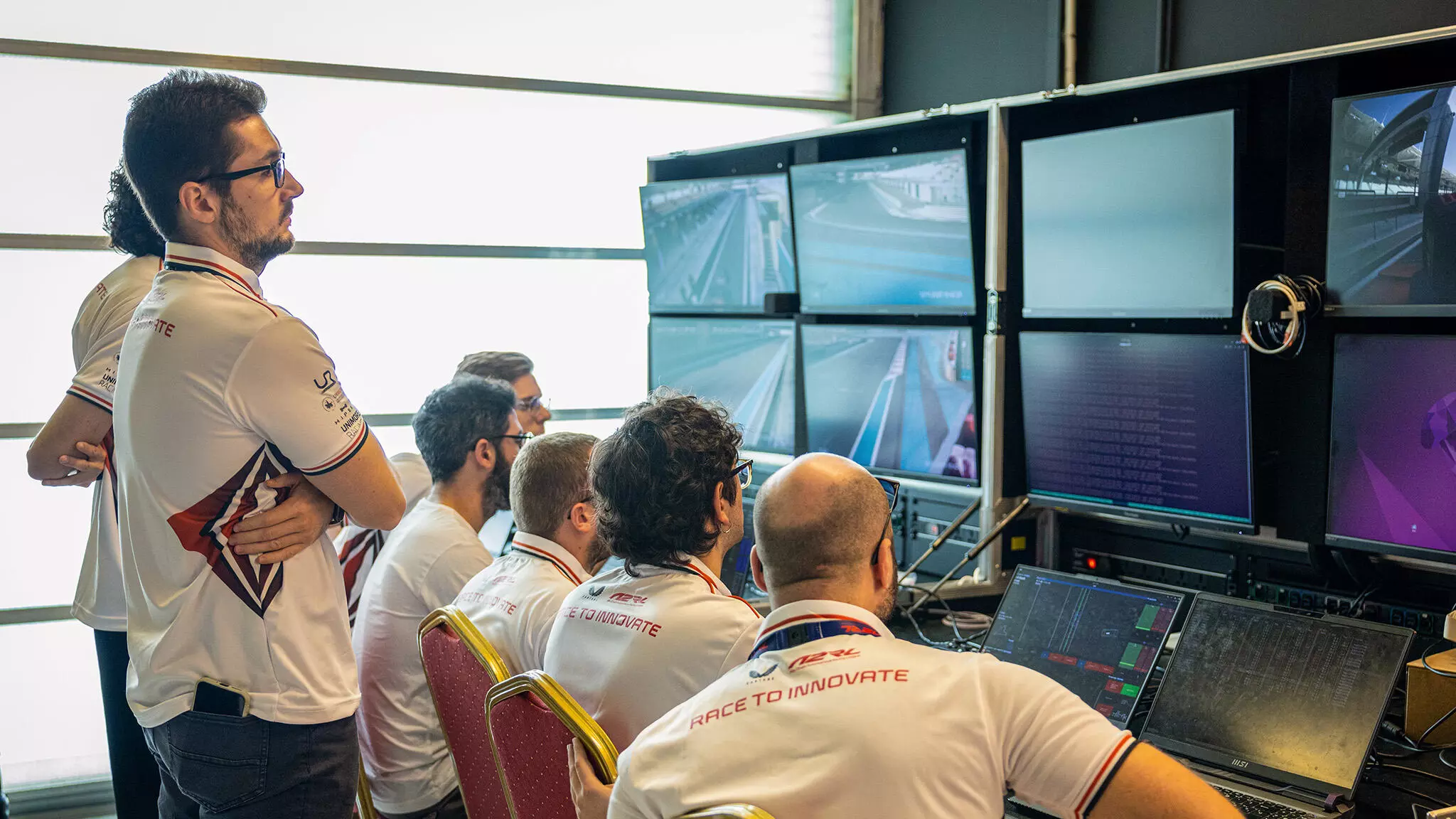
Teams are constantly monitoring their AI-powered car but on a race day, theyre just spectators — Shot by Spacesuit Media & A2RL
This year, 11 teams from Germany, Italy, Japan, the UAE, Singapore, the US, Hungary, and China competed for a USD 2.25 million prize pool. Their challenge: code an AI capable of reading the track, reacting to rivals, managing tyres, planning overtakes, and even navigating the pit tunnel correctly and racing. To reach the final, teams underwent a qualifying shoot-out. Italian outfit Unimore Racing topped the session with a 59.113-second lap, followed closely by reigning champions TUM at 59.417. The top six moved into two sprint races that formed the grid for the Grand Final, while the remaining teams fought in the Silver Race.
The Silver Race, a 10-minute time trial, was won by debutants TGM from Japan with a 1:04.450 lap, followed five-tenths behind by Fly Eagle, a China-UAE collaboration and Code 19 from the US in third.
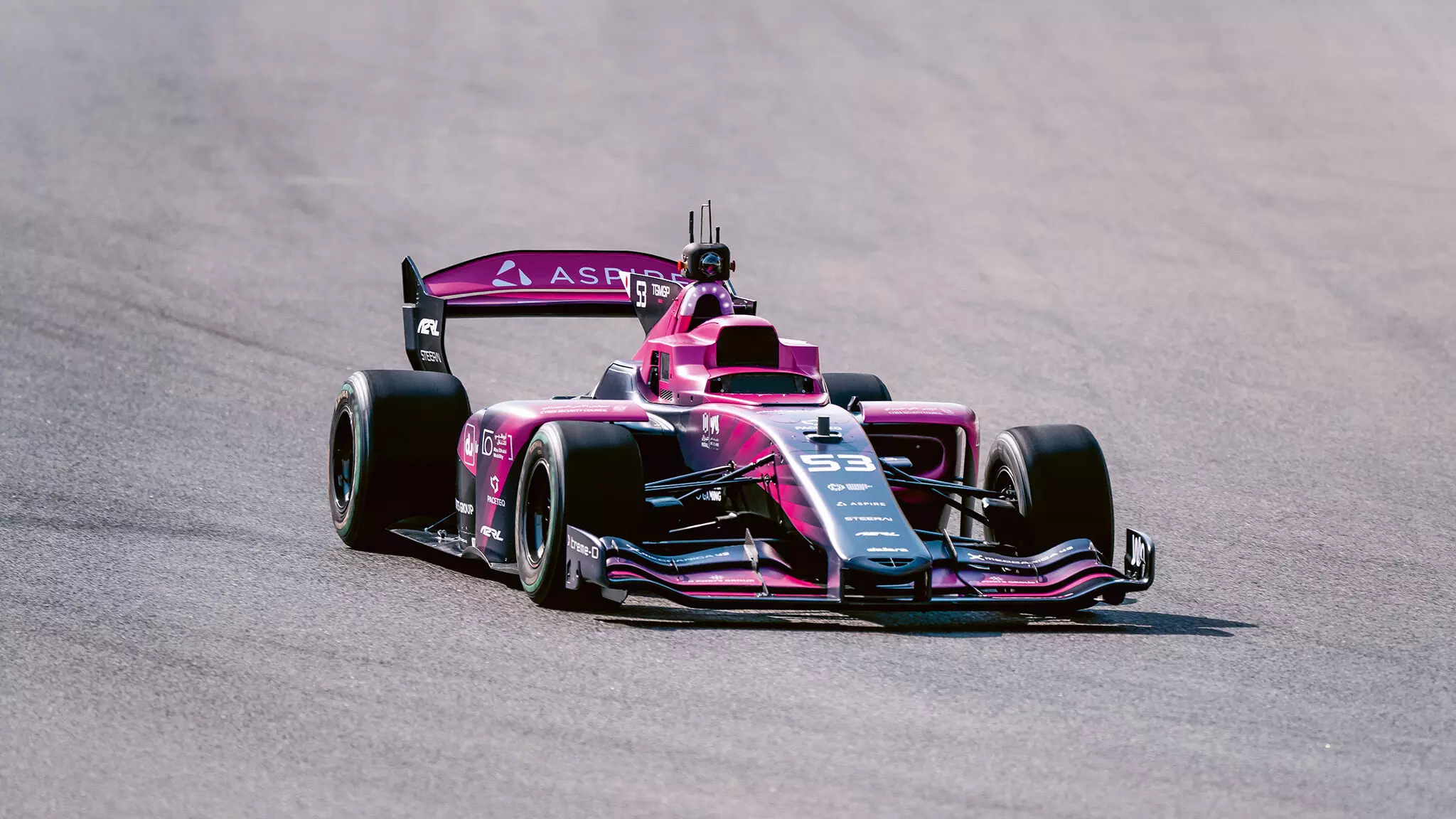
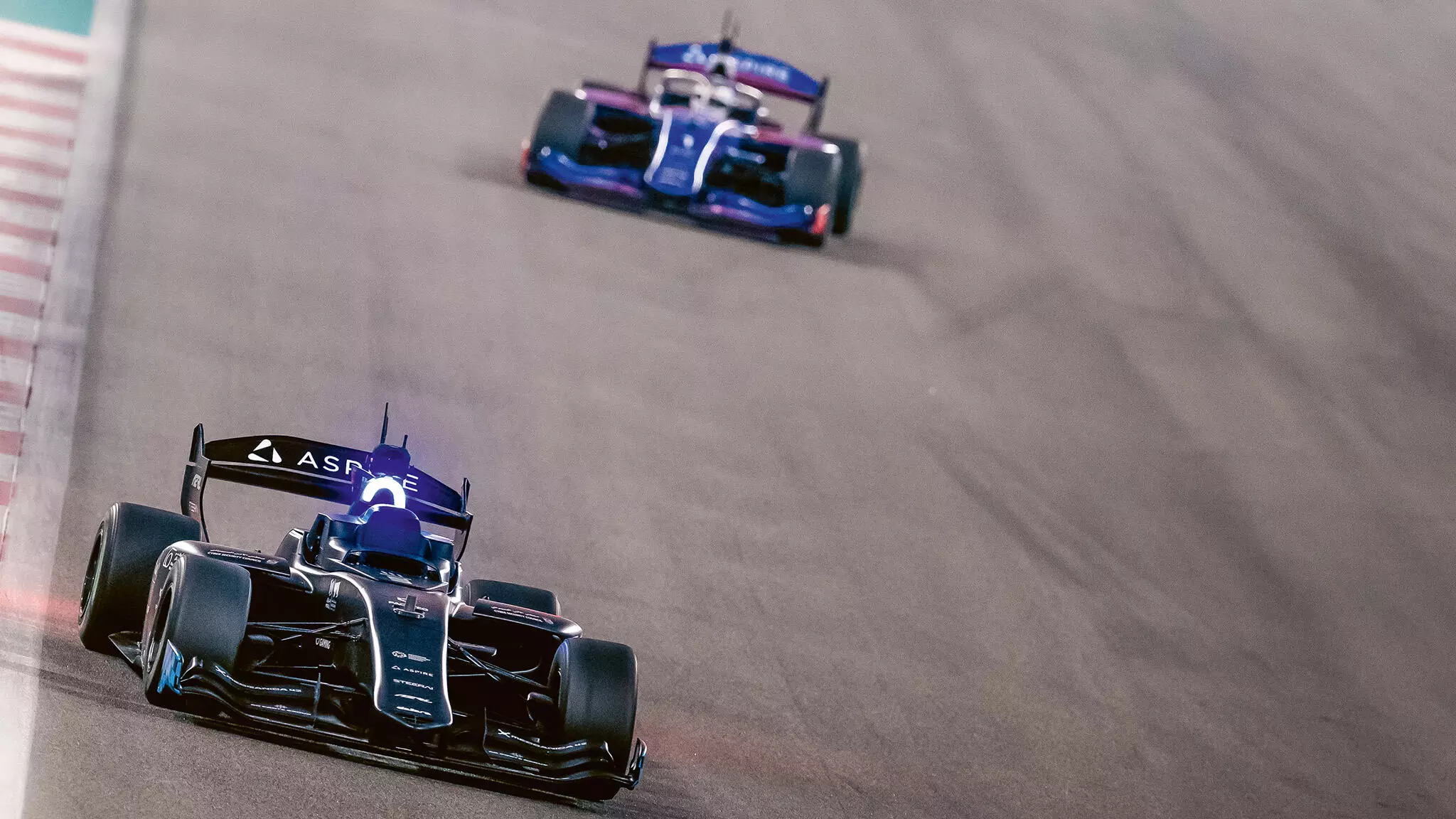
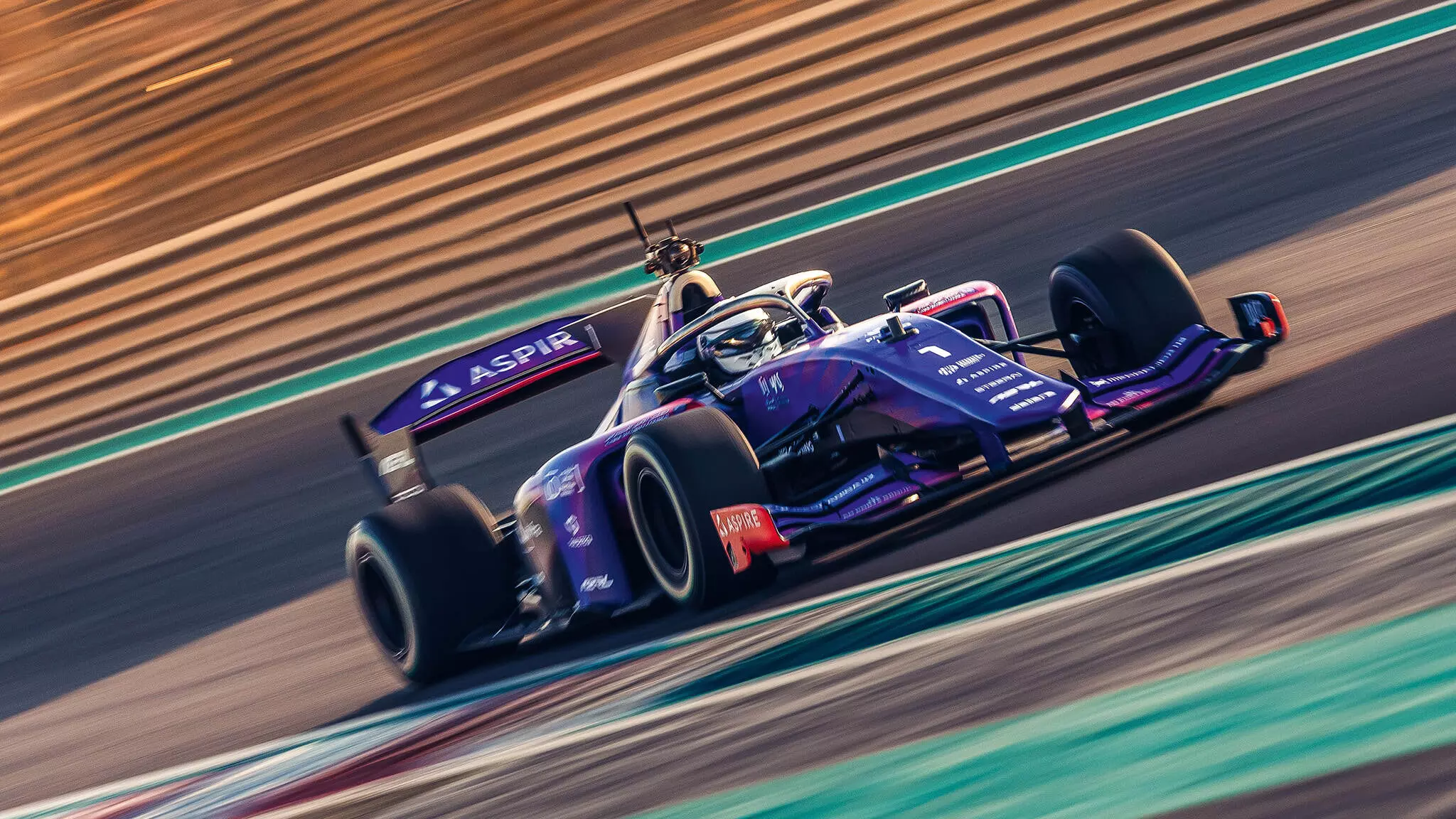
Much like last year, the Human vs AI exhibition drew loud applause from the grandstands. Former F1 driver Daniil Kvyat drove a Super Formula SF23 in a chase-down format against TUM’s autonomous car, Hailey. Starting with a 10-second deficit and ten laps to close the gap, Kvyat clocked a best of 57.57 seconds to Hailey’s 59.15. The gap, which was ten seconds last year, has shrunk to just 1.5 seconds. AI isn’t beating humans yet — but it is closing in rapidly. “Now we are seeing performance within fractions of a second — the technology progress is staggering. As a technology enthusiast and a racer, it’s fantastic to be a part of this development since the beginning.” Kvyat said afterwards.
Under the floodlights, six cars lined up for the first-ever fully autonomous six-car Grand Final. TUM led from a rolling start, with Unimore chasing aggressively. On lap two, Unimore executed a clean overtake at Turn 6, demonstrating pace and racecraft. The two pulled away from the pack, trading tenths at 250kmph and separated by barely half a second. As they approached backmarkers, disaster struck.
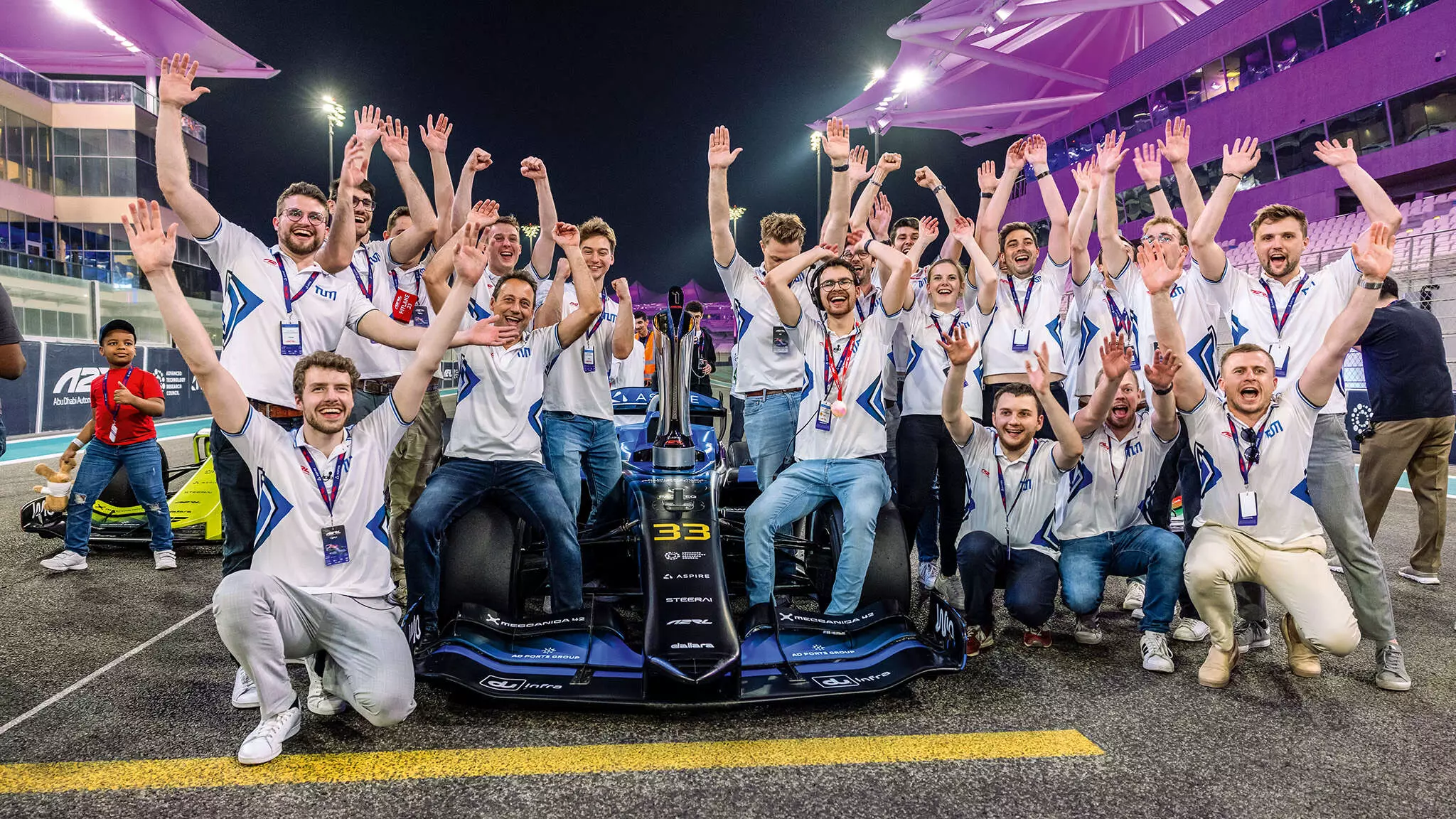
TUM from Germany were crowned champions of the 2025 A2RL and are now 2-time Abu Dhabi Autonomous Racing League Champions — Shot by Spacesuit Media & A2RL
Unimore clipped the rear of a slower car and went into the barriers at Turn 1, eliminating both. After a brief neutralisation, TUM resumed the lead and pulled away, eventually winning by a massive margin and claiming their second consecutive championship. Unimore may have lost the victory, but they did secure the season’s fastest lap, evidence of raw pace, even if the trophy slipped away.
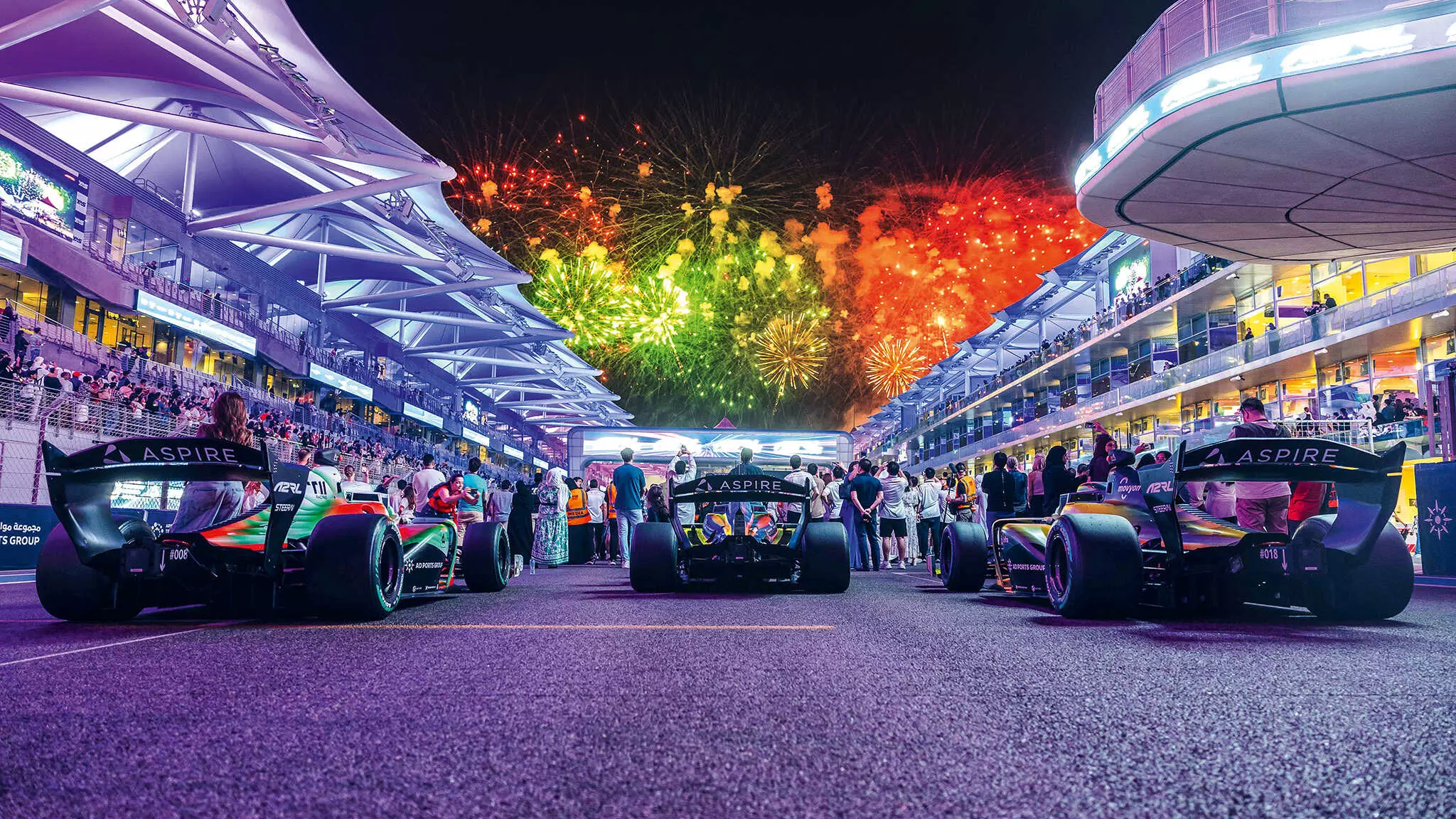
The 2025 A2RL came to a grand ending with a mega fireworks show to light up the night sky at the Yas Marina Circuit — Shot by Spacesuit Media & A2RL
With wheel-to-wheel action, overtakes, a crash, and a shrinking margin between human and AI, the 2025 A2RL felt less like a technology demo and more like a motorsport. Behind the machines were teams of engineers, data scientists, programmers, roboticists, and students, some of the sharpest minds in the world, working together to push AI to new frontiers. Their work doesn’t just advance racing; it lays the foundations for solving far more complex real-world problems.
And as global interest rises, I would love to see an Indian team join the grid soon. When that happens, you know who I’ll be cheering for.