

Motorsport Interviews
“Where there’s a will, there’s a way,” says Ameet Gadhoke, MD, Mumbai Falcons Racing Limited on F1 coming to India
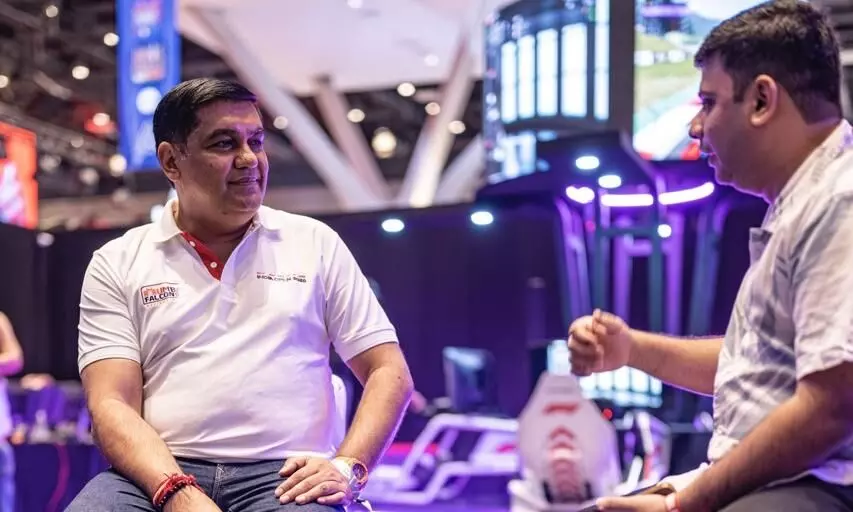
In conversation with Ameet Gadhoke on the commencement of the F1 Sim Racing India Open
Mumbai Falcons Racing Limited has brought F1 simulators to India for the F1 Sim Racing India Open e-sports championship and you can experience the sims at the C.O.R.E pop culture festival in Mumbai from June 20-21 at the Jio World Convention Centre. In addition to the simulator experience, we had the chance to interact with Ameet Gadhoke, MD, Mumbai Falcons Racing Limited, who spoke about the strategy of bringing these F1 simulators to India as a part of the e-sports championship, identifying and nurturing future motorsport talent with the programme they will be announcing in partnership with schools across the country and the future of motorsport in India.
On the ideology behind the sim racing championship
“We are a racing team. I've been on the track for the last five, six years. I can say F1 winners have passed through our ranks, I've seen how they have formulated their minds before each race, so how sim racing was important for them, before they went off to the track. The tracks are the same, the dimensions are the same, so when you move from there, I've seen these boys convert themselves and go to the actual racing parks, and then they know exactly where the turns are, the angles of the bankings and so on. So all that is all learned in the sim, the braking, how they want to brake, how they want to go forward. So it saves their time and energy to go on the track too. So the idea and concept came from there. So basically when I saw them grow up. Actually I've seen somebody who was really, off, on a day on the real racing track. He sat the whole night on the simulator, and when he came back, he was less faster than he was required to be. So then the idea that came back is that people do go back to sim racing as racers, get the concept right, maybe get the track right, maybe get the braking right. That's where the concept came in and then we'd seen so many people are already using sim racing as a virtual to reality tool basically. So I thought India is a market where there's no exposure to F1, it's a very expensive sport, and it is highlighted to be very expensive. So because the minute the parents think that oh, my child is into motorsport, I don’t have the money to do it. So then that's where our version came in, so we thought we would get into F1 on sim racing coming to India. Instead of banging a car, it's better to crash in the sim and it doesn't cost much, so people will get used to it. And the idea is to find the next stars. We want a guy or girl to come from here, getting into single-seater racing as fast as possible. See we are doing a talent hunt program. They're not just doing sim racing. So when I find out that maybe one person is not good enough to sim race, but has the capability of being a single seater driver, we have 200 wild entries that we pick up from this arena that we would like to do. So when you get those guys who can actually understand motorsports and cannot afford it, this is the pathway to it.”
On the exclusive partnership with Formula One
“F1 was already in India in the early stages, but obviously there were some differences on the taxation and all the things are there. We saw the experience that they had in India. So they were very reluctant to come back to India, but India has a fan following of more than 80 million for F1. If I'm not mistaken, they're the 3rd largest country to have an F1 fan following. So without them being in India, it's empty for them. It's obviously a loss for the fans in India, as well as themselves. But we got into a lot of conversations about how we can avoid it for the next time. When we gave them confidence that we will take care of these things, all the taxation, liabilities and all will be with Mumbai Falcons, and they will be exclusive, all the amounts that we are going to pay them and stuff like that, that's where relationships started re-gelling. And now because we've opened up, I'm sure many more things with F1 will open up in India.”
On the importance of world-class resources
“When you're doing a talent hunt, you have to get to the best. You cannot compromise with other things and then say that, okay, no, this was good and then I could have done better. So the idea is to get closest to the track, get the talent out and actually put them on the track. So once you put them on the track, they have to be familiar with the real feel of the kart. They have to get more towards a reality section of it. This is the reason we had to get to that level. F1 has its own guidelines, rules, regulations, the way they host their programs. I think more than that is the discipline that they carry forward. I think more than that a lot of other agencies don’t have that discipline that F1 carries forward. So because of the discipline coming in, with the children at an early stage, they get into the discipline.”
On partner schools and the road safety curriculum
“Everybody loves to drive. I'm sure you also love to drive. But do we Indians drive with discipline as compared to western countries? I think there is a lack somewhere because of the population being in place. It's very difficult for the government to control a lot of things. So we thought this would be a nice initiative program. We go back to schools, we interact with children who are 10 years and above. So we have many programs that we will go to school and do. It's like we're going to do a road safety program, where we're actually telling them how to drive, you know, how not to drink and drive. We decided that when we do this program, we will do the road safety programme. As F1 is already doing the safety programme in 139 plus countries, with their help coming in, the program becomes much stronger because it's tried and tested in 139 countries. So once we use that with our children at this age, so you never know, you might say saving one life also, I think it's worth my program.:
On expansion strategy of the programme
“We will be going to at least 1000 schools in India. We are looking at about 20 cities which will have the pioneer thing, there'll be most cities where, you know, you will put the sims in place. We will get them the experience for parents to come and understand how they can make a career, because the career is not only driving. You can also be an engineer in motorsports. You can also learn about aerodynamics, you can learn about the STEM program that we are going to get together. And obviously, road safety being the top most priority for us at this stage so that, you know, we can, you know, switch everything together. Not disclosing much, but we are also working with F1 to have the World Series come to India, where about 170 countries will take part, which is still in the pipeline, but we are trying to achieve that. If we do that, then you're talking about many countries trying to follow the format that we are following now.
On F1’s return to India
“I don't see taxation as the main hurdle, I think it's the mindset. I say this government under the leadership of the Prime Minister, there are a lot of things that were opened up. For us to even get F1 sim racing is also a big thing. So now when things are opened up, when the mindset of the government is good to explore, get Olympics to India, get sports to India, get F1 to India. Then it's all set. It's how we attack it. See, like I said, taxation and all those things are the created problems. They're not problems. If somebody has to really sit and sort it out, it can be sorted out in 5 minutes. Okay, because there are so many options that are there. It's what the country wants. And at the end of the day, where there’s a will, there’s a way. F1 can come back to India.”