

Motorsport News
The Road to a Championship
Ramji Govindarajan nurtured the talent that went on to become the first Indian in MotoGP, but his story didn’t end as he might have wanted it to.
KY Ahamad made headlines back in 2023 when he got the chance to run the Moto3 class during the MotoGP Indian Grand Prix weekend, even though he didn’t qualify. However, he was far from being the first to represent India in the sport.
Just a little over a decade before KY Ahamad made his Moto3 debut, there was S. Sarath Kumar, and along with Ten10 Racing’s team owner Ramji Govindarajan, he became the first Indian to race in the 125cc category. However, his story in MotoGP didn’t end how he would have wanted. In fact, he was sent back even before running his second race.
Kicking off the MotoGP dream
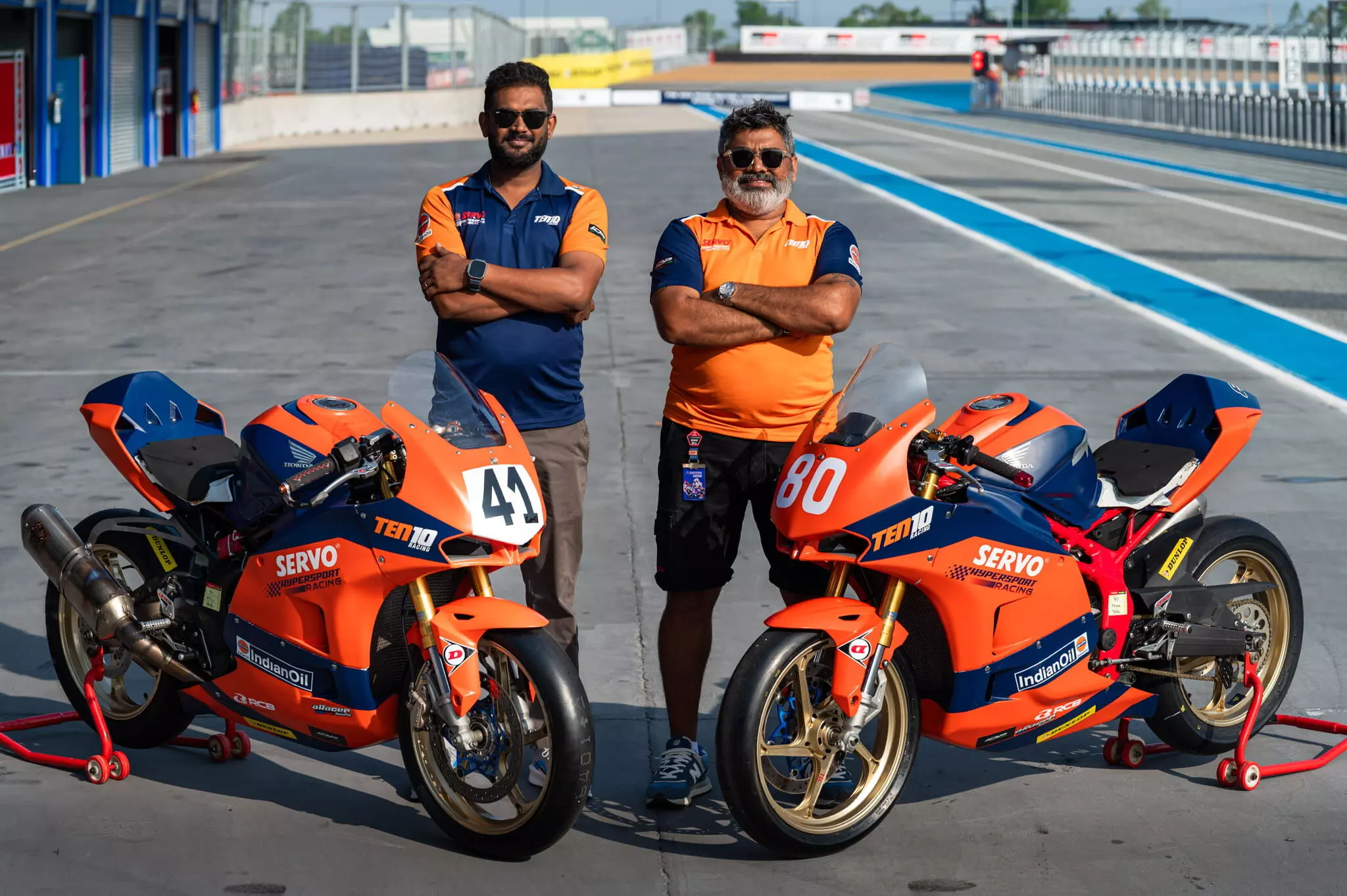
Ramji Govindarajan partnered with WTR to participate in the 2011 125cc season. WTR-Ten10 Racing was prepared, and while searching for a reliable rider, Govindarajan came across 2010 National Champion, S. Sarath Kumar.
And the issues became apparent even before he made his debut.
“It was a kind of a good transition, but Sarath has never ridden a two-stroke. He’s a four-stroke rider, and he's very naive. It was a very naive move. But nevertheless, if I look around and say, who should I put? I don't have anybody else,” Ramji Govindarajan told evo India.
S. Sarath Kumar became the first Indian in MotoGP
As luck might have it, Sarath, becoming the first Indian rider to debut in MotoGP, failed to qualify for the race in Qatar in 2011, riding a two-stroke Aprilia. But he received quite strong backing, even from the officials.
“He [Sarath] didn't qualify by about half a second, less than half a second. It was 0.3, 0.2, something like that. In fact, see, FIM and IRTA tried to put him in the grid with the grace. But unfortunately, the race director didn't accept it.”
It was understandably not an easy task for Kumar. Up until then, he had specifically ridden four-stroke bikes, and transitioning to the two-stroke Aprilia was a challenge in itself.
But the team didn’t simply give up. In fact, to understand the bike better, Sarath went on to race two Spanish Championship rounds to understand the bike better, and that eventually helped.
It finally happened. S. Sarath Kumar qualified for a 125cc race. Although he only finished P24, he made history, becoming the first Indian to etch his name in MotoGP history.
But the happiness wasn’t long-lasting.
Trouble knocks on the door
WTR was sold soon after the race in Portugal, and as Govindarajan explains, the new owners were far too concerned with his upcoming payments, and Sarath’s ride for the rest of the season was ultimately under threat, while, as per Govindarajan, it shouldn’t have been.
“He [the new team owner] put pressure on getting the balance money, while we still had time to pay the balance money. And again, because of my, I couldn't negotiate hard, but he put a pressure on me, saying that, you have defaulted paying the third instalment, and hence I'm going to send your rider back. But technically, I've paid half the money for the season, which means at least half a season he has to ride.”
At the same time, as Ramji Govindarajan revealed, he was in conversation with Tata Docomo to back Ten10 and WTR as sponsors, and it seemed to be going well.
Despite this, things didn’t look too far ahead for Sarath Kumar. He had finally found himself in a spot where he was qualifying for races, adapting well to the two-stroke engines. But once again, the financial backing seemed to have become an issue, and without an announcement, the team decided to send Sarath back right before the next round in France.
“I was talking to Tata Docomo at that point of time, and they were ready to come on the bandwagon. But cut to the French GP, because the next round was the French GP. They got him to Paris; from Paris, they put him on a flight and sent him to India without telling me.”
A moment of learning
This entire experience, although bittersweet, did end up revealing a lot more about the motorsports culture in India, and how it differed from other countries. Meanwhile, it also became a moment of learning for Ramji Govindarajan, when he realised how much Sarath Kumar’s replacement had paid to get his seat: “So, he brought a Norwegian rider who paid 50,000 euros for the full season. Can you believe that? I paid 100,000 euros, rode two or three races, including the Spanish championship, and they bought a 50,000-euro guy for the full season. This is all I came to know later. And that's when I realised I could have negotiated hard.”
At the end, the lesson is that politics is an entrenched part of motorsports and that the road is hard and thorny. End with that
At the end of the day, despite the massive investment and the training Sarath Kumar went through, albeit running a race, there was one important lesson that Ramji Govindarajan learned: massive finances and politics are entrenched in motorsports. The road to the championship, although it seemed quite straightforward, is extremely difficult to tread.