

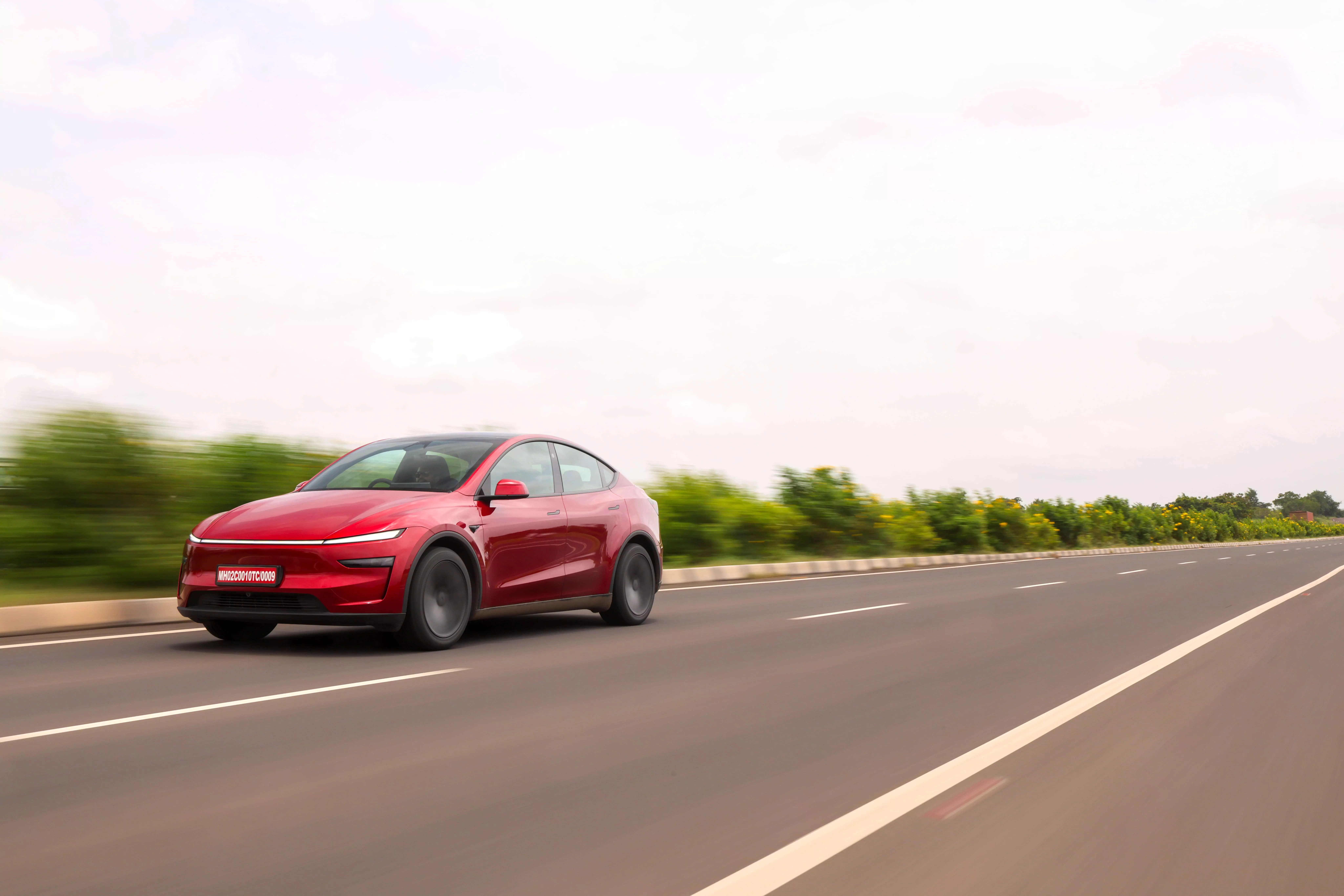
The Tesla Model Y
The Tesla Model Y
Car News
Is the Tesla Model Y habit forming?
We know the Tesla is not conventional, but is there a reason it is engineered that way? Here’s my take
One constant as an automotive journalist is the flow of vehicles for test drives, all through the year. Manufacturers send us a vehicle to test for between a day to 6 months, and depending on how much time we have with it, you get to know more than how well that vehicle performs. But one thing never changes, irrespective of the car. The basics are simple, to get in, and drive. And we figure everything along the way. If it is an electric car, you check the SOC, but nothing else changes. But I had a sense that this time was going to be different. When you know the drive selector is on the screen, there are no headlamp or wiper stalks and no on/off button, just by watching a few reels, you know getting into a Tesla and driving out isn’t going to be that easy. Cue in the Tesla employee, who drives out of the basement of an office building to introduce me to the car I’ll be driving for the next few days.
I hop into the passenger seat and ask him for a quick briefing. A few seconds later, we’re both talking to Grok instead of each other. The AI assistant misused on X is heavily used in a Tesla, and does pretty much everything needed to get you going. I figure within a few minutes that Pankaj from Tesla is going to help me only as much as Grok will, so I say goodbye to him and ask Grok to navigate me to the office. The 16-inch screen on the centre console sets the navigation, asks me to tap my foot on the brake and then asks me to accelerate. The drive selector automatically shifts from P to D and we’re off. On the way, I tap the indicator to change lanes. The left camera turns on and three clicks later, it turns off on its own. Next up, I am turning right at the intersection. I tap the indicator, the right camera turns on and it goes off once I have made the turn and straightened up. Usually cars have a soft click and a hard click for indicators, but the Tesla has just one, using the car’s intelligence, location and sensors to know what you want to do as you drive. Again, making the driver do far less than he/she is accustomed to.
The Tesla Model Y
It takes all of one day to figure out everything you can do while sitting in any seat of a Tesla, and from there on, the car tends to fit like a glove. The next day, we are out shooting. The endless features and gimmicks can wait. Now it’s time to properly drive the car, and initial impressions are very good. The steering settings set to ‘Standard’ make the Tesla fun to dart around in. It’s nice to hold, direct and nimble around town, works on a flowing, winding road and doesn’t require any other setting. They’ve got it right. They’ve also got regen right. There is a reduced setting and a standard setting here too. Standard works well. The throttle modes too, Chill and Standard, work well in the standard setting. The Tesla doesn’t allow for much more customisation, because what do humans know?! The Model Y knows best, much like an iPhone, and you are, at best, the supporting cast in the movie.
The Model Y's interior
That’s when you begin to enjoy the movie. The car fades into the background and time passes without realising how much effort it takes to get a car moving. The stiff ride you experience in the city works to its benefit as speeds rise while the range drops you see at low speeds tend to ease out on the highway. If there are two things going against the Tesla, it’s the tyres and the interior. At about Rs 54-55 lakh on road, it doesn’t feel special enough. We had an i5 for reference on the day we drove the Tesla. And there was a marked difference between Tesla's version of luxury and BMW’s. Sure, the Bavarian is positioned at a more premium price point but the lack of alternatives in the sedan/crossover space makes it an okay reference point. Once you begin to do that, the Tesla’s novelty factor and tech play a big role. Tesla can’t do traditional luxury as well as the old-school car manufacturers can, but when it comes to newer-age solutions, their clean-slate development approach works in the Tesla’s favour. Top of that list is battery management. Despite using LFP cells in this regular range variant (500km WLTP), the Y returned to base with more range than the BMW did on the same route. Tesla understands how regen and battery usage work best. Data is collected from so many more cars across the world in varied driving conditions, and that is reflected in the maturity of the technology. All the fun stuff the centre console does is just the icing on the cake.
The Tesla Model Y
A few days of living with it made me realise how habit-forming it is. The UI is intuitive and it doesn’t make you feel like a test subject with all the functions that the centre console offers. From adjusting the steering and mirrors to using the drive selector from the screen, it is all done differently from what we are used to, yet it works without a second thought once you get used to it. The only issue I had was that the car didn’t connect to Apple CarPlay and Android Auto. The built-in Google Maps works just as well and integrates better with the screen, so using CarPlay was more of a habit, one I lost in just a day of driving the Tesla. After the Hyundai Ioniq 5, this is the first EV that has felt like such an excellent daily driver.