

Skoda Octavia Turns 30: Three Decades of the Brand's Icon
Skoda's bestseller turns 30 years old, and we take a look back at the Octavia
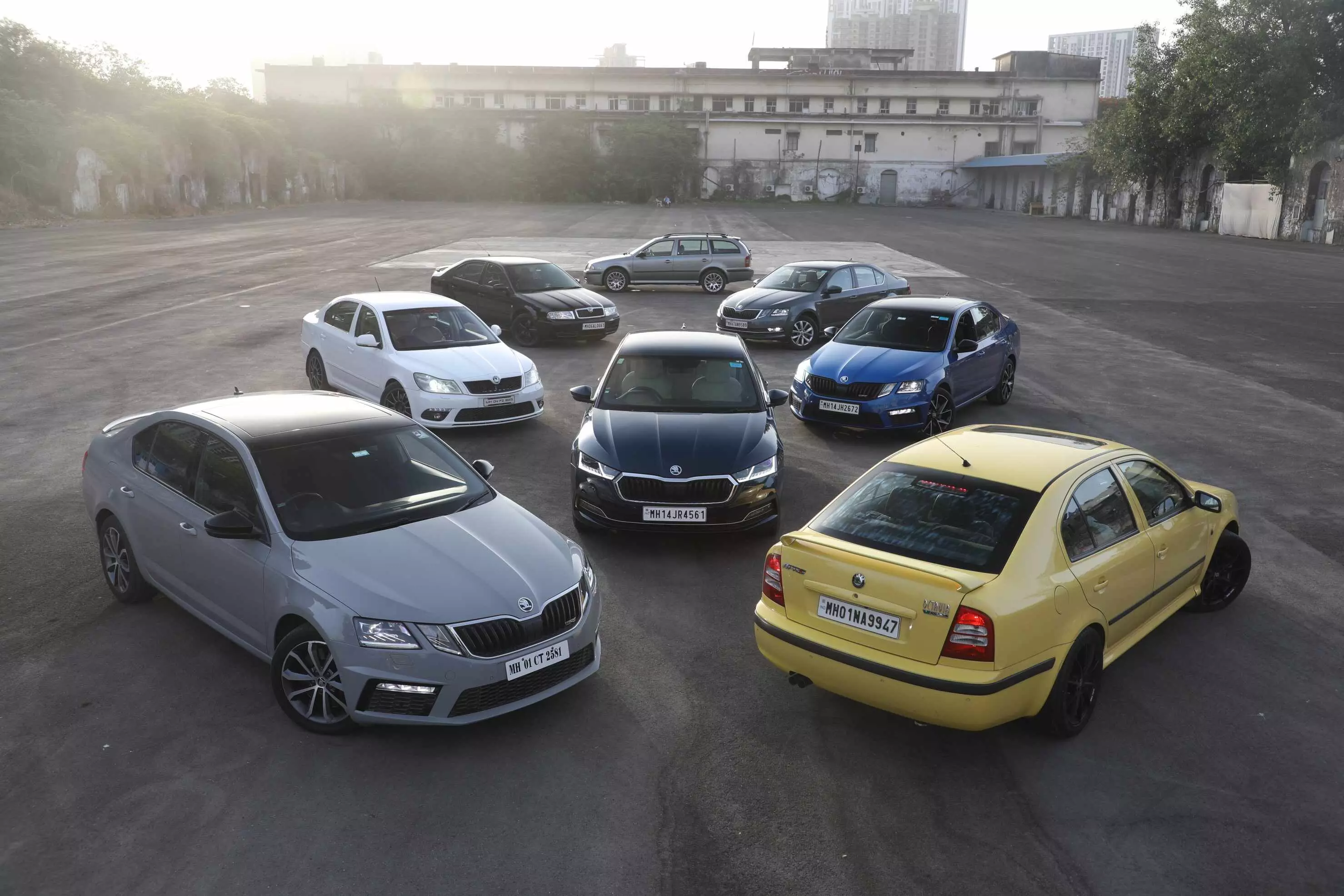
Skoda is celebrating 30 years of the Skoda Octavia globally, with the first Octavia as we know it rolling off the production line back in September 1996. The nameplate is not exactly new, as the nameplate was a part of the brand’s line-up between 1959 and 1971. However, this time it was reinvented. Post a merger with the VW Group, Skoda needed a product that could prove the acquisition had changed something for real, and the Octavia was it.
First Generation (1996-2010)
Work on the ‘new’ Octavia began in 1992, one year after the Skoda brand had joined the Volkswagen Group. Dirk van Braeckel designed the car, and it was built in a new facility that pushed an annual production capacity from 90,000 to 3,50,000 vehicles. The Octavia globally debuted on 4 April 1996, with a 528-litre boot which was generous by the standards of the time. The Combi estate arrived later in March 1998, with an AWD variant following in 1999, and the turn of the millennium marked the debut of the first Octavia RS. By the end of the first generation's run, which stretched in some markets to 2010, over 1.44 million units had been produced.
The Skoda Octavia Mk1 is in the centre with the Skoda Octavia Combi RS on the right and the Octavia Combi L&K on the left.
The Octavia debuted in India in 2001, and could be optioned with a 2-litre turbo petrol or a 1.9-litre TDI engine. The Octavia was initially imported as an SKD (Semi Knocked Down); the cars were imported in an almost complete condition, with a bit of local assembly work to be done. Later on, the cars were imported as CKDs, with assembly being done at the brand’s Aurangabad plant. The Octavia was a breath of fresh air for Indian enthusiasts with its low driving position, solid build quality and turbocharged engines. Back then, the performance car benchmark was set by the Honda City VTEC, but the Octy RS raised the bar higher. Skoda also experimented with the station wagon bodystyle in India. However, that attempt bombed as nobody back then, as now, cared for station wagons, leading Skoda to eventually pull the plug on the Octavia Combi.
Second Generation (2004- 2013)
The second-gen Octavia was globally unveiled in 2004, with an additional 32-litres of boot space, but more importantly for us enthusiasts, it brought the DSG gearbox to the line-up. It sold 2.6 million units globally before production ended in 2013. However, in India, things were a bit different, because when Skoda were about to release the Gen 2 Octavia in India, their best-selling car was the first-gen Octavia, such was its demand. It led to them selling both together, with the second-gen named Laura.
Skoda released the Gen 2 Octavia in India as the Skoda Laura; their best-selling car was the first-gen Octavia, due to its high demand. Skoda decided to sell both of them together.
The Laura featured a 2-litre common-rail diesel mated to a DSG, with the petrol engine being a 1.8-litre TSI. The India-spec Laura vRS featured the same 158bhp 1.8-litre TSI engine along with a manual gearbox. It did 0-100kmph in 8.4 seconds, and that was in stock form. Everybody back then used to tune their cars, this powertrain had tonnes of opportunities to improve performance, and the tuners certainly had a roaring business thanks to that.
Third Generation (2012–2020)
The third generation of the Octavia was based on VW Group’s MQB platform and had gained 62mm in length, 45mm in width, and 110mm to the wheelbase. It pushed tech even further with advanced driver assistance systems, optimised TSI and TDI engines, a GreenLine efficiency package, and a 2017 facelift with split headlights and glass-finish infotainment screens – all of which were features previously limited to higher-end segments.
In India when the third-gen Octavia was launched in 2013, it was so popular that Skoda barely had to advertise the car. It received independent rear suspension, so enthusiasts could fully exploit the handling, and things went even further in 2017 when we got the facelift alongside the Octy RS 230. It had a 2-litre 227bhp TSI engine and at the time was the fastest Skoda to be sold in India; it also had the best front-wheel drive chassis in the country too. The handling was brilliant and was aided by XDS+ electronic LSD on the front axle that was activated once lateral acceleration exceeded 1.5 G.
Skoda also released the Octavia RS 245 in India, with only 200 units being available, all of which sold out quickly. It was powered by the same 2-litre TSI engine featuring a higher state of tune, producing 241bhp and 370Nm of torque, with a 7-speed DSG. All of this helped it do a 0-100kmph sprint in just 6.6 seconds, making it the fastest Skoda available in India.
The Current Generation (2020-present)
The fourth-generation Octavia debuted globally in November 2019 in both notchback and Combi body styles. An early 2024 update added improved connectivity and added up to ten airbags. Driver safety was also improved thanks to a refined Attention and Drowsiness Assist system with a new algorithm for fatigue detection.
It made its way to India in 2021 during the Covid-19 pandemic, and a lot was riding on its shoulders, considering the entire market had moved en masse towards SUVs. It is powered by a 2-litre TSI engine, the same as the earlier RS 245, which is mated to a 7-speed DSG and does 0-100kmph in 8 seconds flat.
The fourth-gen Octavia RS was so eagerly awaited that both batches which were available in India are already accounted for. Deliveries are scheduled to begin from October 2026 onwards, with power coming from the same 2-litre turbocharged petrol engine now making 265bhp and 370 Nm of torque thanks to an upgraded turbocharger, increased fuel injection pressure (up to 350 bar), and reworked piston crowns. Skoda claims it will do 0-100kmph in 6.4 seconds. It also features an electronic limited-slip differential at the front.
Thirty years later, the Octavia has changed considerably, but it stays true to its fundamentals of European build quality, performance and practicality. The formula did particularly well in India, whether it be the Mk1 with its 1.9 TDI engine or the vRS and its cult following, and the Octavia became the car that showed Indian buyers that practicality and driving pleasure could go hand in hand.