

Car Reviews
Toyota Urban Cruiser Ebella first drive review: Is the Maruti Suzuki e Vitara better with the Toyota badge?
Toyota India’s debut EV feels more like a well-sorted petrol SUV than a typical electric car, and that’s probably the biggest compliment it could get
Nowadays, electric cars usually arrive like announcements. They tell you what they are, what they represent and why they matter, often before you’ve even driven them, especially when it’s the brand’s debut into the BEV segment. The Toyota Urban Cruiser Ebella does the opposite. It doesn’t introduce itself with drama, doesn’t dress itself up as a concept car for the road, and doesn’t insist that you rethink everything you know about driving. This effect has its own pros and cons, which will unravel itself as you read through this story.
The restraint you see in terms of design, packaging, specs, and even marketing is deliberate, and very Toyota. This is a company that has built its reputation not on revolution but on consistency – on cars that work, keep working, and rarely surprise their owners in inconvenient ways. Which makes this car less about disruption and more about adaptation. The Ebella isn’t here to convince the sceptic or thrill the enthusiast. It’s aimed squarely at buyers who are already warming up to the idea of an EV, but don’t want the experience to feel unfamiliar or demanding. And that intent shapes every part of the car.
Toyota Urban Cruiser Ebella platform and design
Before we go any further, it’s important to address the obvious. The Urban Cruiser Ebella is fundamentally the same car as the Maruti Suzuki e Vitara. Both are built at Maruti Suzuki’s Hansalpur plant, in Gujarat, roll off the same production line and share the same platform, battery packs and motor options under the Toyota-Suzuki global partnership. This is effectively the same engineering package wearing a different badge. The differences, therefore, are largely cosmetic and positioning-led. The Ebella adopts Toyota’s hammerhead front-end treatment, unique bumper detailing and brand-specific trims to visually distinguish itself from the e Vitara. The branding in the cabin is different, and Toyota brings its own ownership packaging and partnerships to the table. But in terms of how it drives, rides, accelerates and delivers range, the Ebella mirrors the Maruti Suzuki e Vitara. The strengths and compromises are shared.
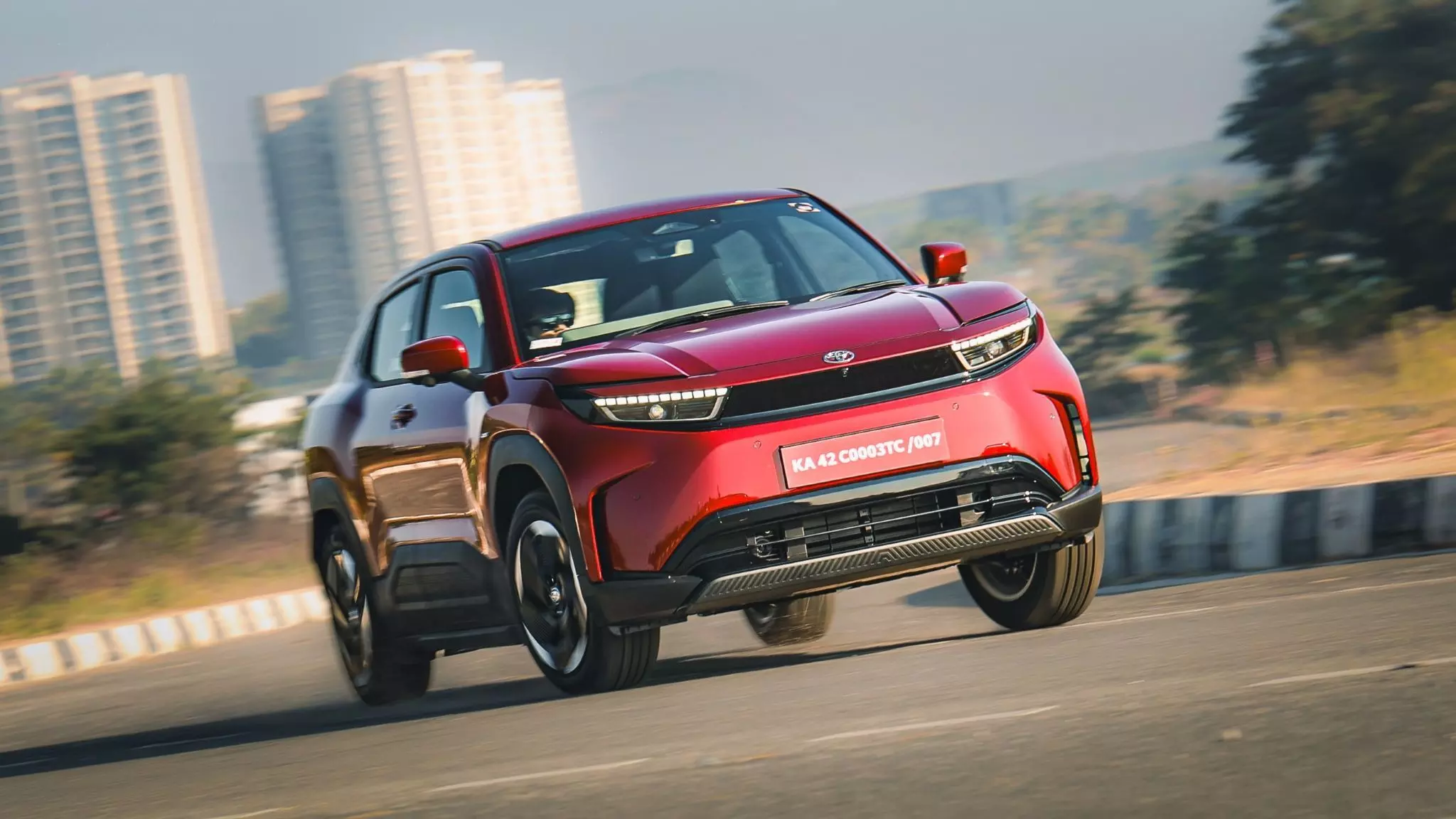
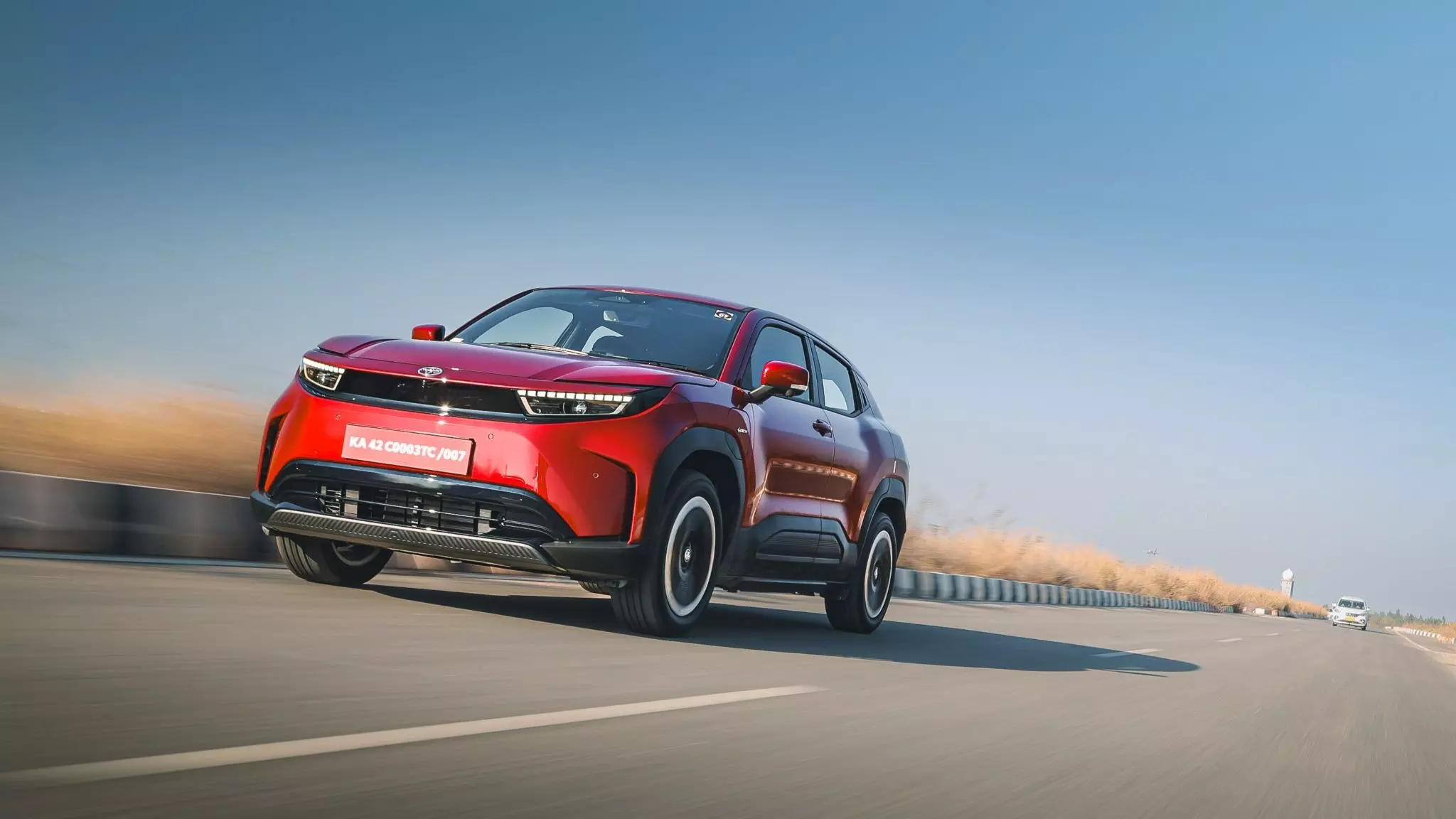
The styling choices are restrained and safe, but it has a clear differentiation from its Maruti Suzuki counterpart — Shot by Avdhoot A Kolhe for evo India
Visually, the Ebella resists the temptation to look radical. There’s no excessive surfacing, no theatrics, no attempt to look completely different from other cars on the road. Instead, you get a familiar SUV silhouette with EV-specific cues worked in thoughtfully rather than aggressively. The car adopts Toyota’s hammerhead design language, which gives the front end a distinctive, almost shark-like appearance. The LED headlamps house ice-cube DRLs that look genuinely striking, and the 18-inch aero-optimised wheels are well designed, with the silver and black finish coming together particularly well when the car is in motion.
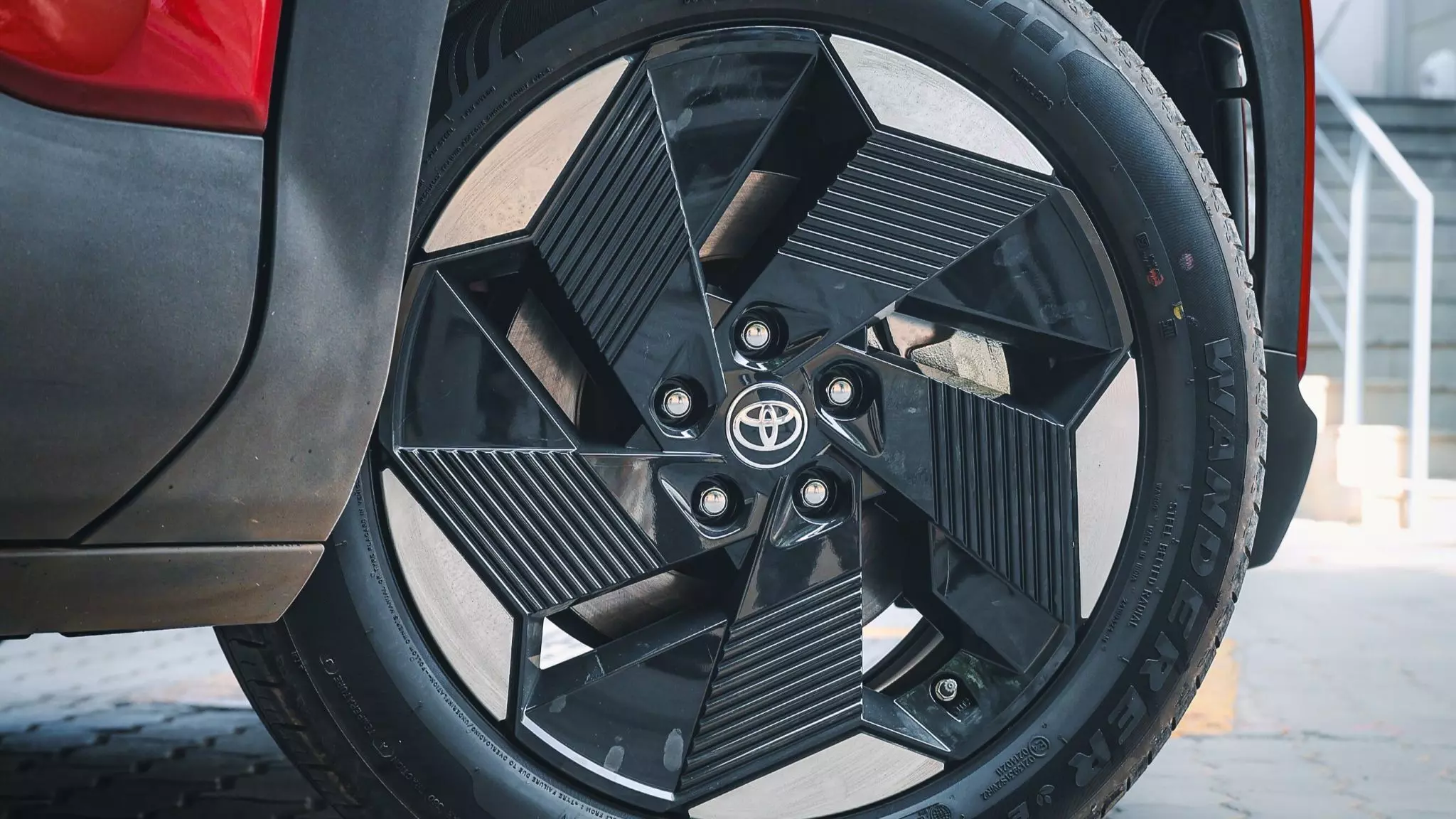
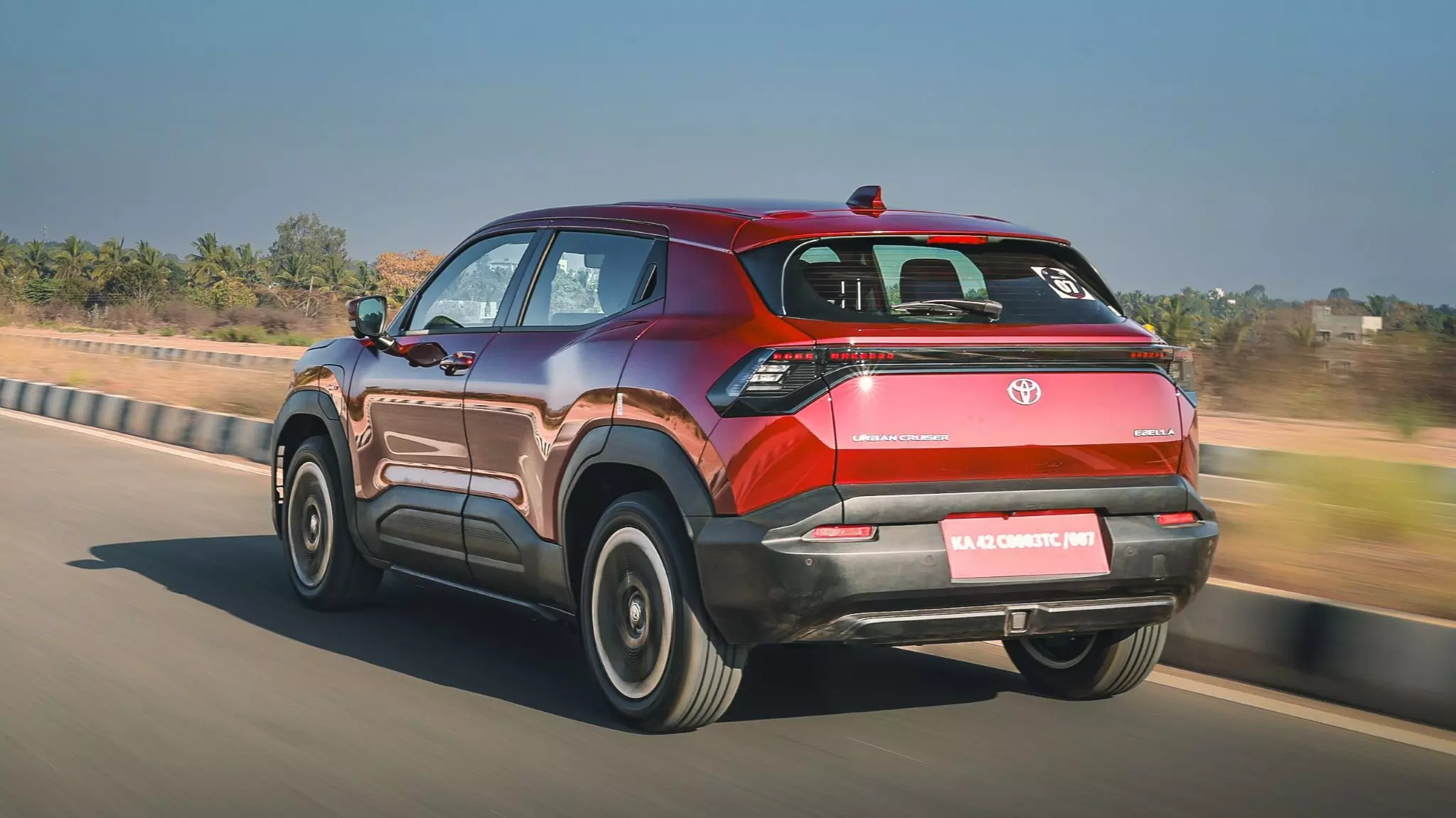
The Ebella gets a 2700mm wheelbase, which is 90mm more than the Creta Electric and 75mm lesser than the Mahindra BE 6. During the shoot, I kept noticing the car from different angles and realised that its prettiest view is the rear three-quarter. The sloping roofline, wheels that fill the arches nicely, and the vertically mounted door handles all come together to give it a stance that looks both sporty and purposeful. At the rear, the smoked tail lamps with ice cube LEDs look distinctive, and there’s a glass panel that stretches the entire width of the tailgate but doesn’t get a lightbar which is a good thing.
Toyota Urban Cruiser Ebella interior
The cabin reinforces the ‘no radical elements’ philosophy too. Much like the e Vitara it is based on, the focus here is on usability rather than visual drama. Everything is the same as the e Vitara here too except for the logo on the steering wheel. There’s no sensory overload when you climb in, and no attempts to overwhelm you with screens or ambient lighting. Instead, everything feels arranged with logic in mind, as though Toyota’s first priority was ensuring that existing customers wouldn’t feel lost. The dashboard layout is clean and straightforward, dominated by a 10.1-inch screen for the info system and a 10.25-inch digital instrument cluster. Both screens do their jobs well enough, but neither feels cutting-edge. The graphics are clear, the response times are adequate, and even though there aren’t any glitches, there is no slickness to them either. In a segment where rivals are pushing ultra-high-resolution displays and fluid animations, the Ebella’s interface may feel a step behind.
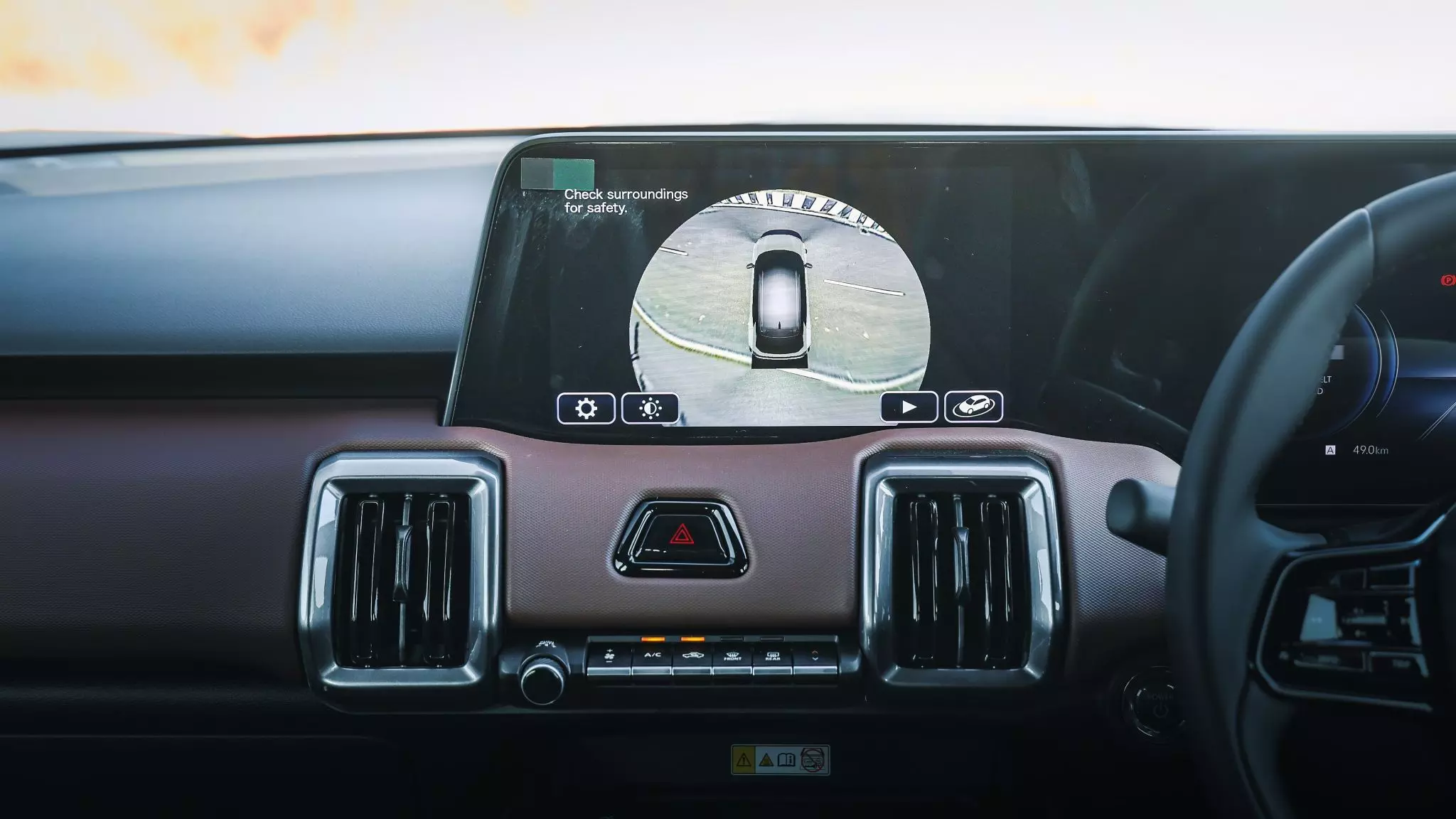
The front cabin gets a 10.1-inch infotainment; physical climate controls and seat ventilation as well as dual-tone upholstery — Shot by Avdhoot A Kolhe for evo India
But that slight lack of polish is offset by good decisions elsewhere. Physical climate controls are present and intuitive – a small but meaningful win in daily use. The rotary gear selector is simple and foolproof – you don’t have to look down every time while shifting and second guess whether the car has shifted into drive or reverse. There’s also a rotary volume knob and aircraft-style rocker switches for the aircon settings which has a good feel when you use it. Smaller storage spaces are plentiful and well thought through inside the cabin, but the downside is that bootspace is very little at 306 litres and there’s no frunk too! On the floating centre console, you get buttons to change drive modes, a specific Snow mode button, and a one-pedal driving mode button. There’s also a wireless charging pad which is positioned smartly in a place where it would actually get used rather than forgotten. The seats are comfortable and have a ventilation function, but to activate it you have to go through menus on the screen!
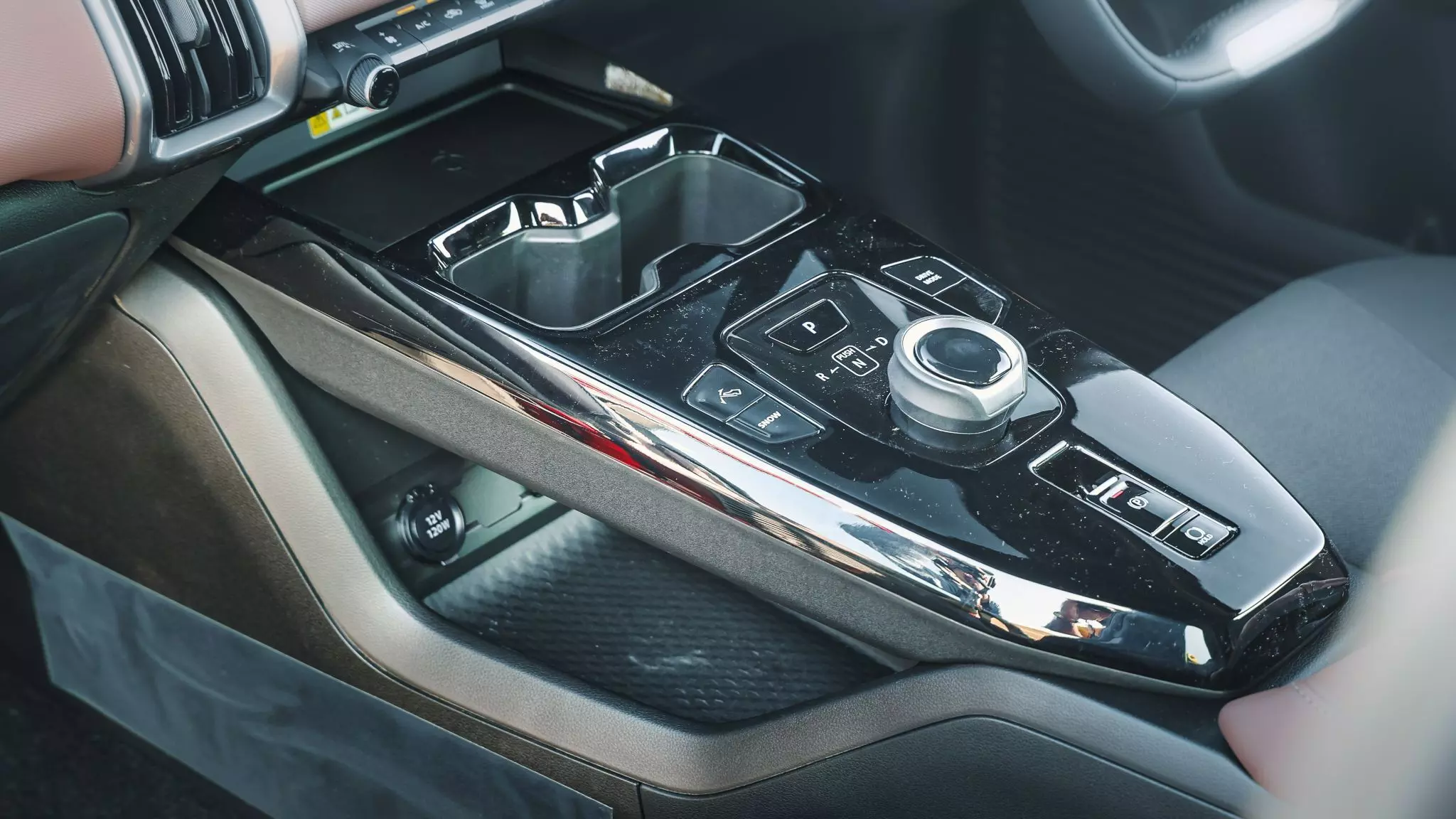
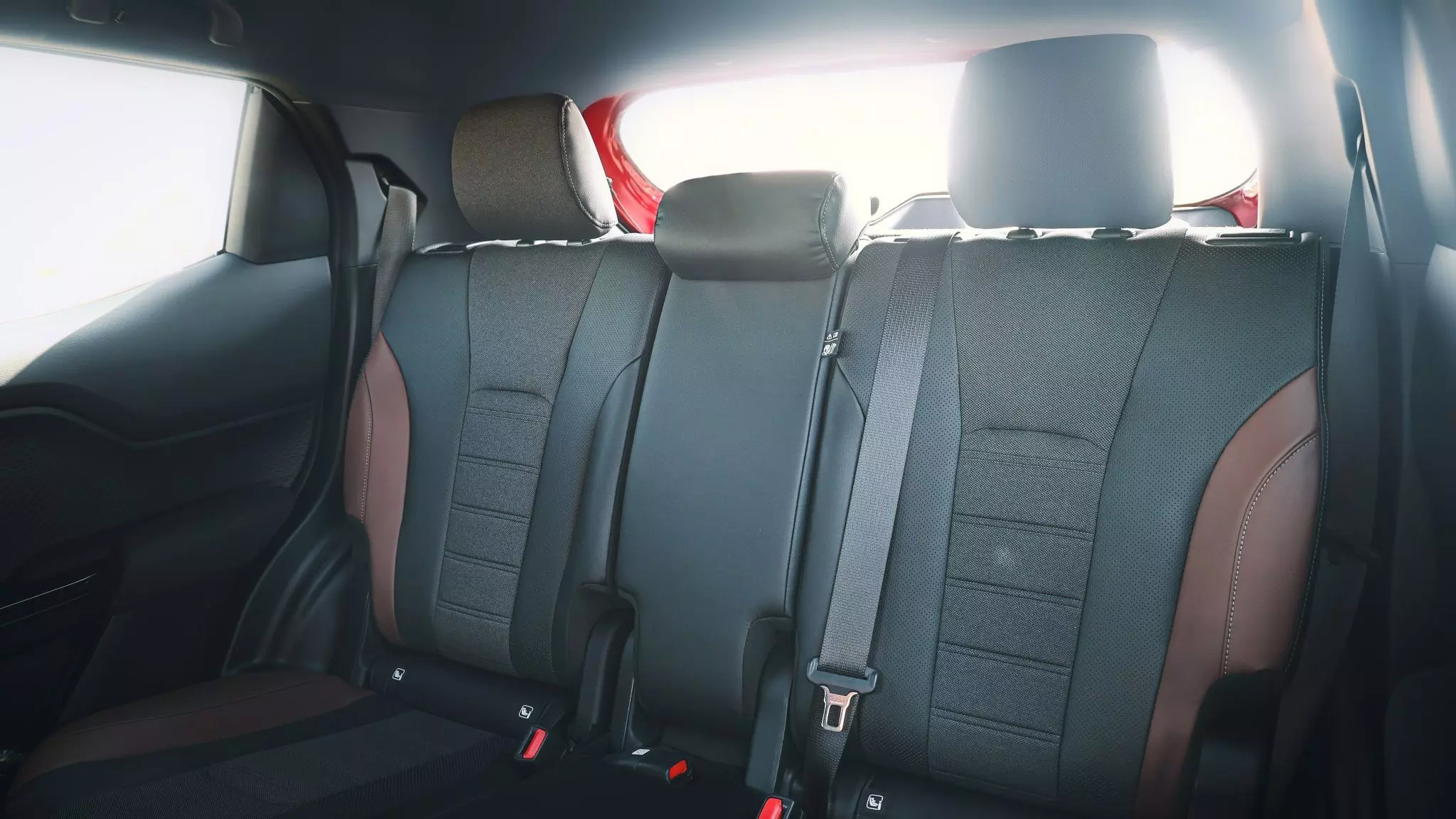
Material quality follows the same pattern. There’s soft-touch material where it matters, tougher plastics where durability takes precedence, and an overall sense that this cabin is designed to age quietly rather than impress immediately. The fixed glass roof brings in light, though the absence of a panoramic unit does leave the cabin feeling less airy than some newer competitors. Some parts and buttons have also been borrowed from other models like the 360-degree camera view button and panel is borrowed from the Glanza, and the exterior door handles look like the ones from the Urban Cruiser Hyryder. There’s nothing negative about this but just more of an observation.
Toyota Urban Cruiser Ebella space
The Ebella’s limitations become clearer in the second row. Knee room is decent, and headroom is just about sufficient for an average-height adult. But the raised floor – an unavoidable consequence of battery packaging – compromises under-thigh support, leaving occupants sitting with their knees slightly elevated. The rear bench does slide and recline, which allows some flexibility, and you get features like AC vents, type-C ports, spacious door pockets and the middle seat doubles down to become the central armrest and gives cabin-boot access. It’s fine for short to medium journeys, but not a place you’d look forward to spending hours.
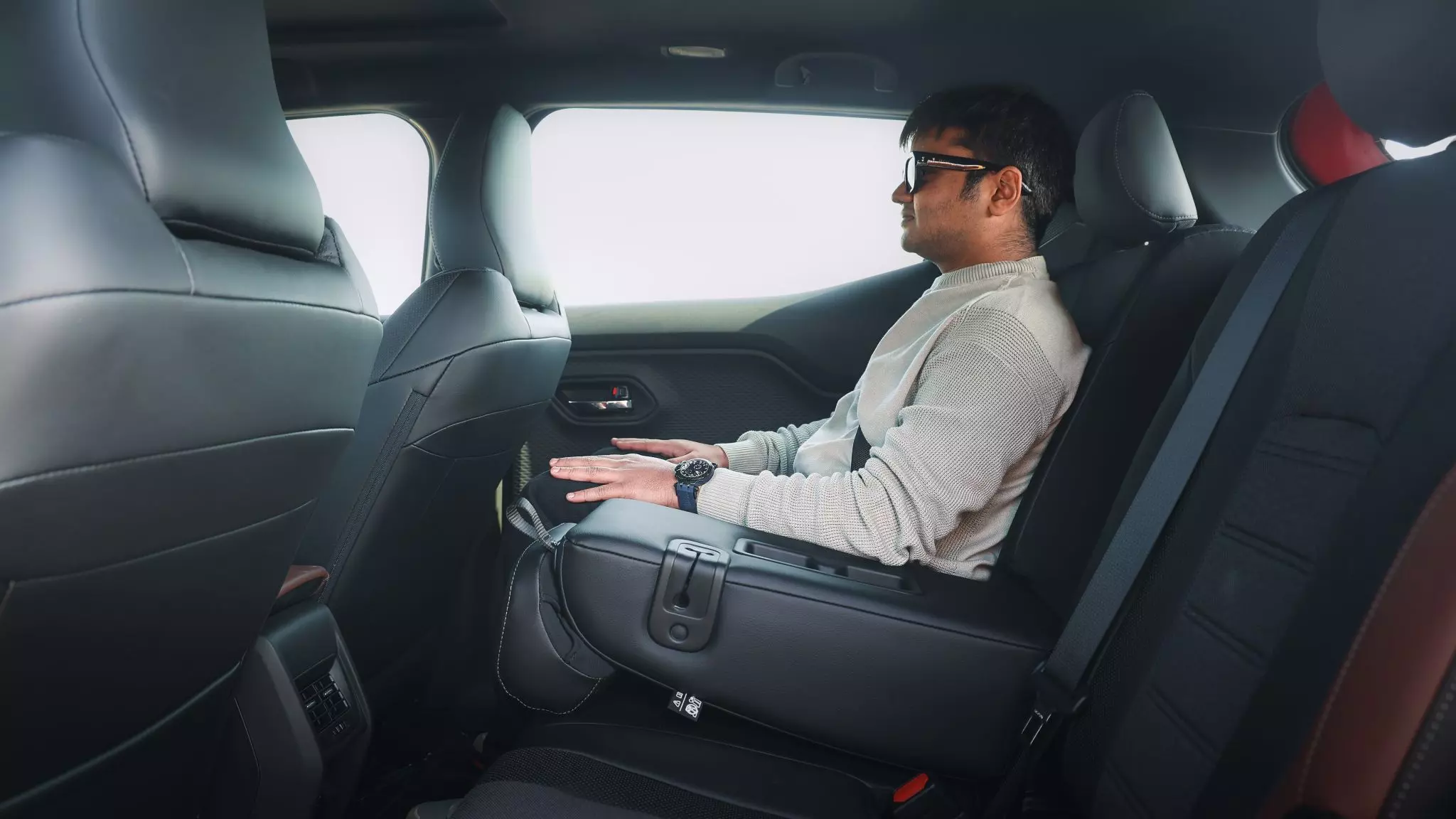
Its rear bench slides and reclines, still lacks adequate under-thigh support; the rear gets amenities like rear AC vents and USB Type-C charging ports — Shot by Avdhoot A Kolhe for evo India
Toyota Urban Cruiser Ebella battery and driving impressions
Moving on to what matters the most at evo India. The Thrill of Driving. The Ebella’s electric drivetrain feels perfectly aligned with its overall character. Given that it shares its battery and motor setup with the Maruti Suzuki e Vitara, the way it delivers power will feel identical to its sibling. It's not going to make any headlines in terms of power or range, but still gets respectable figures to not get called out for it either. It gets two battery pack options – a smaller 49kWh unit with a 440km claimed ARAI range, and a larger 61kWh unit with a claimed range of 543km. In reality, our test car with the bigger battery showed a readout of 480km range with 100 per cent SOC. There’s a single motor placed on the front axle which makes 172bhp and 192Nm. On paper, those figures look adequate, and because it’s an EV, I had assumed the acceleration would be aggressive and immediate, like most electric cars. But the moment I drove out of the hotel and onto the highway, it was clear those assumptions were about to be rewritten.
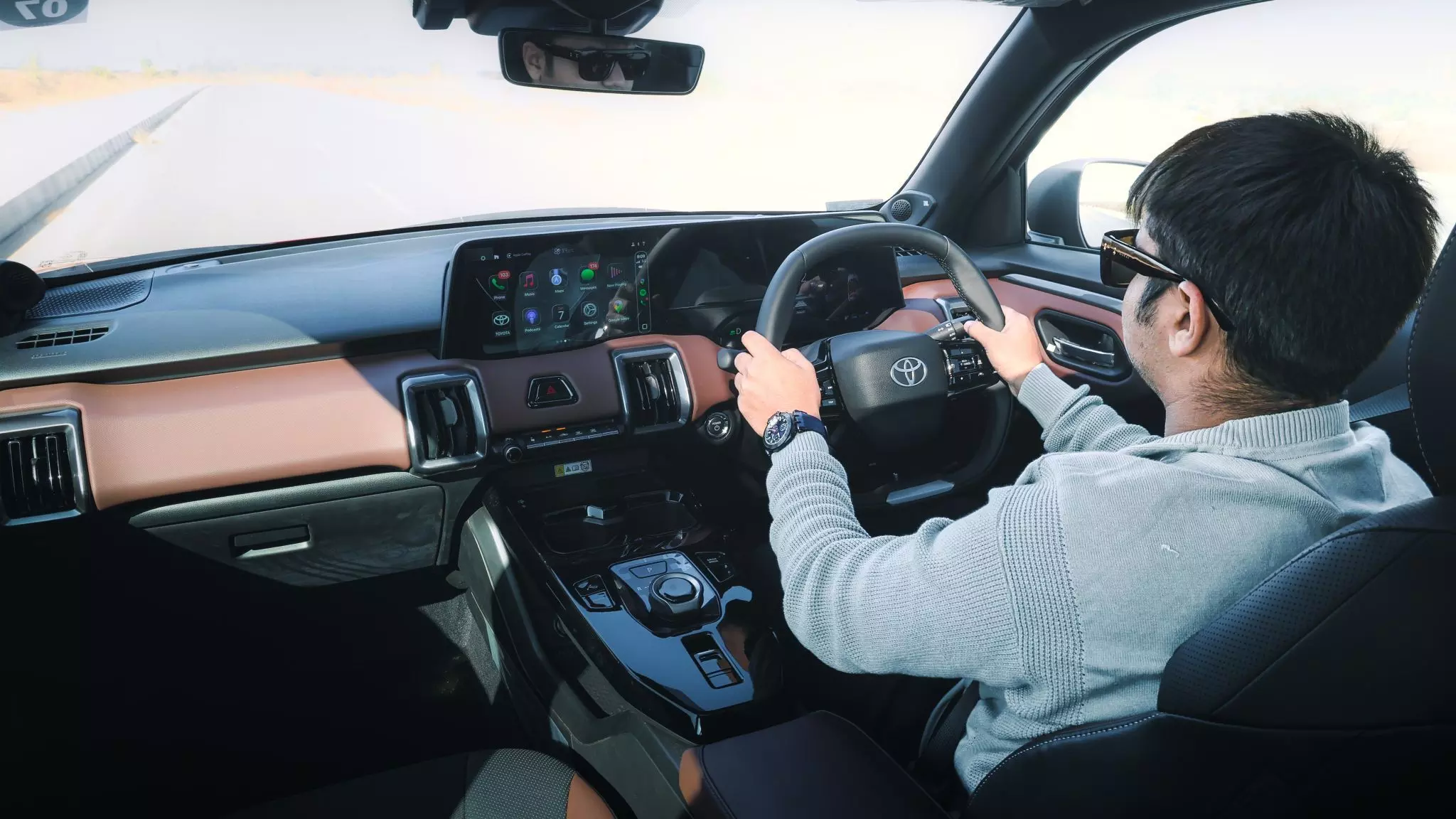
It puts out a max output of 172bhp and 192Nm, which is sufficient but not thrilling by any means — Shot by Avdhoot A Kolhe for evo India
Initial acceleration is brisk enough to remind you you’re driving an EV, but it never tries to pin you to the seat. The torque mapping is done so well that you never experience that sudden surge that can feel nauseating in some electric cars. For someone like me, who does struggle with motion sickness, this calibration feels spot on. Instead of mimicking the brutal acceleration of other EVs, the Ebella delivers power in a more linear fashion, building pace progressively, much like a petrol car. That familiarity makes the driving experience far more natural. In city traffic, the immediate torque makes gaps easy to exploit and keeps the car feeling light on its feet. Even at highway speeds, it continues to respond cleanly, with enough shove on tap for confident overtakes without any sense of strain. You get three drive modes – Eco, Normal and Sport – it alters throttle response and efficiency, but Normal feels best suited to everyday Indian conditions. Sport sharpens responses but never turns the Ebella into something it isn’t, and Eco prioritises range without making the car feel lethargic.
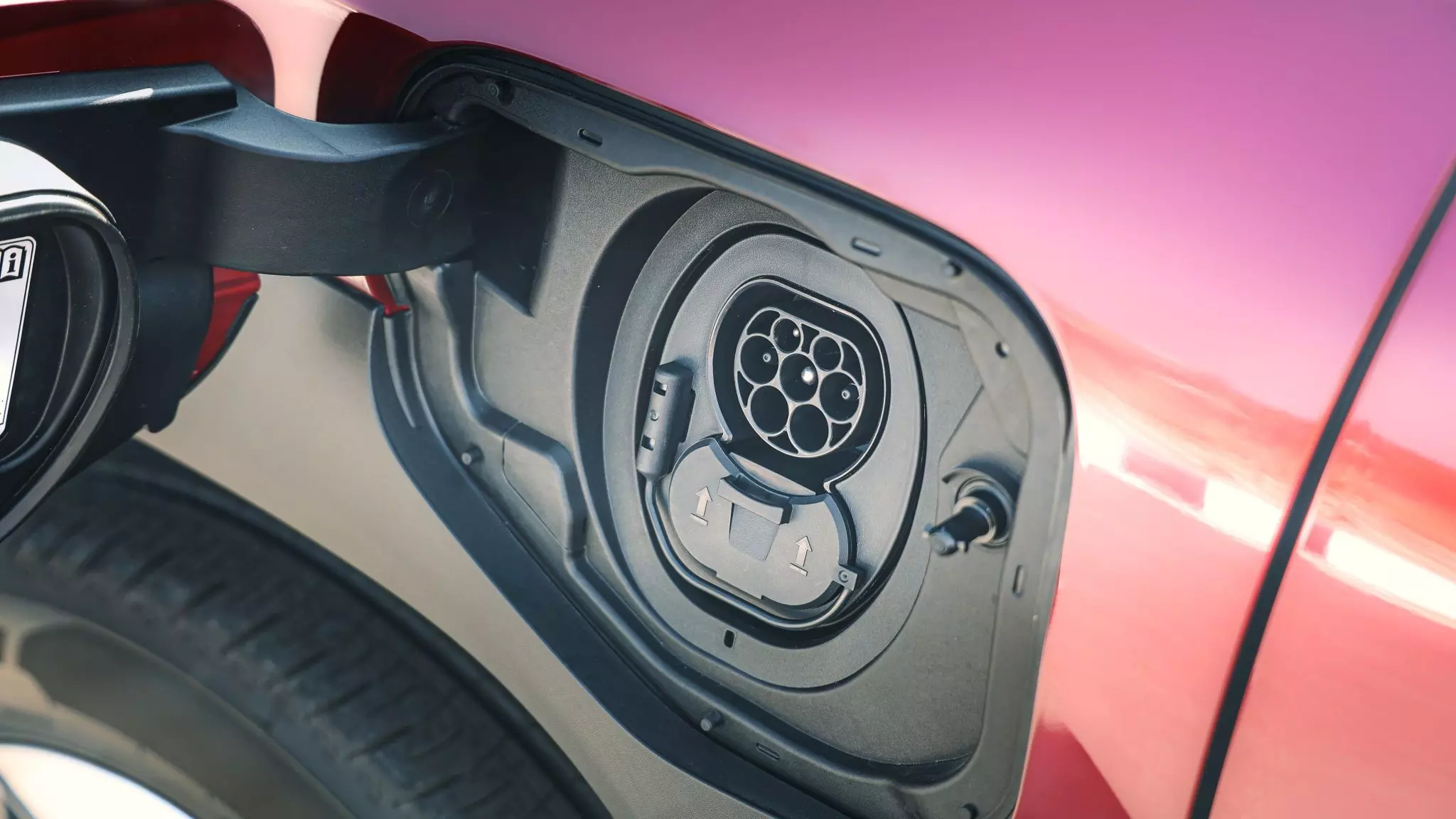
The larger 61kWh pack has a claimed range of 543km; utilises three driving modes Normal, Eco and Sport Mode — Shot by Avdhoot A Kolhe for evo India
Even when driven harder, efficiency remains consistent at around 7km/kWh, which is actually better than a lot of other EVs. That efficiency matters more than headline numbers, because it reduces the mental load of constantly recalculating range based on driving style. The regenerative braking is well judged, particularly in its stronger one-pedal mode, which feels natural and progressive. However, there are no paddle shifters to change regen modes and the inability to adjust these levels on the move feels like a missed opportunity. The controls are buried in menus and restricted to adjustments only when the car is stationary.
Toyota Urban Cruiser Ebella suspension
Where the Ebella really impresses is in how well it deals with Indian roads. The suspension setup strikes a careful balance between comfort and control, absorbing broken surfaces, potholes and uneven tarmac without feeling floaty or brittle. At speed, the car feels stable and composed, with body movements well contained. There’s the occasional thud over sharper imperfections, but nothing that unsettles the chassis or disrupts confidence. On winding roads, the steering remains light and largely devoid of feedback, but grip levels are strong and body roll is also managed fairly. This isn’t a car that encourages spirited driving, but it doesn’t discourage it either. More importantly, it feels predictable and secure – qualities that matter far more in emergency situations than outright engagement.
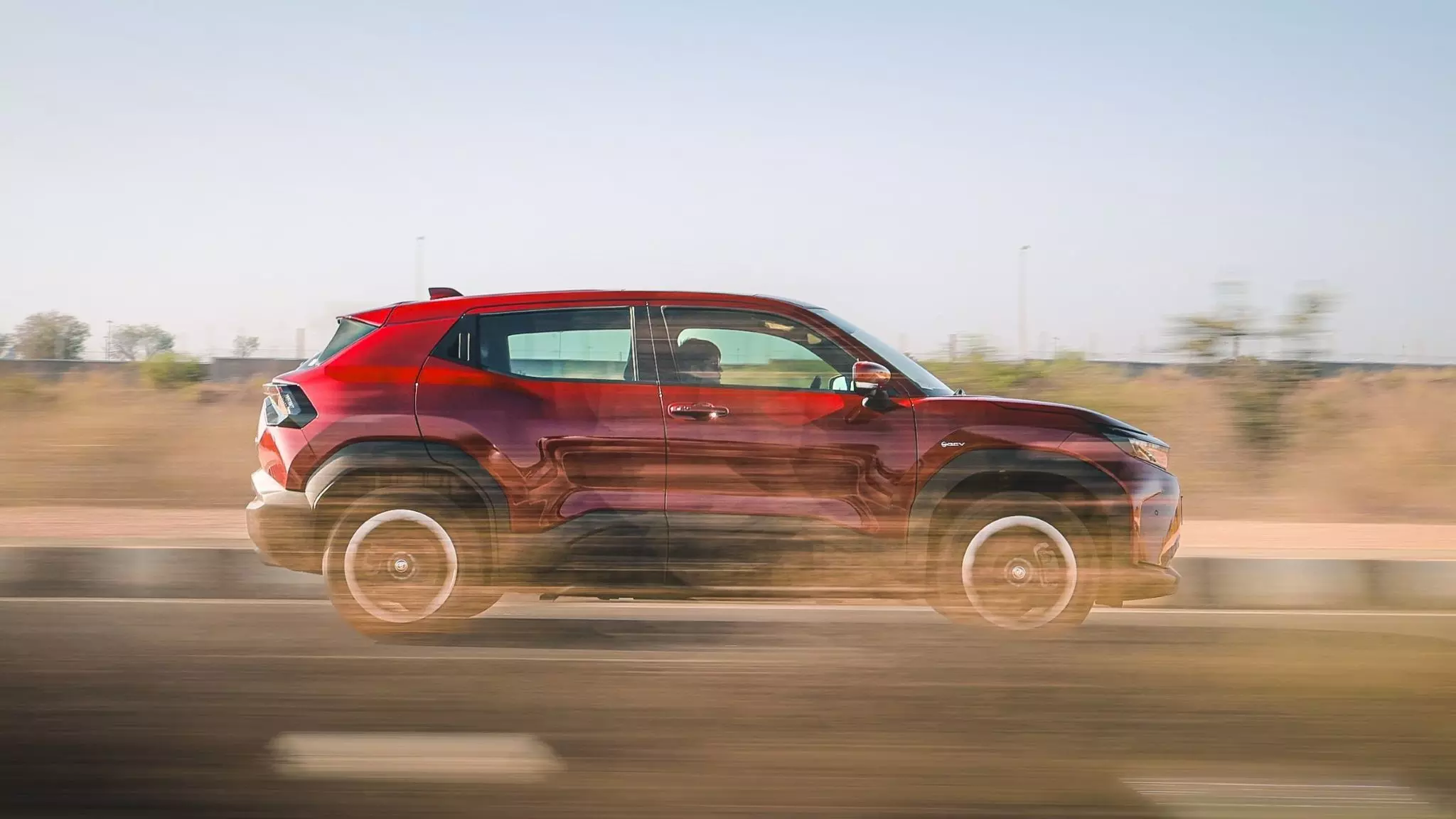
The suspension toes the line between comfort and control, making it predictable yet it isn't meant for enthusiastic driving — Shot by Avdhoot A Kolhe for evo India
Toyota Urban Cruiser Ebella verdict
Spend enough time with the Urban Cruiser Ebella and a clear picture emerges. This is not a car designed to dominate spec sheets or steal headlines. It doesn’t offer the most space, the flashiest interior or the most dramatic performance in its segment. What it does offer is a coherent, well-judged electric experience that feels reassuringly normal. That restraint will frustrate some buyers, particularly those looking for excitement or novelty from their first EV. But for others – especially those stepping into electric mobility with a degree of caution this is a great option.
Now, unlike the Maruti Suzuki e Vitara it shares its underpinnings with, the Ebella doesn’t benefit from Maruti’s expansive charging ecosystem or priority access, but Toyota has said that they have partnered up with Chargezone and Jio-bp pulse to set up a network of fast chargers throughout the country. Along with this, Toyota will also give owners a home charger, 8 year battery warranty, and a BaaS programme to encourage more people to purchase the car. The Ebella’s prices aren’t out yet, but the e Vitara’s prices have been announced. The BaaS programme starts at ₹11 lakh and you can purchase it outright starting from ₹16 lakh, which goes up to ₹19.79 lakh. The Ebella will be priced similarly, and that does sound like a good deal. It undercuts the Mahindra BE 6 aggressively, which goes all the way up to ₹27.65 lakh! The e Vitara might be a smarter choice considering their charging infra with priority access, lower maintenance and service costs compared to Toyota, and expansive dealer and service network. That being said, the Ebella does have a different design which may appeal to some buyers and also the Toyota badge which adds tonnes of credibility.