

Skoda Kodiaq
Special Features
We drive three new Skoda Kodiaqs L&Ks from Delhi to Hyderabad covering 1800kms
While driving the three Skoda Kodiaqs from Delhi to Hyderabad we test its comfort, performance, ride, handling and Skoda's Simply Clever features
This was one of the smoothest stretches of tarmac I’ve ever driven on. No tyre noise, no wind noise, no surprise bumps, no sudden patches of broken road. Just a long, flawless ribbon of NH44, the kind of road that makes even a longhaul SUV stretch its legs and feel alive. But before I get ahead of myself, let me backtrack a bit to explain how I ended up here – not with one Škoda Kodiaq, but with three of them.
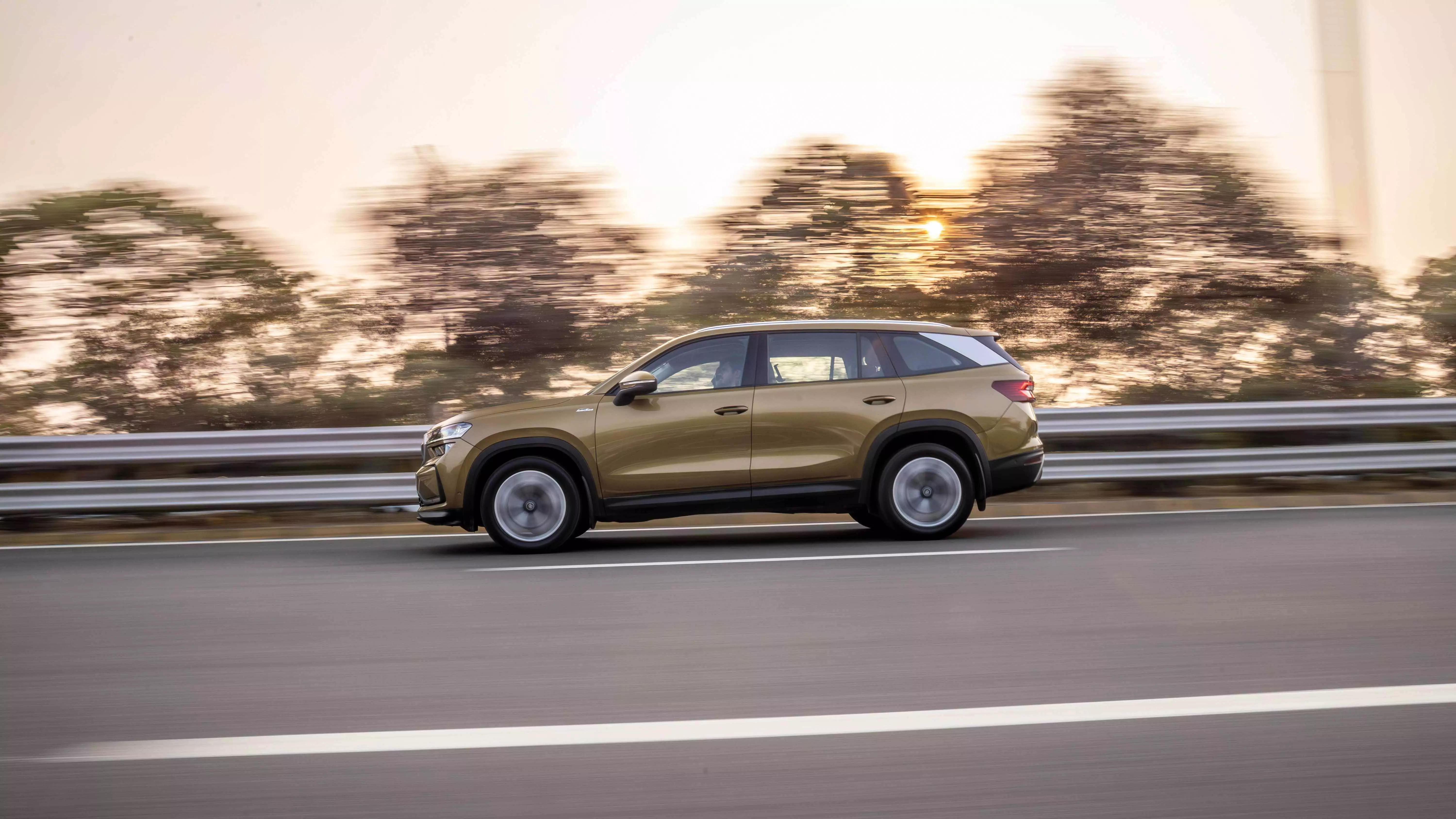
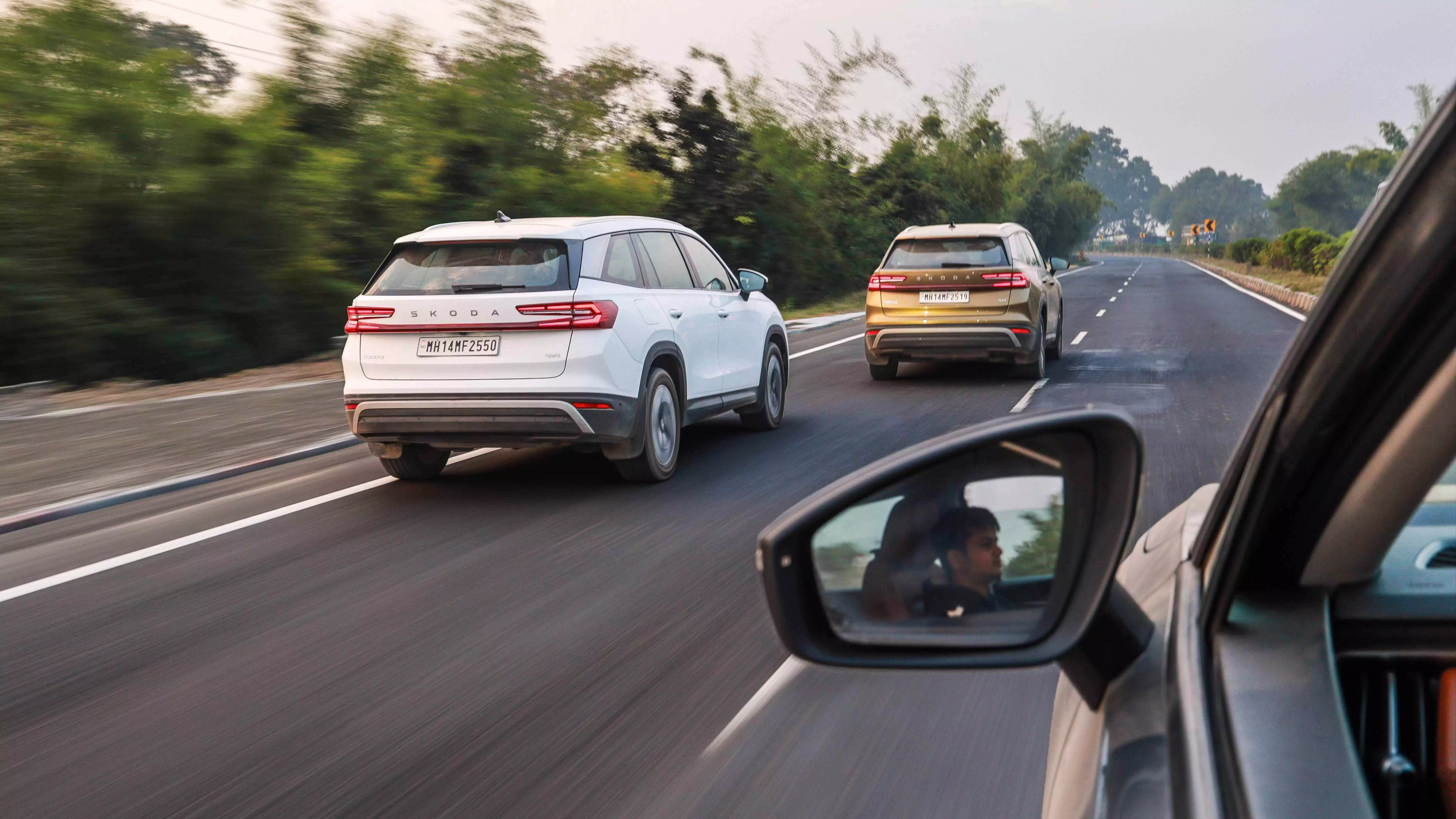
The Skoda Kodiaq L&K on the NH44 covering the distance from Delhi to Agra on Day 1
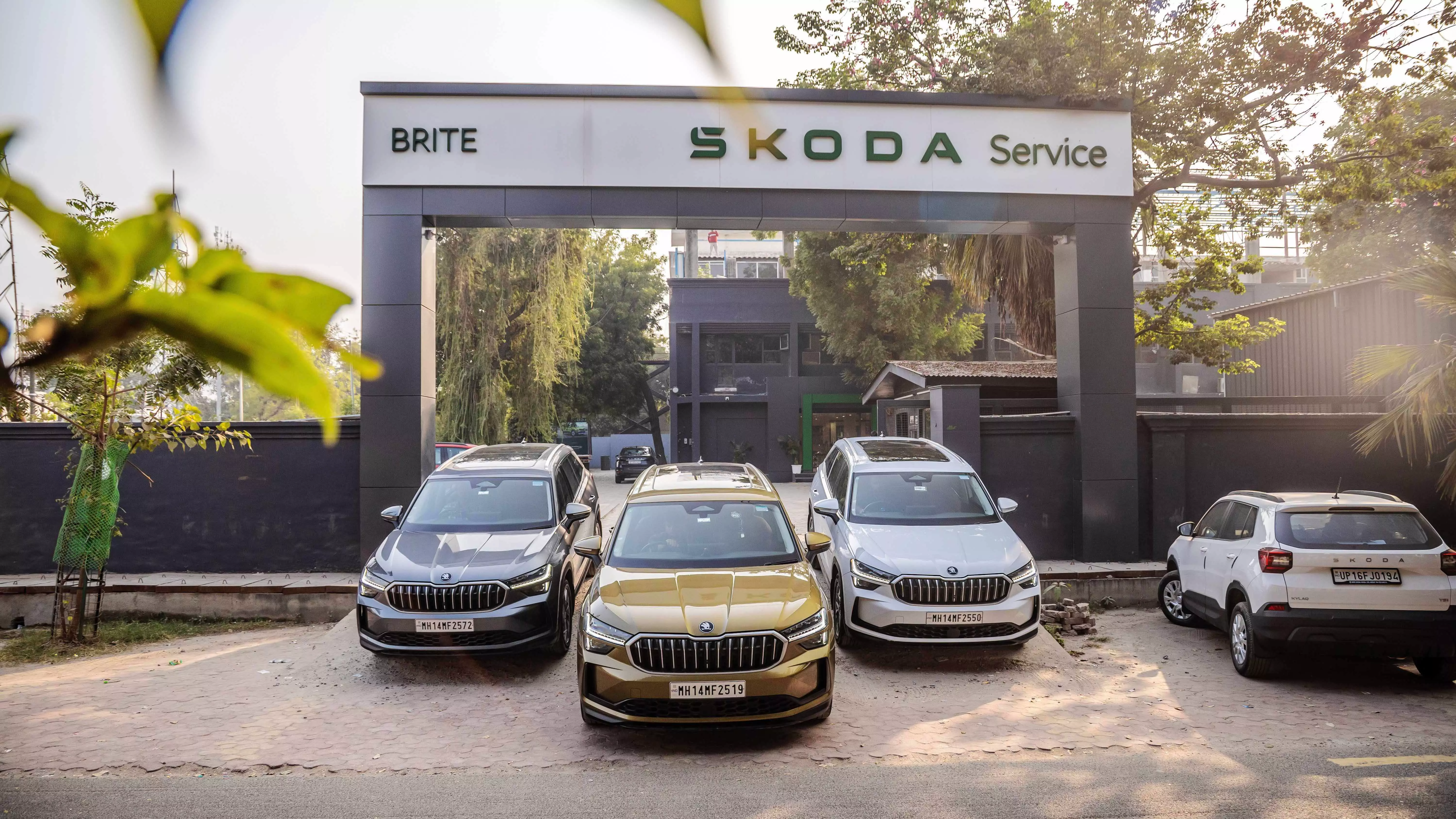
Most road trips begin with a plan. Mine began with a question: what’s the best way to cross half the country without feeling like you’ve crossed half the country? The answer stood outside the Brite Škoda service centre in Noida – three brand-new Kodiaq L&Ks lined up in a neat formation, looking like they’d been specced specifically for a cross-country mission. Delhi to Hyderabad was the target. 1800km, five states, five weather forecasts and one big question: could the Kodiaq genuinely make this monster of a drive enjoyable, or would the novelty wear off somewhere around the heartland?
Truth be told, the trip nearly didn’t happen for me. I’d just driven 1000km a few days prior and the idea of getting back on the road wasn’t exactly thrilling. Combine that with Delhi’s winter cocktail of cold air and questionable air quality, and my enthusiasm was hovering slightly above zero. And then I remembered the Kodiaq’s massage seats. That alone should explain everything. Ventilation, heating, perfect cushioning and a genuinely good massage function – enough to make you question your life decisions, especially why your couch at home doesn’t do any of this. With that in mind, motivation returned. And I joined the crew.
Escaping Delhi at 3pm is a universal test of patience. Horns blaring, buses appearing from angles that shouldn’t exist, lane discipline that exists only in theory – classic NCR chaos. But inside the Kodiaq, none of that mattered. The acoustic glass created a peaceful cocoon, and the 725W 13-speaker Canton sound system handled the rest. The city remained outside; we stayed in our little bubble. At moments like this, you don’t just feel like you’re driving a nicer car – you feel like you’ve upgraded your life.
The Yamuna Expressway gave the Kodiaq room to breathe. Agra was our first halt, 230km away. The concrete surface can drone and echo in most cars but the Kodiaq simply ironed it out. At a steady 100kmph it felt like we were gliding. We reached by evening, grabbed dinner and the next morning, made the mandatory sunrise trip to the Taj Mahal. Winter sun, a gorgeous monument, immaculately manicured gardens and three Kodiaqs idling nearby – not a bad way to start the day.
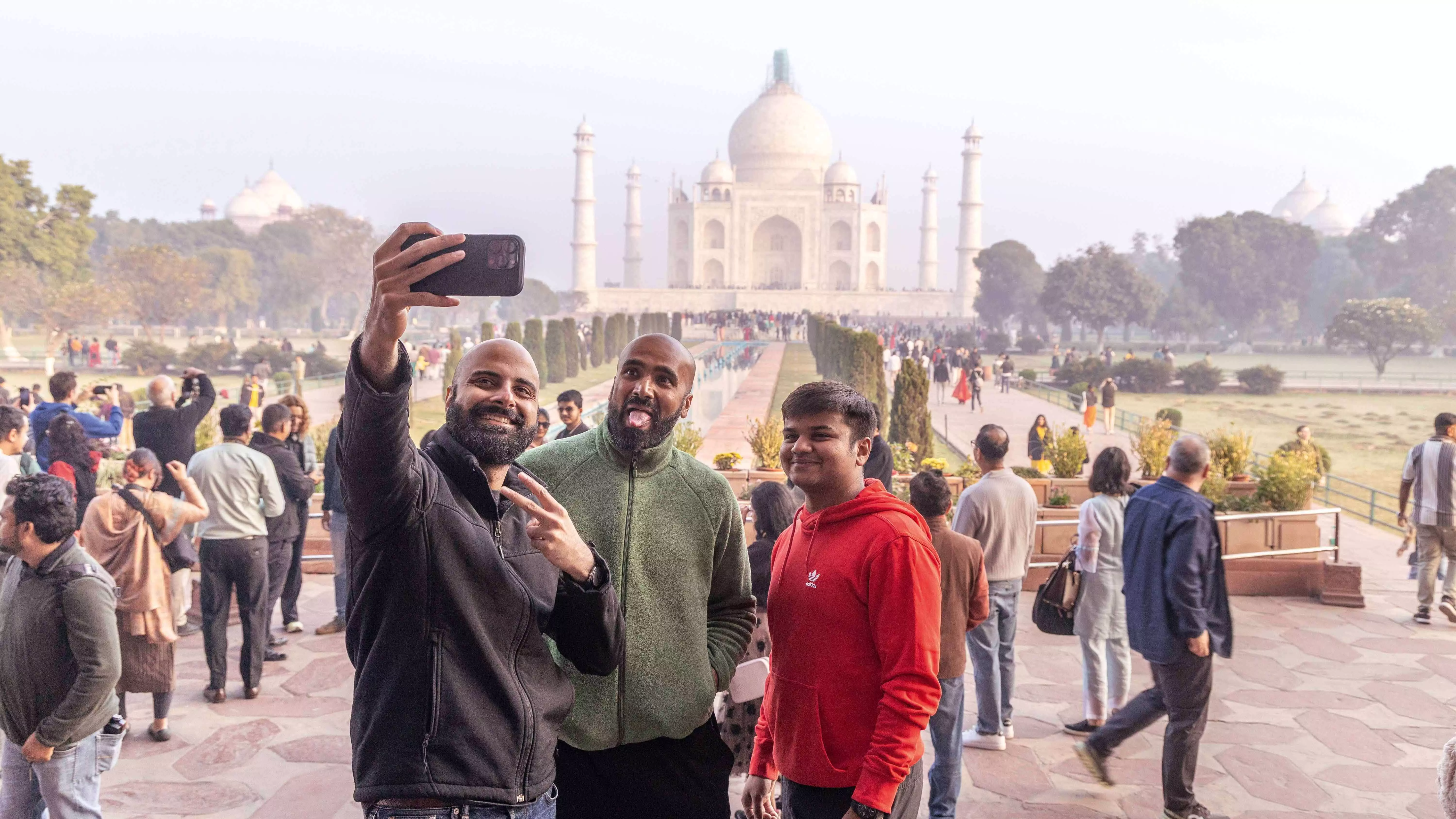
The team at the Taj Mahal, Agra
From Agra, the stints grew longer. After Taj Mahal, the plan was to head 530km to Satna via the Bundelkhand Expressway and NH44 – a highway that I soon learned, is the longest in the country, stretching from the top of Jammu & Kashmir to the bottom of Tamil Nadu. And it turned out to be the perfect playground to get properly acquainted with the Kodiaq’s cabin.
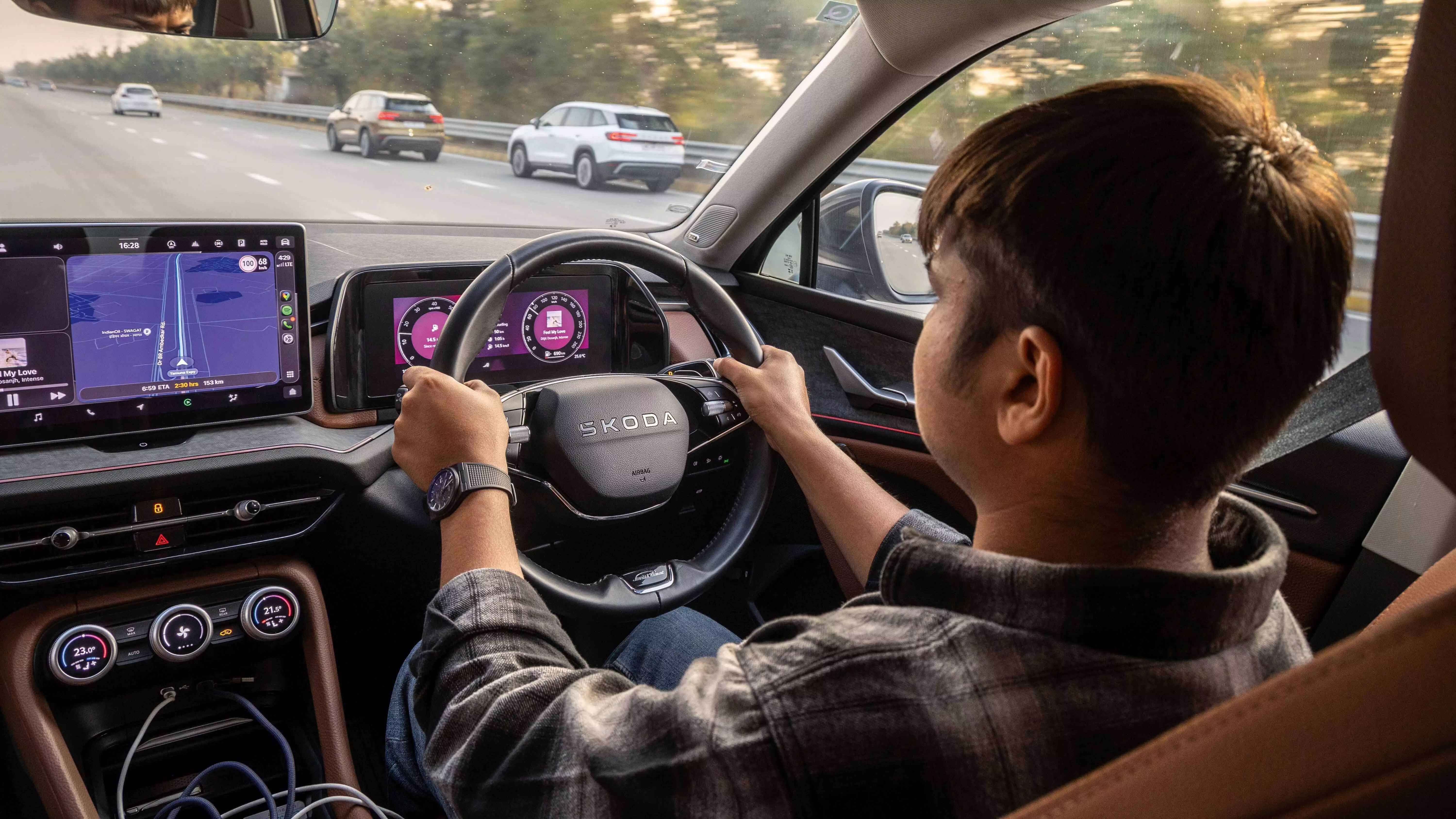
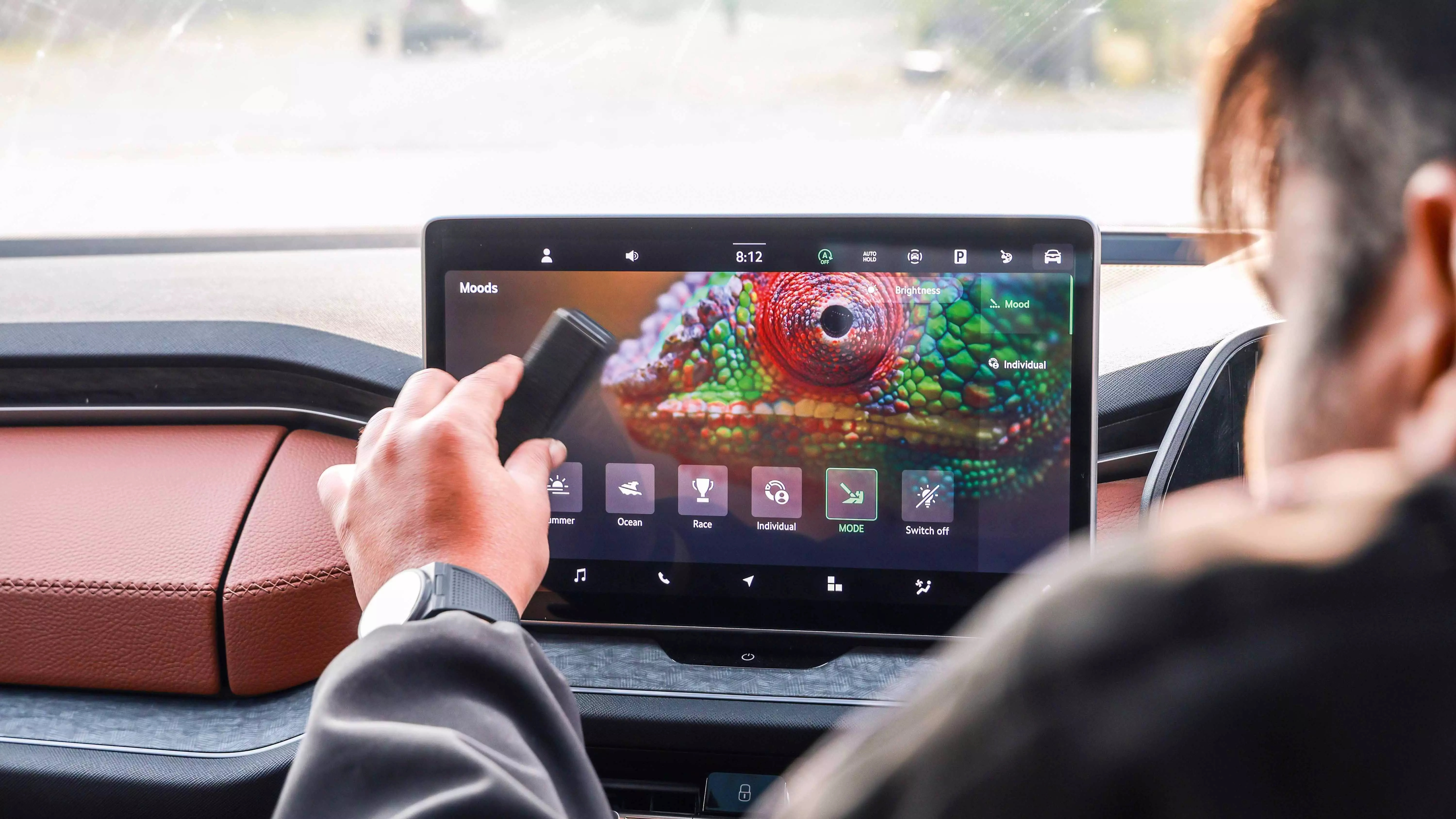
This new generation has taken a big leap forward. Softer tan leather, a cleaner dashboard design and a steering column-mounted shifter that suddenly frees up space in places you didn’t know needed freeing. You also get threezone climate control, two wireless chargers, USB-C ports where you actually need them – it’s all very thoughtfully arranged. But the hero is the Smart Dials. Three brilliant rotary knobs that let you control temperature, seat ventilation, drive modes and even volume, depending on what you assign. No sub menus. No digging. No ‘touch the screen and hope you hit the right thing’. Just twist. Done. On an 1800km road trip, this is a saviour.
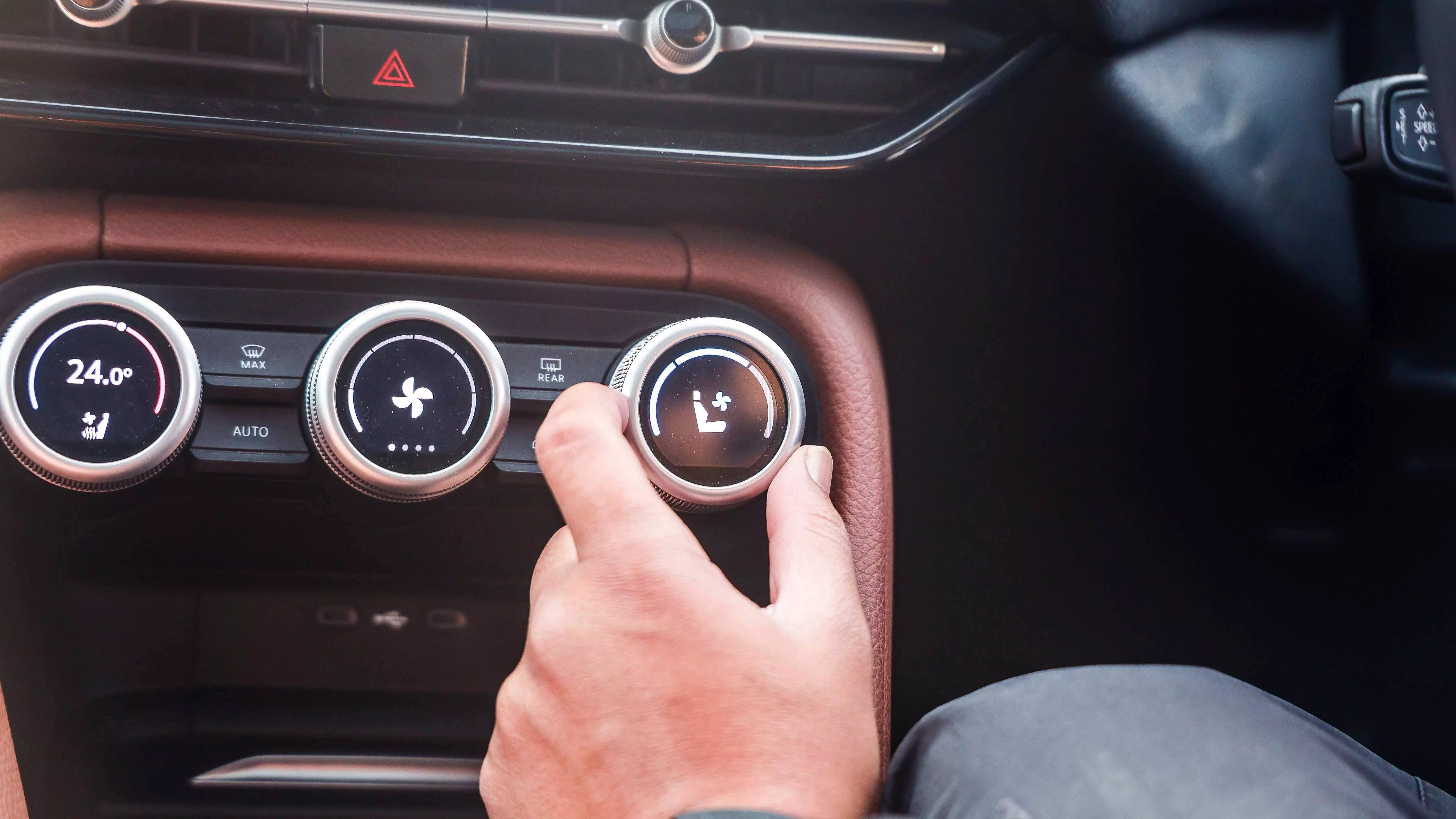
And this is where Škoda’s ‘Simply Clever’ philosophy also quietly shines. It’s not just a tagline – it’s an entire ecosystem of small conveniences that constantly help without shouting for attention. Door-edge protectors that automatically slide out so you never ding your paint while opening the door in a tight spot. An umbrella in a dedicated holder so you’re never bothered by unseasonal showers. A dustbin that keeps snack wrappers in check, a ticket holder so toll slips stop disappearing, a display cleaner for the massive 13-inch infotainment screen, a tablet holder and a storage tray for bottles for the rear passengers.There’s also a flexible boot mat that folds individually with the seats and has hooks for your bags. Honestly, Škoda has left no room for any kind of inconvenience with this Kodiaq.
Back on the Bundelkhand Expressway, the road was beautifully empty and the Kodiaq surprisingly efficient. We managed an honest 15kmpl thanks to the aero-optimised 18-inch wheels and long cruising stretches. By Satna, we’d covered serious ground without feeling drained.
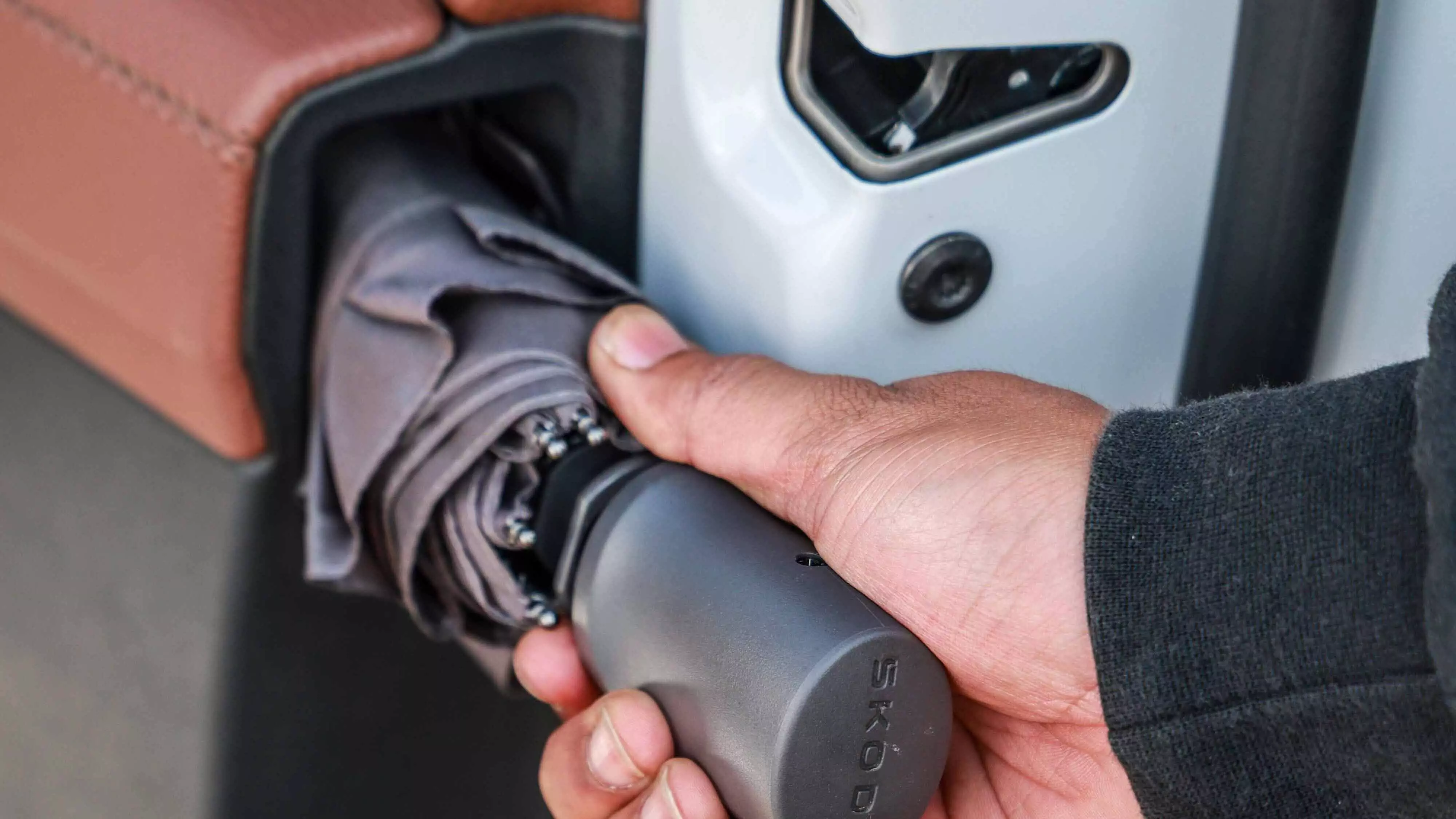
The next day, the Kodiaq’s character began to unfold more deeply as we pointed ourselves towards Nagpur – about 480km away. This is a route of fast highways,sweeping curves and the occasional straight stretch where you can pull off even drag races. And we properly made use of the good roads and the Kodiaq’s turbocharged petrol motor. Under the bonnet sits the familiar 2-litre TSI – the EA888 – the same engine that powers the Octavia RS. In the Kodiaq, it makes 201bhp and 320Nm, which sounds adequate on paper, but on the road, it feels like far more. Driven gently, it’s smooth, polite, almost shy. But shove it into Sport, drop a gear, give it the beans and suddenly the Kodiaq reveals a streak of athleticism that’s wonderfully unexpected for a car weighing 1.8 tonnes.
Nagpur greeted us with diversions. 15km of diversions in the city due to metro construction. Here, the 360-degree camera came in handy because of the narrow lanes and all sorts of vehicles trying to overtake you. We tucked in early, knowing the next day would be the most challenging – Maharashtra’s post-monsoon roads.
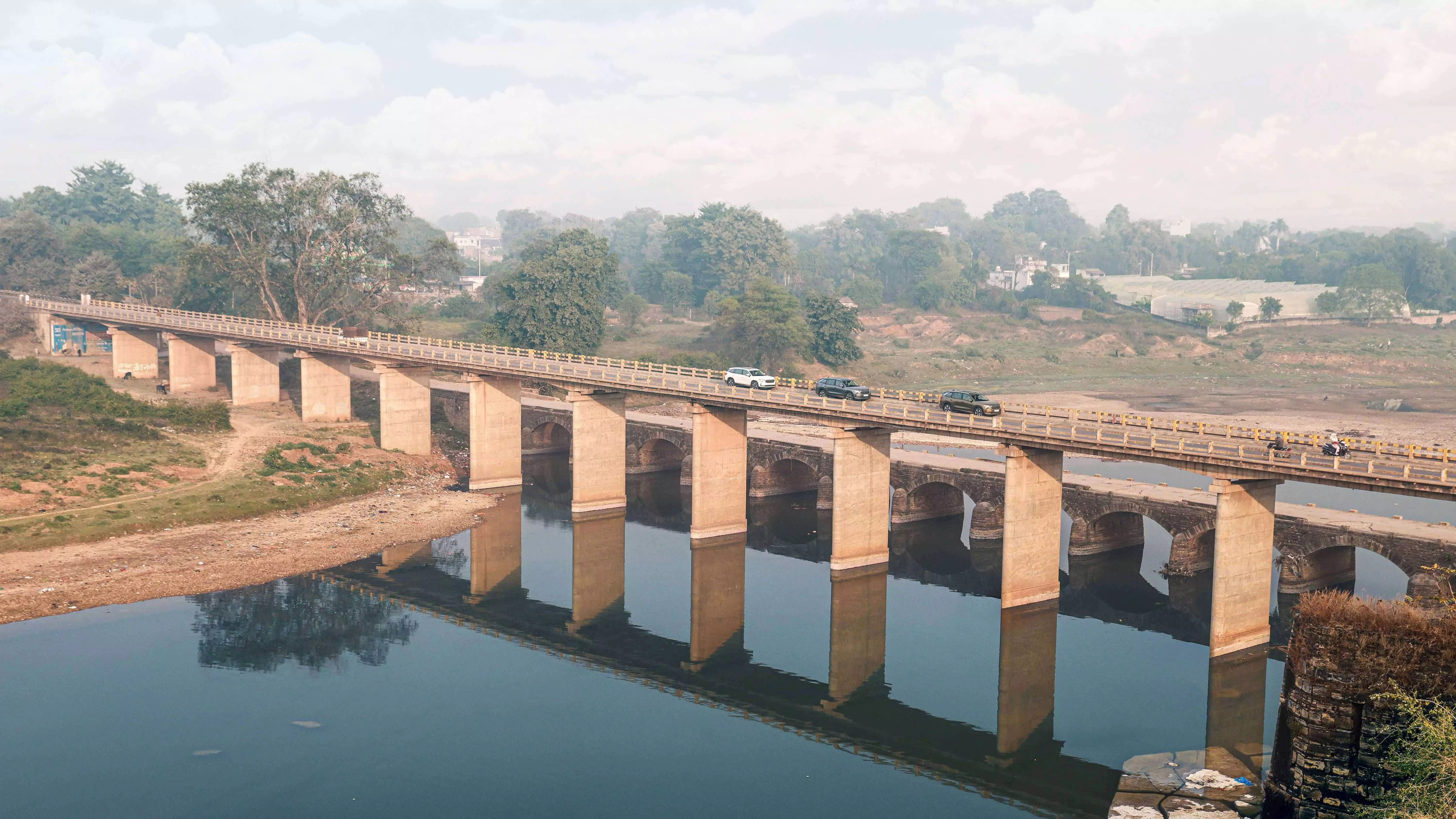
The next morning was early and our first destination was the Zero milestone. That point marks the geographical centre of India and it is in Nagpur. Post a quick photo session, we started driving towards Hyderabad. It only took me a few hundred kilometres to realise how wrong I was. I had never driven south from this side of the country. And everything that I expected was incorrect. The bad Maharashtra roads and broken patches don’t exist on this side. Yes, there were a few diversions to fix the broken patches but it was negligible. The roads are buttersmooth, tarmac is brilliant and it is one of the best national highways to drive on. The AWD system worked brilliantly whenever we did find broken patches and craters, and helped us get out easily. Even though the Kodiaq is a fairly long SUV and we had packed luggage to the brim, it didn’t bottom out even once. The MQB platform deserves applause here. It’s solid, predictable and reassuring in the way good European engineering often is. Even over expansion joints, the Kodiaq remained composed, like it had quietly decided stress was beneath it.
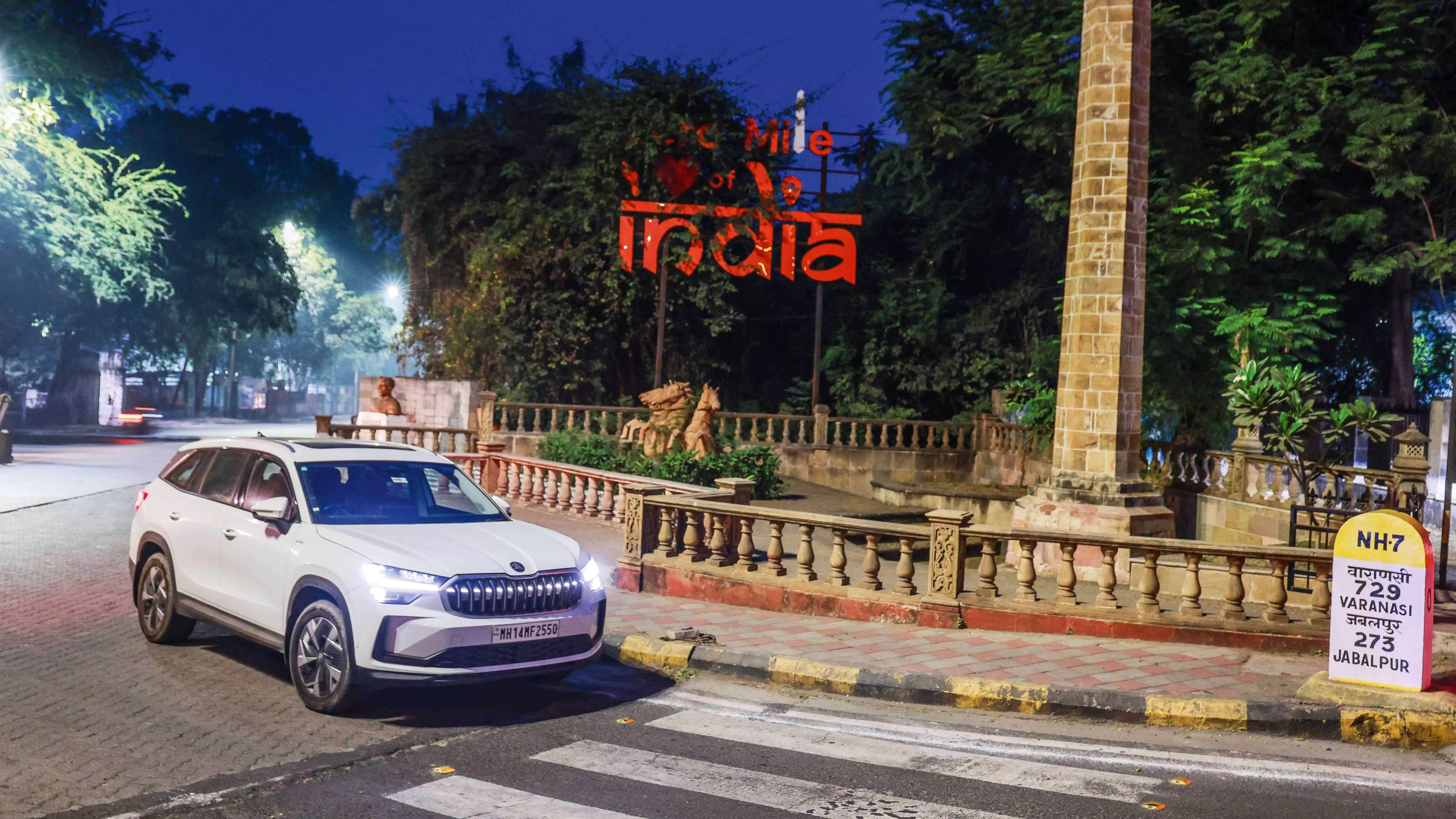
Kodiaq at the Zero milestone in Nagpur, India
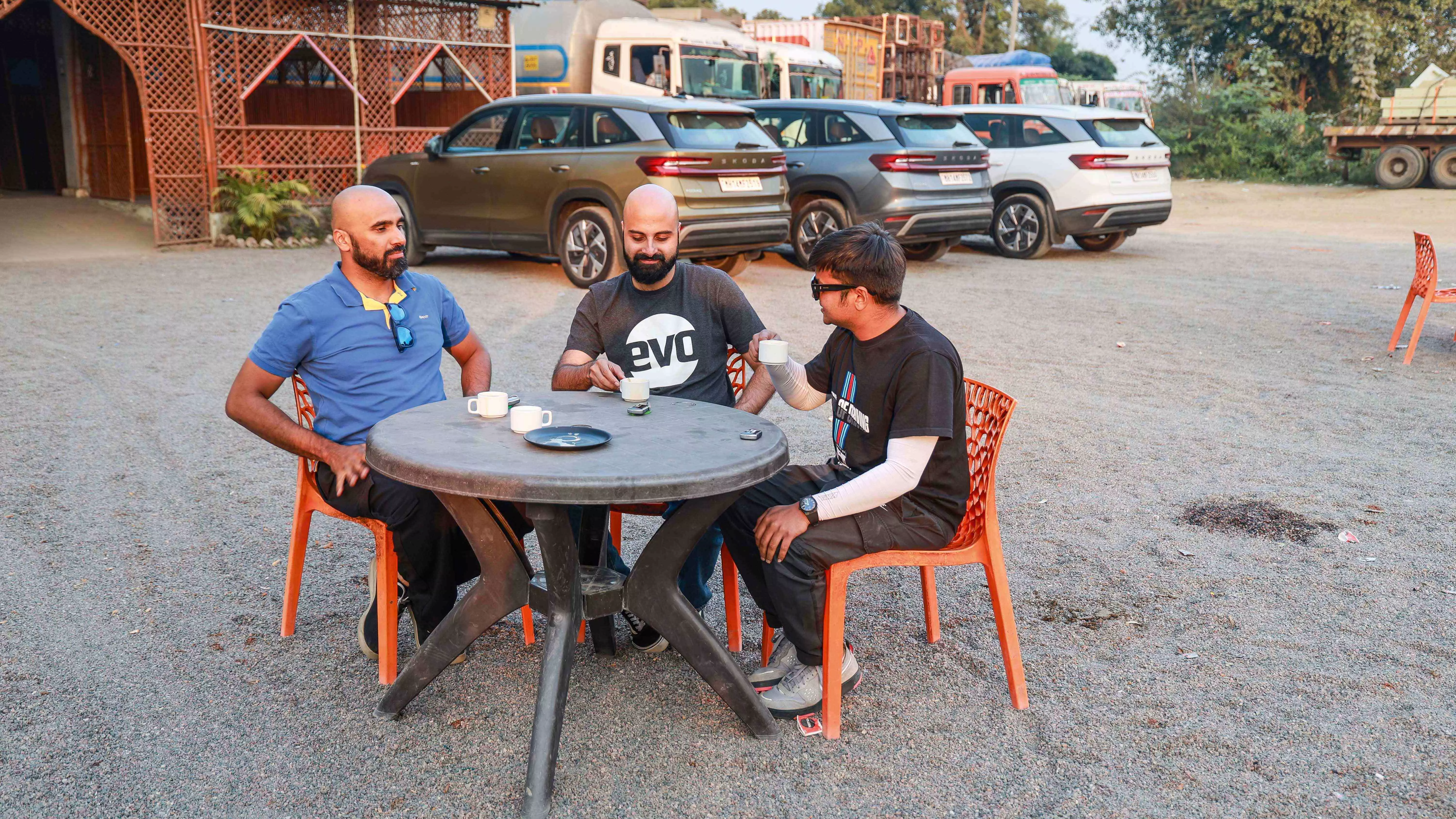
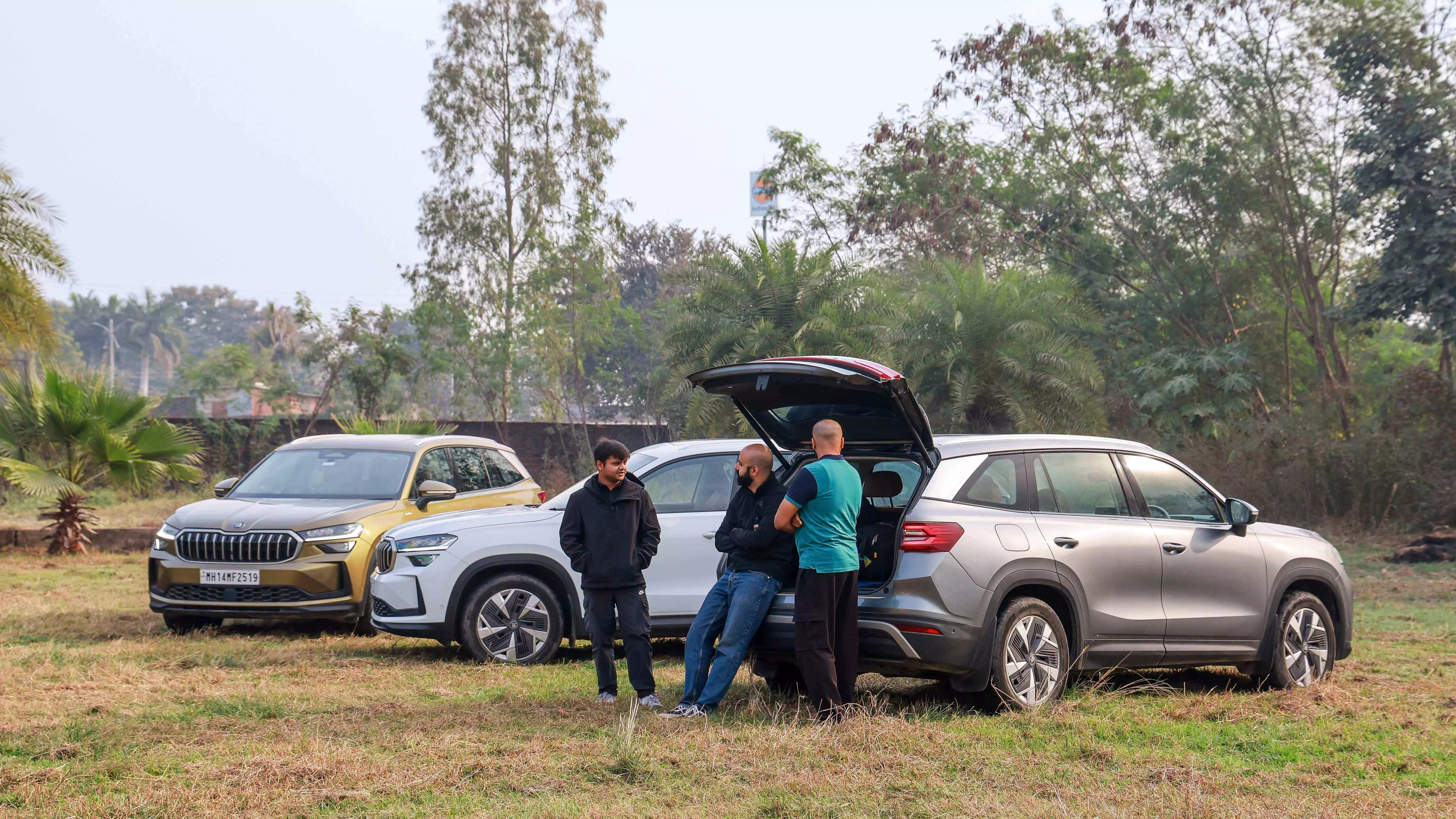
As we crossed into Telangana, golden hour arrived – and so did the chai. Part of the stop was for the chai, but let’s be honest: most of it was for admiring the Kodiaq in that warm evening light. The L&K trim looks especially sharp then – elegant grille, crisp LED signatures, aero wheels and that estate-like silhouette that gives it real presence. And somewhere between the admiration and the serenity, a plate of tasty pakoras magically appeared. I was happy.
By the time we rolled into Hyderabad, the fatigue hit – but in a good way. A satisfying kind of tiredness that only comes after a great drive. We’d crossed 1800km, breezed through states, terrain and conditions, and the Kodiaq never once felt out of its depth.
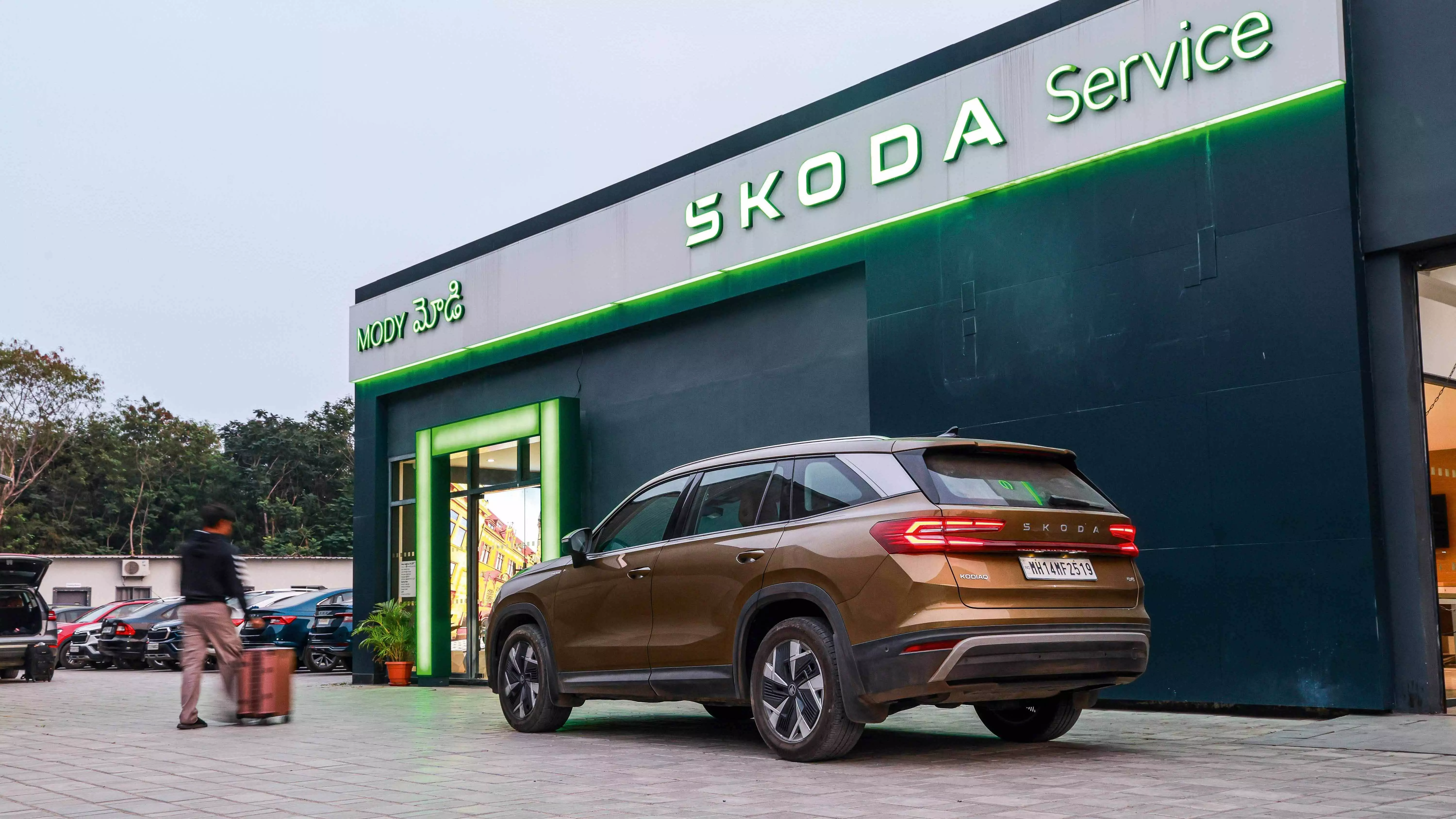
And that brings me to the final bit – the numbers that define long-term peace of mind. The Kodiaq L&K I was driving used to cost ₹48.69 lakh. Thanks to GST 2.0, it now sits at ₹45.95 lakh. Same car. Same kit. Less money. And if you want an even more accessible entry point, Škoda now offers the new Lounge variant starting at ₹40 lakh ex-showroom – same mechanicals, same chassis, just a tighter package which is more affordable.
Peace of mind also comes from knowing the numbers behind the car. Nine airbags, of course, but the ownership package is what really stands out – five-year standard warranty, a year of Škoda Supercare and ten years of roadside assistance. It’s the sort of backup that stays at the back of your mind, silently reminding you that you’re well looked after. We had the perfect finish to end our sweet drive too: proper Hyderabadi biryani. Not the Pune interpretation, but the real deal.