

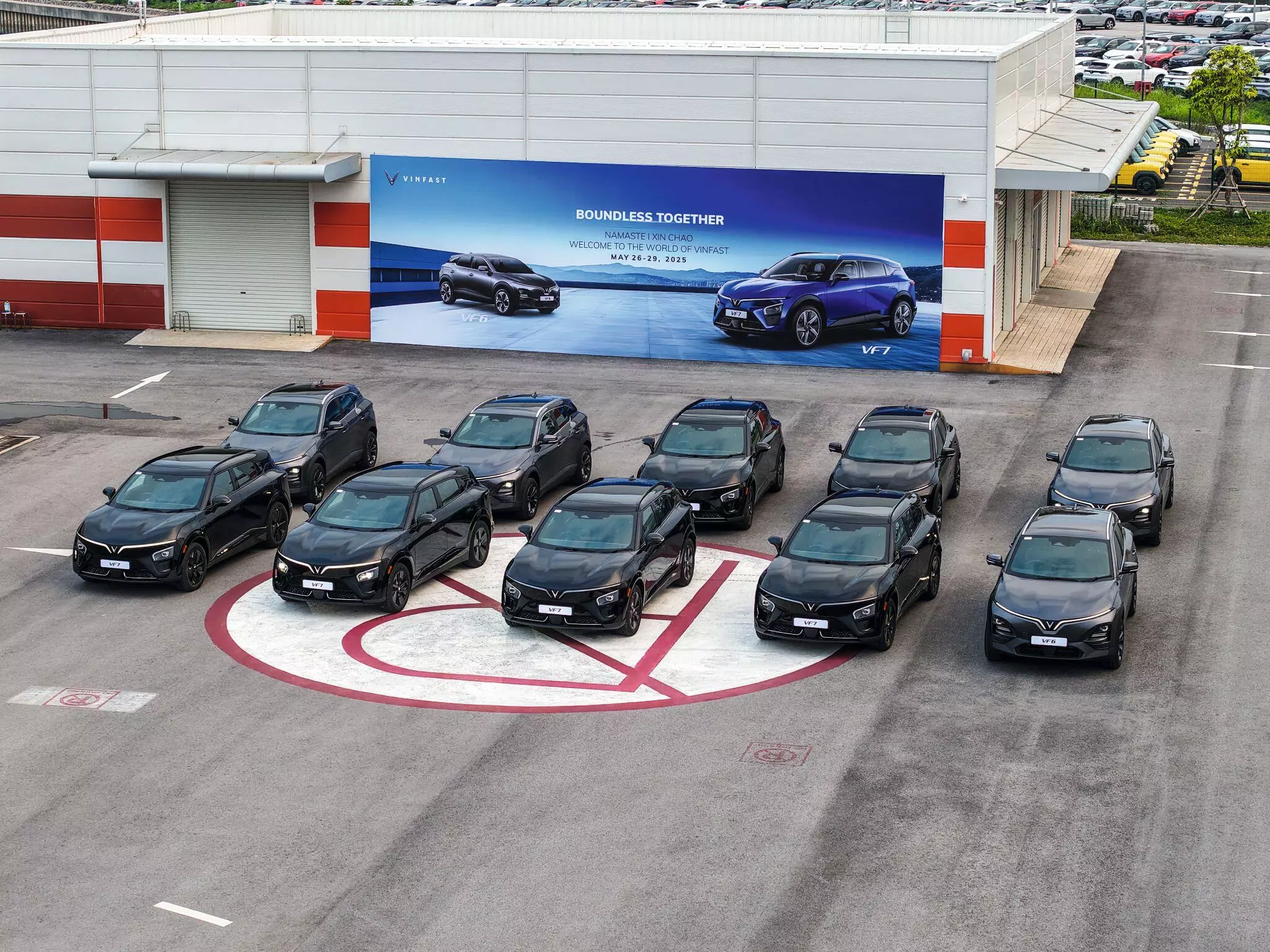
Special Features
VinFast special feature: VinFast's vision for reshaping India's electric landscape
VinFast's approach to India is smart. It shows commitment, and that approach is the one that is rewarded
It doesn’t take much to launch a car in India. But it takes a lot to be successful in India as a carmaker. Many have tried. Not all have succeeded. Giants have had their fingers burned. But few have picked the right strategies, persevered and seen immense success. The formula to crack India isn’t easy: it needs grit, commitment and a fair bit of investment. The Koreans have proved it can work. And now there’s another Southeast Asian carmaker en route. And they’re on the right track already. VinFast could have taken the easy route that so many OEMs have taken in the past – launch a flagship model as a CBU, “test” the waters and then slowly commit to a car with cost structures that work for India. They haven’t. Instead, they’ve done their research and have come to the conclusion that India deserves its own setup. A plant to manufacture cars locally. Hero products to make their debut here. And a nation-wide strategy with sales and service to build the brand in India.
The Thoothukudi plant is VinFasts way to show serious commitment to India; it has a production capacity of 1.5 lakh cars a year, but initial production plan is set at 50,000 units
The foundation of their strategy in India is their plant in Thoothukudi. It is a greenfield facility, spread across 400 acres and will be able to churn out up to 1.5 lakh cars a year. To begin with, it will make 50,000 units of its cars. It demanded an investment of ₹4000 crore, and that shows that VinFast is fully committed to make-in-India and all the benefits that come with it. A strong investment is a sign that VinFast is here for the long haul, and apart from the logical cost and tax benefits of this move, it is a great way to build confidence with the Indian buyer as a serious player in the Indian automotive space. The VF 6 and VF 7 mark VinFast’s entry into the Indian market with pricing that undercuts established competitors. The VF 6 starts at ₹16.49 lakh for the Earth variant and goes up to ₹18.29 lakh for the Wind Infinity, positioning it as an affordable electric SUV option. The VF 7, priced between ₹20.89 lakh and ₹25.49 lakh across five variants, takes aim at premium offerings such as the Mahindra XEV 9e and the upcoming Tata Harrier EV.
The two VinFasts in India have distinctly chiseled faces with an instantly recognisable bird-like LED light bar with the integrated "V" logo
Both models carry VinFast’s signature design language, which sets them apart in India’s increasingly crowded EV space. The VF 6 features a distinctive bird-like LED light bar up front that integrates seamlessly into the fascia, complemented by split LED headlamps and 18-inch diamond-cut alloy wheels. The lower bumper adopts a sportier stance, while wraparound LED taillights and a full-width light bar define the rear.
Both VF 6 and VF 7 models feature a 12.3-inch touchscreen, a HUD, ventilated seats, a panoramic glass roof and a 360-degree surround view monitor
The VF 7 builds on this theme with more aggressive bumpers and a more imposing size. Step inside the VF 6 and the cabin feels well built. They’re both well equipped with 12.3-inch touchscreen, head-up displays, ventilated seats, a glass roof and a 360-degree surround view monitor. The VF 7 takes things up a notch with a wireless phone charger, reclining rear seats and a lot more space in the rear.
The Wind variant of the VF 6 makes a healthy 201bhp and 310Nm of torque; its capable of doing a 0 to 100kmph sprint in 8.5 seconds
The VF 6 Earth variant produces 174bhp from a 59.6kWh battery, while the Wind variant delivers 201bhp and 310Nm of torque. The VF 7 offers both two-wheel drive and all-wheel-drive configurations. The highlight is the Sky variant, powered by a 70.8kWh battery. Its twin motors make for a combined 349bhp and 500Nm. Safety is well-covered with seven airbags, ABS, EBD, TCS, hill start assist, disc brakes, cruise control, and multiple drive and regeneration modes across both models. VinFast opened online and offline bookings for the VF 7 and VF 6 in July 2025 with a token amount of ₹21,000.
VinFast’s approach to India extends far beyond manufacturing. The company has partnered with RoadGrid, a prominent EV charging and aftersales solutions provider, to establish extended service workshops and tackle range anxiety with comprehensive charging solutions. Dealerships are open in major cities as are service centres. VinFast is also getting third party service providers on board to be able to cast a wider service net. GSM – an all-electric taxi company running only on VinFast cars is also on the cards. At the Bharat Mobility Global Expo 2025, VinFast showcased its broader vision for India. Alongside the VF 7 and VF 6, the company displayed the VF 3, VF 8, and VF 9 SUVs, signalling an expansive product lineup. The VF 3 could be on the cards for a 2026 launch, while talks are already on to bring the scooter and bus line up to India.
The Vietnamese EV maker has the full support of the government of Tamil Nadu to make their vision for India's EV landscape into a reality
VinFast’s strategy for India is ambitious and, critically, differentiated from the tentative approaches of many international entrants. By committing to local manufacturing from day one, the Vietnamese automaker has signalled skin-in-the-game intent that resonates with both government policy and consumer sentiment. The aggressive pricing of the VF 6 and VF 7 makes them competitive against established players, while the premium design and feature set help position VinFast as a credible alternative in the rapidly evolving EV landscape. This isn’t a toe-in-the-water exercise; it’s a full-scale manufacturing and ecosystem play that few new entrants have attempted. If VinFast can maintain this momentum and deliver on its ecosystem promises, it could very well follow the Korean playbook to success in one of the world’s most challenging automotive markets.

Aatish Mishra, Asst. Editor, evo India
Assistant Editor at evo India, Aatish started his career at this magazine and has always been here save for a year-long sabbatical at BBC TopGear India. With five years of car and motorcycle testing under his belt, he swears by anything Porsche and is looking for free KTM Powerparts for his recently acquired 390 Duke. He believes, quite contrary to popular opinion, that print is not dead and will survive for a very long time. Also appreciates a good gin, provided he has that teetotaler Abhishek dropping him home.