

Renault Duster first drive review: The creator of the mid-size SUV segment returns to the party with all guns blazing
The Duster created the mid-size SUV segment in 2012. Can the new one topple the Creta and other rivals?
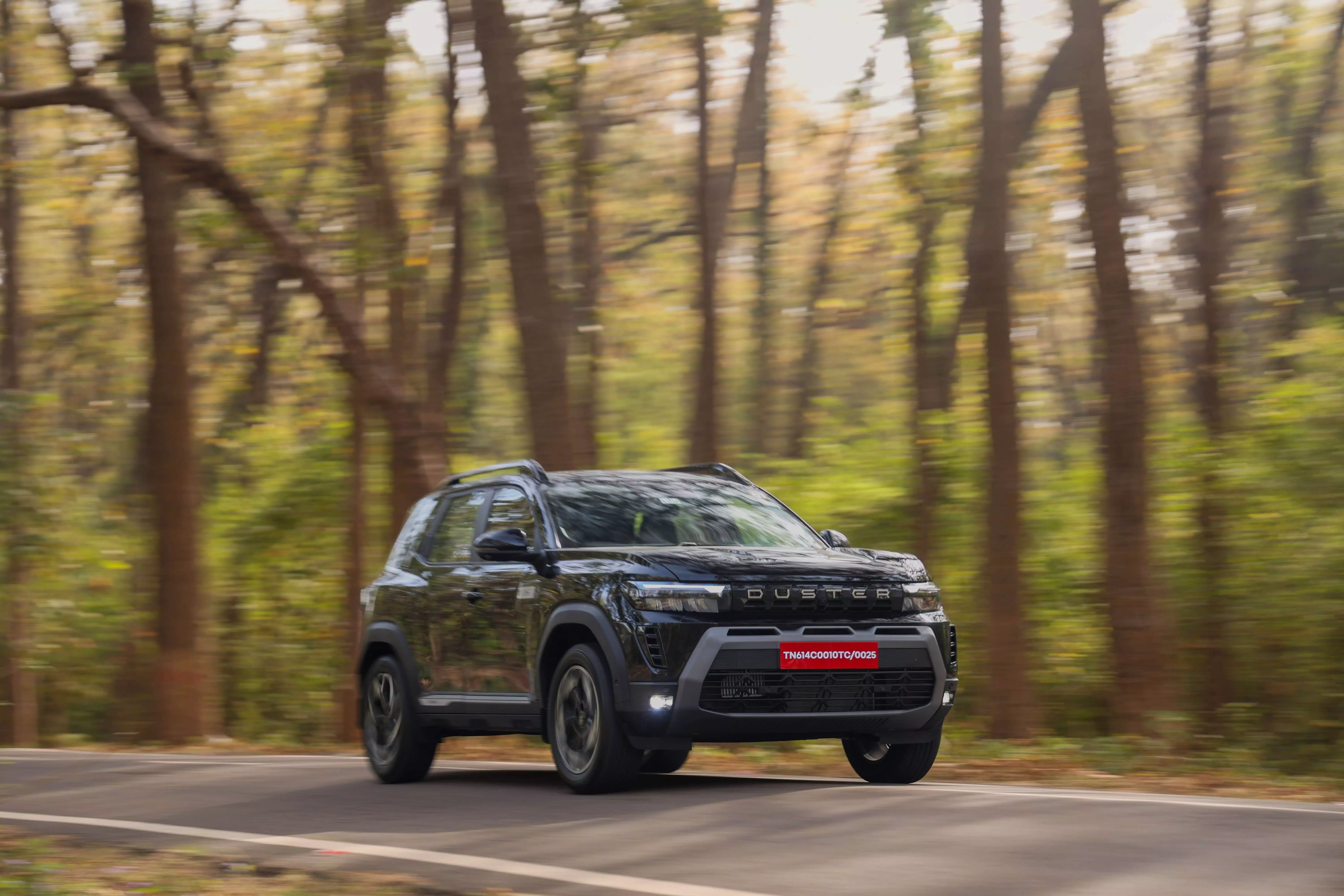
The Renault Duster created the mid-size SUV segment in 2012, 3 years before the Hyundai Creta arrived, and over a decade before the likes of the current hot favourites Skoda Kushaq, Kia Seltos, Maruti Suzuki Victoris, Toyota Urban Cruiser Hyryder and VW Taigun. The Duster defined what an SUV for India should be - tough, simple, capable, refreshingly honest, and powered by one of the most popular diesel engines in the country, the Renault K9K. But most importantly, affordable – it sat under the likes of the Mahindra XUV500, Scorpio and Tata Safari. For years, it sat at the top, and then it faded away as Renault decided to bring in the Captur on the Duster’s platform instead of keeping the Duster alive.
By 2022, the Duster was discontinued, and with it, an era quietly came to an end. Now, it’s back, and headlining Renault’s renewed commitment to India marked by their take-over of the Renault-Nissan manufacturing facilities and confirmation of not just the 7-seater Boreal but also the sub-four metre Bridger.
The 2026 Duster isn’t just an update – it’s a complete reinvention and what Renault are calling ‘the best Duster in the world’. And that’s why before talking about the styling we have to talk about the platform.
Renault Duster features the Indian RGMP and not global CMF-B platform
The Renault Duster is based on the Indian Renault Global Modular Platform and not the global CMFB platform that the Duster sold in international markets is based on. Renault has re-gutted its entire electrical and electronics architecture, while making modifications required to make it compatible with the equipment Indians demand.
The monocoque is now taller, with the roof being raised higher up to accommodate the panoramic sunroof. The rear section of the monocoque was also tweaked to allow for the electric tailgate. The RGMP also allows it to build smaller sub-4m SUVs on this platform, compared to the CMFB platform on which sub-4m cars are not possible. While the CMFB platform was never meant to be electrified, the RGMP can easily take on full electrification – as well as other powertrain systems like hybrids and CNG – without any compromise on packaging.
In terms of the electrical architecture, there’s now a new system called SWEET400 (SoftWare Electric and Electronic Technology) that’s co-developed with Google. This allows the integration of Google in the infotainment screen and cluster, and you can also sign in with your Google account now.
Renault Duster styling
The new Renault Duster looks nothing like the SUV it replaces – and that’s exactly what it needed. Where the older model relied on simplicity, designed as it was to be a low-cost SUV for Eastern Europe, this one moves to a far more assertive, sportier design with plenty of India-specific premium touches.
There are differences between the Indian and international spec Duster. First up is the bold Duster lettering on the grille, in place of the Renault logo – a clear nod to the brand cache that the Duster has. The DRLs look sharper on the Indian-spec Duster instead of the Y-shaped DRLs that come in the global spec car. Other changes for the Indian-spec car include a lightbar at the back, smoked tail lamps, aggressive front skid plate and rear bumper, powered tailgate and dual-tone colour options. The ground clearance also has gone up for the Indian-spec car by 5mm.
The 18-inch wheels fill in the squared off arches very well. The stance has proper intent, proportions are squared-off, and there’s 212mm of ground clearance (more than the Tata Sierra’s 205mm), and enough visual muscle to make it look genuinely capable. The DCT gets disc brakes on all four corners, while the manual makes do with drums at the rear. You also get functional roof rails, headlamp height adjustment, and ADAS Level 2. The line-up spans five variants – Authentic, Evolution, Techno, Techno Plus and Iconic – along with an Iconic Launch Edition finished in Mountain Jade Green with a black roof and subtle lime accents. We drove both the Launch Edition and the standard Iconic in black, and both have serious road presence. It still carries a hint of the original’s identity, but this is a far more modern interpretation, and arguably among the best-looking SUVs in the segment right now.
Renault Duster engine and performance
Before you ask, no, the Renault Duster doesn’t and will not get a diesel engine. The base engine is the 1-litre turbo-petrol making 99bhp and 160Nm and which is already familiar from the Kiger. What we are testing is the 1.3-litre direct-injection turbo-petrol which is also a familiar engine. This is the engine that replaced the K9K diesel when BS 6 emission norms kicked in 2020 and which is famous for being shared with Mercedes-Benz (the current GLA 200 has this same engine).
Renault calls the engine in the Duster all-new but that’s stretching the definition of the term.
What it gets are redesigned cylinder heads with a thinner coating for better heat transfer, and fuel injectors with multi-spray injection. Peak power of 160bhp is 6bhp up on the old Duster and peak torque of 280Nm is 26Nm up on the old Duster. And that means despite having less cubic capacity than the 1.5-litre turbo-petrol rivals, it actually puts out the most power. It’s paired with either a 6-speed manual - and this is properly new - wet-clutch 6-speed DCT.
We tested the Duster Iconic variant in its Launch Edition paired with a 6-speed MT as well as the regular Icon variant with the 6-speed wet-clutch DCT. Why I keep mentioning wet-clutch specifically when I say DCT is because that is a big talking point. All its rivals like the Kia Seltos, Hyundai Creta, Volkswagen Taigun, Skoda Kushaq use a dry-clutch DCT which is prone to reliability issues, while only the Tata Curvv uses a wet-clutch DCT. Dry-clutch DCTs operate without oil and rely on air cooling which make them more fuel-efficient but are prone to overheating in traffic conditions and are also more jerky. On the other hand, wet-clutch DCTs use oil to cool the transmission which makes it more reliable and smoother in the city and on the highway. And you can instantly feel the difference in the way the Duster’s gearbox operates. Shifts are super smooth even in traffic and there’s very little turbo lag. The gearing is tall enough and you can reach speeds of up to 120kmph in the third gear itself. We drove it in Dehradun at around 17 degrees celcius, so we’ll reserve final judgement on long-term behaviour until we test it in harsher city conditions like Mumbai and Pune.
In terms of the engine, the 1.3-litre turbo feels eager and responsive, with a strong mid-range that works equally well in the city and on the highway. We drove it around Dehradun across a mix of roads – smooth tarmac, broken patches, steep climbs and traffic – and it never once did it feel out of its depth; more to the point you never feel the lack of cubic capacity over its 1.5 TGDi rivals. Power is always accessible, and the engine rarely feels strained. When you leave the throttle at around 3,000rpm you can even hear the turbo whooshing inside the cabin and outside, which sounds very cool. NVH levels inside the cabin are well-contained and the engine is very refined, a major issue with other Renault cars like the Triber. That said, on steeper hill sections, the DCT can feel a step behind. You need to be a bit proactive with your inputs, downshifting before entering a corner to ensure you exit cleanly without running into turbo lag. With the DCT the Duster did 0 to 100kmph in 10.72 seconds (Hyundai claims the Creta can do it in 8.9 seconds), while the manual clocked 10.91 seconds. And you can switch off traction control and get plenty of wheelspin with the manual. As for the shift quality, the manual gearshift is good but not as good as the Skoda or Volkswagen.
We’re yet to test the 1-litre turbo in the base version but what we are more interested in is the hybrid that will come around Diwali. That gets a 1.8-litre naturally aspirated petrol paired with a 1.4kWh battery putting out 158bhp and 172Nm and will surely set some new benchmarks in terms of fuel efficiency.
Renault Duster interior
Step inside the Renault Duster and the leap over the older gen is immediately apparent - as it should be, and therefore we will not compare it to the old Duster but use the Creta as a benchmark. It’s now a more driver-focussed cabin with the 10.1-inch infotainment screen angled towards the driver, paired with a sporty looking steering wheel. Ahead sits a 10.25-inch digital cluster with a distinctive orange theme and different layouts none of which include any sort of dials much to the irritation of the editor. At best you get a bar graph for the tacho which doesn’t do justice to a genuinely fun-to-drive SUV.
What the cluster does display is Google Maps thanks to the entire electrical architecture being co-developed with Google. You also get in-built Spotify, Amazon Prime video and more apps so, similar to the Tesla, you don’t really need to pair your phone via Android Auto but just connect it via Bluetooth for calls. That said it gets wireless CarPlay and Android Auto and that too projects maps onto the digital cluster, in addition to the infotainment screen. A quirk that remains from the old Duster is the volume controls on the stalk mounted on the steering column to the right which, once you get used to the positioning, works rather well. Speaking of which, the sound system is a 6-speaker setup from Arkamys.
Material quality is good with layered trims, soft-touch surfaces and contrast stitching that add premiumness though the door pads still retain the cheap-and-cheerful hard plastics that the European Duster has (which is unashamedly positioned as a cheap-and-cheerful SUV).
Premium touches for the Desi-Duster include ventilated and electrically adjustable front seats, a panoramic sunroof, dual-zone climate control, tilt and telescopic steering adjust, 360-degree camera, Level 2 ADAS, a fast-charging wireless pad with magsafe, and a powered tailgate.
The driving position is well judged too. The driver’s seats can be set low adding to the sporty feel of the SUV while the tinted panoramic sunroof makes the cabin feel airy without baking your bald head in the sun.
Another impressive factor is the big boot that the Duster has. 518 litres that extends to 700 litres without the parcel tray. This space is credited to not having a spare wheel and even compromised backseat space. The Sierra has a wheelbase of 2730mm, while the Duster gets 2657mm, and the difference is immediately evident as you step in the backseat. While the space is enough for someone who’s short-heighted like myself, but for taller people over 5’10 feet, it can be a problem.
The DCT gets an electric parking brake and that cleans up the centre console, and there’s neatly integrated cupholders and a sliding tray that adds a touch of sophistication – something the manual misses out on. Steering wheel paddles also give you manual control on the DCT, and that’s the only way manual mode can be engaged.
What stands out is that despite the jump in tech and features, the Duster hasn’t overcomplicated things. It still feels practical, robust and easy to live with – just at a level that now matches the competition. What is also impressive is the generous use of buttons throughout the cabin which feels refreshing considering everyone else is moving to screens and touch-sensitive buttons. Renault has also focused on safety, with reinforced materials and a claim to secure a 5-star Bharat NCAP crash safety rating.
Renault Duster driving impressions
A lot of the success of the Renault Duster was down to the solid, confident and impressive way it went down all kinds of roads, particularly bad roads, and that core DNA hasn’t been messed with on the gen 3 Duster – with Dehradun being the perfect place to test this. Fast straights, windy roads, steep hill ascends and descends, and a beautiful landscape. We also found some forest trails which were laid with dirt, stones, and dry leaves. Now during the briefing before the drive, Francisco Hidalgo, Vice President of Sales and Marketing at Renault India told us to go ahead and push the car to our maximum limits. He jokingly said to not test the airbags but apart from that he sounded very confident with his words. It seemed a little forward at first, but it made sense when we actually drove the car. Through straights the car remained calm and composed when cruising and you would only notice slight vertical movements when you would reach high speeds of 120kmph or above, but nothing that would be of any serious concern. On the bends and twisties, it performed surprisingly well. The steering feel is very direct and it responds to every minimal input from the driver. Understeer is a term that is not so familiar here and you have grip through most of the corner. The automatic and manual both performed well here and it did not cut any power or have any turbo lag. The minute you downshift, you can feel the urge in the engine to be revved out and the response becomes very sharp. Pitch and roll is also well contained not only through the corners but also at low speeds in the city and high speeds on the highway. We drove it on dirt trails as well that were laid with sharp stones and the ride comfortable enough for you to carry higher speeds while doing it.
The good ride quality is all credit to the brilliant suspension setup that has been engineered and tuned by Renault India guys specifically for the Indian market. At the front, you get stabilizer bars and MTV-CL dampers all around that help with flattening all the vibrations at lower speeds and also making the car more flat at higher speeds. At the rear, there’s a twist beam. In layman terms, the suspension setup is very good for Indian roads as it aids with driving on bad roads comfortably but also helps with dynamic driving.
Renault Duster price and verdict
The Renault Duster has been launched at an introductory price of ₹10.49 lakh which goes up to ₹18.49 lakh. The starting price for the 1.3-litre turbo variant is ₹13.99 lakh (with the R Pass). In terms of pricing, the Duster’s entry-level point is similar to rivals, while the range-topping pricing is very aggressive and undercuts rivals like the Kia Seltos priced at ₹20.19 lakh, Hyundai Creta priced at ₹20.2 lakh, and the Tata Sierra priced at ₹21.29 lakh.
At this price, the Duster has all the ingredients to be a roaring success. It gets segment-best power figures and also brings with a lot of brand recall and nostalgia. The only real miss is the absence of AWD. While the first-gen offered it, it accounted for a very small percentage of sales, which makes it hard to justify from a business standpoint. That said, Renault claims the platform is AWD-ready, and if there’s enough demand, the possibility isn’t entirely off the table. As it stands, the Duster returns with proper intent. It’s more complete, more modern, and still one of the most engaging SUVs to drive in this segment. And that, more than anything else, is what made it special in the first place.