

Tried and Tested
Tried & Tested: Samsung Galaxy Z Fold8
Is the Z Fold 8’s wider aspect ratio and build quality enough to make up for the lack of a telephoto and the high price tag?
Ideally, every car or bike review should start with a run-through of the spec sheet, except this is evo India. We are all about The Thrill of Driving. The subjective dive into how the car feels, what it tells you, whether it even talks to you, and whether it puts a smile on your face, that is what matters. The specs are, of course, important, but they're no longer what differentiates cars. The era of breakthrough figures is vanishingly rare – even 1000bhp hyper-EVs break the internet for how they look and not their specs. And the same applies to the Samsung Galaxy Z Fold8 that I’ve been testing for nearly a month.
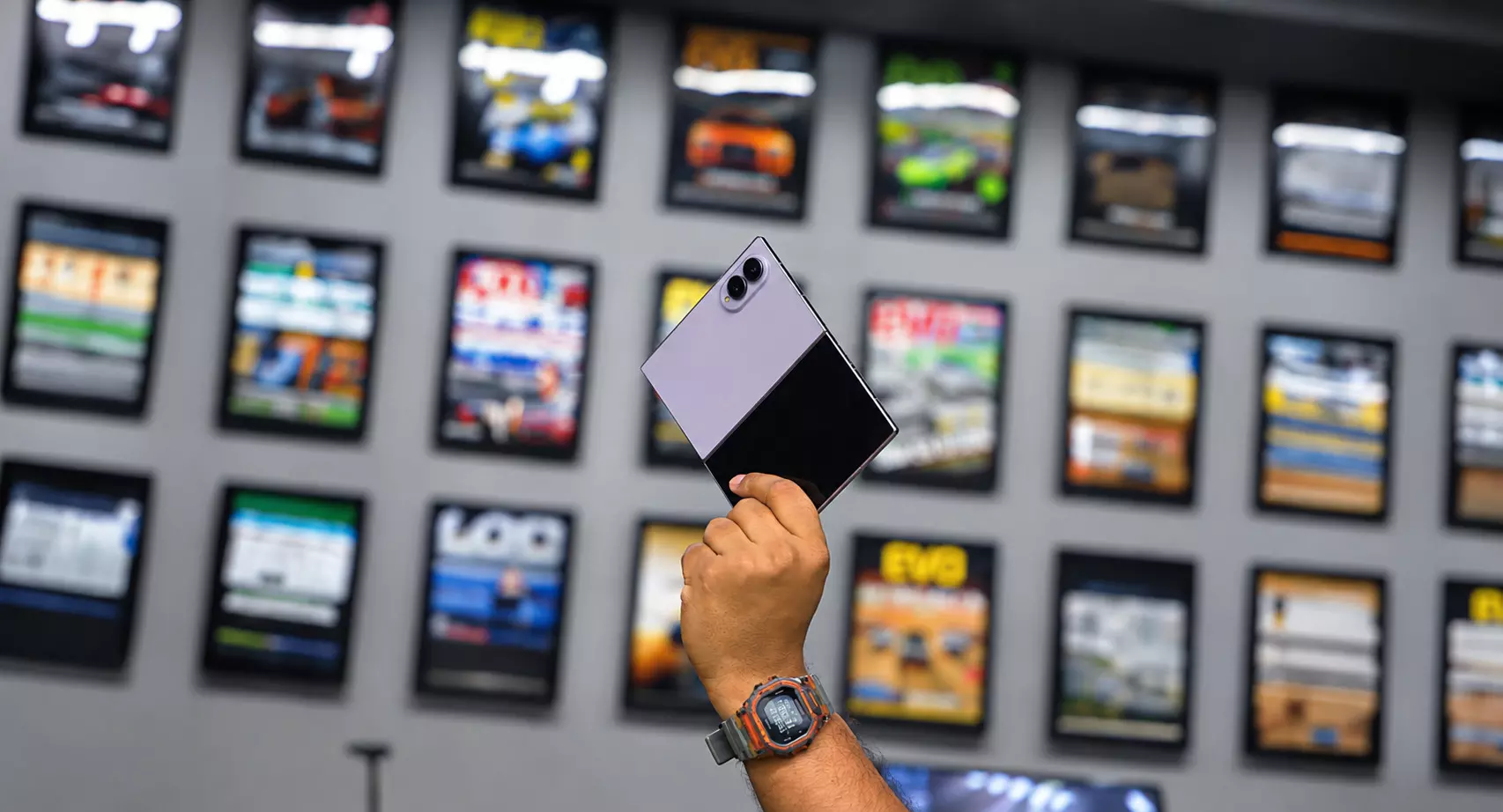
You’d ask what’s the big deal with this form factor that fits into your shirt pocket, in this day and age when shirts with pockets aren’t needed even in corporate jobs. But hold it in your hand, and it feels genuinely different and genuinely works. On paper, a 4:3 foldable sounds like it should feel like carrying a small tablet everywhere — squat, wide, impossible to slip into places you usually slip your phone – but the Fold8 doesn’t feel cumbersome. I also personally think this looks beautiful. Of course, everybody is entitled to their own opinions on styling, but I can tell you that everybody notices it; everybody asks questions about it. I’m used to people asking me questions about the new cars constantly rotating in my garage but I didn’t expect a phone to generate the same curiosity. The only thing I’m not sure about is the soft lavender of my test device; I have yet to snap a case onto it – which it needs to balance out the camera bump – and that tells you how much I like the way this phone looks.
Samsung has also reduced the tension needed to pry the Fold8 open compared with the Fold7, although you now lose the ability to prop it open at a mid-fold angle
And shuts.
It’s how the door shut on any car that's your first impression of perceived quality; the same applies to a phone that folds shut. The Fold8’s structural story is that its chassis makes extensive use of titanium. Samsung calls the display structure Flex Titanium, and it combines a titanium-alloy film with a reinforced titanium plate to make the device thinner without giving up the durability, plus a book-style hinge to survive years of folding. This rebalances the hinge mechanics, the display tension, and the magnetic closing force so the whole action of opening and shutting the phone feels lighter and smoother than on last year’s Fold7. The sense of quality has taken a big step up while also shedding some weight. At 201gm, it’s the lightest large-screen foldable Samsung has built.
Samsung has also reduced the tension needed to pry the Fold8 open compared with the Fold7. You lose the ability to prop it open at a mid-fold angle, which the Fold7 allowed, but you gain a phone that opens with noticeably less resistance, which I feel is a fair trade since I never used the old Fold in the half-open stance. The crease on the inner display is also harder to notice compared to the Fold7 – but it is still there. Flex titanium is helping to close the gap.
Build quality otherwise reads as expected at this price: Gorilla Glass Ceramic on the cover display, Victus 2 on the rear, Advanced Armour aluminium frame, and an IP48 rating which can survive 1.5 metres in fresh water for 30 minutes, though it’s still short of full dust resistance.
Oh, the price. ₹2.4 lakh for the Fold8 with 16GB RAM and 1TB. Phones are becoming as expensive as bikes! And then there’s the Ultra at an ultra price. We will come to that, but first, living with the 4:3 display, which, it’s safe to assume, shape pre-empts Apple’s own fold.
When folded, the 5.5-inch cover screen with its 10:16 aspect ratio is large enough for most use cases like messaging and social media
When folded, the 5.5-inch cover screen with its 10:16 aspect ratio is large enough for most use cases like messaging and social media, while the wider main screen is a genuine upgrade over a conventional phone, and over the older tall-Fold shape too. The 7.6-inch main display has a 4:3 aspect ratio; landscape videos fill the screen better with smaller letterboxed black bars on either side. There’s enough digital real estate to split the display between footage on one half, a WhatsApp thread on the other and thumbing through timecodes without switching apps. This is not just a content consumption device; it is a productivity enhancer, though that said, the Fold8 doesn’t have everything.
On the back, the Z Fold 8 gets a 50-megapixel wide and a 50-megapixel ultra-wide angle lens, with 10-megapixel selfie cameras on both the cover and inner screens
Let’s start with the cameras and the omission of the telephoto lens. You get a 50-megapixel wide and a 50-megapixel ultra-wide, backed by 10-megapixel selfie cameras on both the cover and inner screens. Samsung leans on sensor cropping for 2x and 4x shots rather than genuine optical reach, and for someone obsessed with the finer details on cars, the absence of a dedicated zoom is something I noticed on day one and cannot stop noticing. It’s the single biggest reason to look at the Fold8 Ultra instead, which keeps a 3x optical telephoto alongside its 200-megapixel main sensor and the traditional mobile phone form factor.
The Ultra employs an 8-inch main display in the familiar tall-Fold proportions, a 6.5-inch cover screen, and is Samsung’s slimmest Fold yet at 4.1mm unfolded. The camera system is the clearest reason to pay the ₹ 20,000 premium over the Fold8: 200-megapixel main sensor with HDR capture, 50-megapixel ultra-wide, 10-megapixel telephoto with 3x optical zoom, 8K video through Samsung’s new APV codec and Cine LUT colour grading built directly into the camera app. 45W dual-path wired charging is standard with the Ultra, using a 5000mAh battery, and the Fold8, a 4800mAh battery. Both are also powered by the Snapdragon 8 Elite Gen 5 for Galaxy platform.
Dual recording lets you shoot the subject and your own reaction simultaneously using the cover screen as a preview, and My FanCam – an AI feature that tracks a chosen subject through a clip and reframes it automatically for social formats – turns a wide static shot into something Instagram-ready without manual cropping, even if the zoomed-in result does cost you some resolution with the Fold8’s 50MP camera.
One thing I miss is the S Pen support. I edit a lot of reels and short videos off the phone, and the S Pen on the S26 Ultra saved my right thumb a world of ache. That said, I know I am in the minority of users who actually use it, and I can also report that in a month of using this new Fold I have no tendonitis to report during my workflow – reviewing video cuts, watching rough edits of our YouTube pieces, typing out notes and feedback across multiple apps at once. Rotate it 90 degrees, and the 4:3 ratio turns into a genuinely usable reading shape for proofreading magazine pages – again where S Pen support would have come in handy.
Both screens get up to 3000 nits of peak brightness, 120Hz adaptive refresh rate and a new anti-reflective coating on the inner display, that Samsung claims will cut glare by up to half
The screens themselves are excellent with up to 3000 nits of peak brightness, 120Hz adaptive refresh rate and a new anti-reflective coating Samsung claims will cut glare by up to half. I noticed the latter most while filming our test device under studio lights that would ordinarily turn any glossy screen into a mirror. Oh, and my Porsche wallpaper looks so beautiful I’ve left the always-on display, erm, always on. And on a phone with two screens you can fuel your Porsche obsession with two 911 wallpapers.
A month in and the new Fold8 shape and size feels genuinely well-judged; the Flex Titanium build makes the hinge feel like a piece of high- performance engineering, and I’ve come to appreciate its on-the-go productivity. For somebody like me who travels extensively, editing magazine pages and reviewing videos while on the move, the wider display does a world of good. The missing telephoto, especially at this price, is the one asterisk, but not enough to undo everything else it gets right.
