

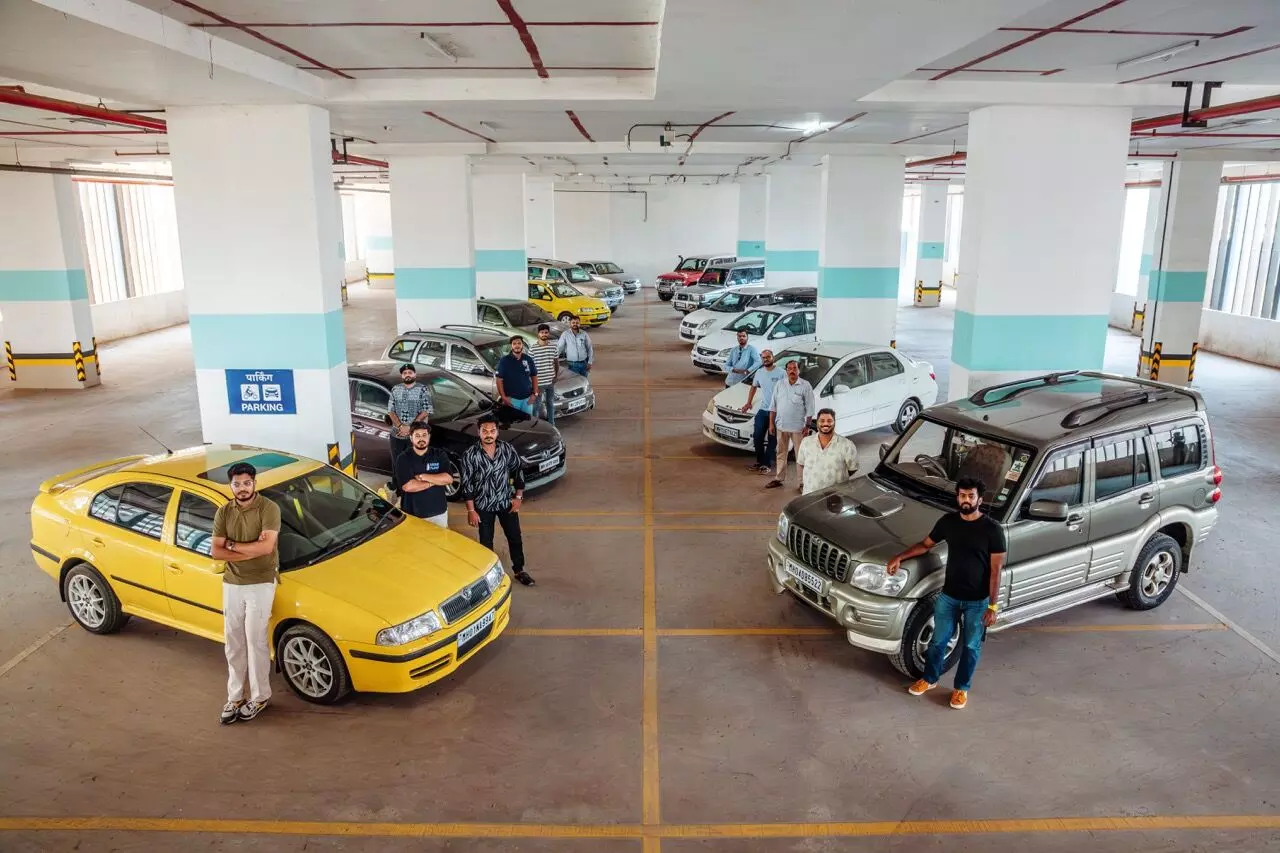
Gone but not forgotten
Cars from 2000s Part 1: Revisiting the first half of the golden decade
A throwback to some of India’s most iconic cars from the early 2000s
The doghouse was where car magazines spent an inordinate amount of time in the 2000s. Criticism wasn't tolerated and - God forbid - if a magazine conducted a comparison test and didn't pass out gongs to all the participants. The term had yet to be coined, but the automotive industry were master practitioners of the art of shadow-banning. Test cars would be refused, and the publisher would be spanked with the threat of advertising withdrawal.
Not that the nuances of magazine-manufacturer relationships weighed heavy on the shoulders of 21-year-old me, starting his internship at the biggest car magazine of the time, with a propensity for messing up the back-of-the-book car and bike prices pages matched only by driving talent that was manifestly non-existent. It was one of my very first shoots for the magazine. The road test editor was a legend, the only Indian to have raced at the Isle of Man TT, and he was sending it. We started the morning with the TVS Fiero, skinny tyres no barrier to him getting the pegs to spark off the tarmac for the cornering shots. The editor then tossed him the keys to the Opel Corsa and off he went, with similar vim and vigour, losing it on the second run and nearly killing a milestone. But the cornering shot was in the bag and now it was my turn.
Hyundai Accent
I was driving my to-be father-in-law’s car. Hyundai were so upset that the Santro had lost the small car comparison test to their arch-nemesis – Daewoo, that we’d been banished to the doghouse. Me to the rescue. My would-be in-laws were the Hyundai dealers in Pune, and I’d sweet-talked my way into borrowing their Accent. As reward, the editor let the intern do the cornering shots, except the intern thought he had to drive like an Isle of Man TT motorcycle racer. Too much speed and too little talent into the first corner. Big body roll, tyres squealing in horror and disgust, and an inability to process any of the sensory cues. Fear and panic assaulted me. I let off the accelerator and discovered the effects of weight transfer on soggy suspension. The Accent spun in the middle of the road. It was sheer dumb luck that I didn’t hit anything and held onto both my internship and relationship; as for the comparison test it ran with no cornering shots of the Accent.
I may have been lacking in driving talent, but so was the Accent. Those were the days when suspension was so soft that leaning-on-the-door-handles was an accurate way of describing body roll. Put three people in the back and the rear suspension squatted so heavily, the headlights lit up lunar craters. Handling was manifestly lacking from the Accent’s repertoire, in marked contrast to the car that it was, if not reverse-engineered from, then clearly inspired by. The Mitsubishi Lancer.
The story goes back three decades. Desperate to learn the art and science of car-making, Hyundai offered the then-mighty Mitsubishi Motor Corporation a 10 per cent equity stake in return for formal technology transfer. The 1975 Pony, South Korea’s first domestically produced car, used the Lancer as the basis for its chassis and powertrain. The mid-80s Hyundai Excel was sold in the United States as the Mitsubishi Precis between 1987 and 1994. Mitsubishi’s comprehensive transfer of knowledge allowed Hyundai to build not just cars but an entire automotive manufacturing infrastructure including quality control systems and R&D capabilities leading to the 1994 Accent, the first car developed in-house in South Korea with no Mitsubishi license.
The Accent was Hyundai’s flag-bearer and was set to launch the brand in India until significantly higher volume potential was sensed in the Santro. The delay meant India got the second- generation Accent, code-named LC, into which Hyundai had poured a 1.2 billion US dollar development budget. Hyundai India’s advertising agency, Saatchi & Saatchi headlined the Accent as ‘The $1.2 billion car’ when it was launched in India, except underneath there was more than a hint of Lancer. The design philosophy of the 3-valve per cylinder 1.5-litre petrol engine was shaped entirely by their Mitsubishi partnership; it even put out nearly identical power at 93bhp. The wheelbase was identical to within 40mm. The independent rear suspension had Mitsubishi DNA, except Hyundai had yet to learn how to tune it – explaining why my ham-fisted attempts at cornering the Lancer didn’t result in the drama that I experienced with the Accent. Hyundai even followed Mitsubishi into the World Rally Championship with the Accent – something my to-be father-in-law was so excited by that he had a huge print done on the wall of his dealership.
Hyundai doubled down on performance with the Accent Tornado in 2001, a new 1.6-litre twin-cam engine making 102bhp of power. If not the City VTEC, this should have at least run the City close for performance, except it never did. We always wondered why Korean horses weren’t as sprightly as Japanese ones. A year later, Hyundai introduced us to the joys of CRDi engines, debuting the first, affordable, common-rail diesel in the notchback-shaped Accent Viva. The diesel had nothing to do with Mitsubishi, the 3-cylinder 1.5 unit licensed from Detroit Diesel, and that was a stop-gap until they were ready with their own diesel which debuted with the gen 3 Accent in 2006.
Except in India, it was called the Verna while the Accent was repositioned to continue hounding its nemesis, the Ford Ikon. Eventually the nameplate was retired in 2013 to make way for the Xcent – something that must have seemed like a smart branding strategy at the time but with the booted i10 finding favour only with Ubers and Olas, all that managed to do was kill a name that could have been to Hyundai what the City is to Honda. Not that Honda were beyond reproach themselves.
Honda City & Honda Accord
After enthusing enthusiasts, the maker of ‘The world’s best engines’ wholesale abandoned the enthusiast with the second-generation City in 2004. From 100bhp on the VTEC, power dropped to 88bhp in the i-DSI. The redeeming quality though was fuel efficiency, borderline nonsensical fuel efficiency when our race-bred road test editor announced he had gotten 26kmpl and insisted we print it. If that wasn’t enough to stick a knife in the heart of the enthusiast, Honda debuted what was called the ‘dolphin’ styling which, honestly, was unfair to the dolphins.
Nevertheless, the City went on to win multiple Car of the Year awards, and that’s because it marked the start of the ‘man minimum, machine maximum’ philosophy. It featured a centrally-mounted fuel tank and together with the torsion beam rear suspension it liberated far more room at the back despite the wheelbase shrinking by 50mm. The seats were high-set, almost like an SUV, and where you had to crouch and crawl into the old City, with the new one you walked in and out of – a big ergonomic improvement.
The suspension was tightened up and it no longer scraped over speed breakers. It became cheaper, nearly two lakh rupees less than the VTEC. To us enthusiasts it was the end of a love story though. The City was slow. You got an automatic, but it was the whiny and rubber-band-y CVT. The car was fun to drive, and the new electric power steering was so light and devoid of feel it bordered on the scary.
Something had to be done and the ZX facelift in 2006 made it kinder on the eye – that is the car you see on these pages. While the i-DSI engine continued, enthusiasts finally got the option of a 1.5-litre, 100bhp, VTEC and, eager to discover whether Honda had redeemed themselves in the eye of the enthusiast, we took it to the Chennai racetrack and pitted it against the Fiesta.
The VTEC won the drag race but the Ford handled so much better and beat the City on lap times. Not that the Honda’s chassis was inherently lacking in grip but thanks to tyres optimised for fuel efficiency the nose would descend into squealy understeer way too early while the stiff rear setup meant the tail would snap out without much in the way of provocation. The EPAS was claimed to have more ‘feel’ engineered into it, but it remained unnervingly light and lifeless. Honda no longer catered to the enthusiast, except if the enthusiast had a rather sizable budget.
The Accord came in 2001 as an attainable ‘near-luxury’ car that was bigger, more sophisticated and more powerful than mainstream sedans, but priced way below a Mercedes C-Class. In 2004 came the seventh-generation Accord, and you could get this with a 3-litre V6 in addition to the 2.4-litre i-VTEC.
The V6, also an i-VTEC, put out 221bhp and 276Nm compared to the 2.4’s 142bhp and 196Nm and did 100kmph in 9.58 seconds, 1.79 seconds quicker than the 2.4. The SOHC 60-degree aluminium V6 was a popular and proven engine, doing duty in various Accords, Preludes and Acuras, and with the DOHC head this engine did duty in the mid-engined NSX supercar. This generation was arguably the best Accord we got; the update that came four years later made it longer, wider, comfier but more expensive and solely focused on the plutocrat in the back seat who, if not dreaming of a German luxury car in their garage, had started migrating to SUVs.
Mitsubishi Pajero
The most random things happened in the 2000s. The Pajero was already a popular grey import, and the latent demand meant it was a no-brainer for HM-Mitsubishi to follow up the Lancer with India’s first, locally assembled, luxury SUV. Which they did in 2002, except they rejected the concept of chronology by first launching the third-gen Pajero as a CBU, badging it the Montero, and six months later bringing the older, second-gen Pajero. And it wouldn’t fit in HM-Mitsubishi’s paint booth!
The result was the dual tone paint finish of every Pajero that was specced in anything other than white. The main body shell would arrive painted white and then the doors, bonnet and fenders, painted in Chennai, would be bolted on to the Dakar-winning SUV – that had already been phased out globally. The 2.8-litre 4M4 turbo-diesel made 118bhp, which would later drop to 107bhp with stricter emission norms. Monster turbo lag was part of the package, coming on boost around 1750rpm and that boost staying on till 3000rpm. You could rev it past 3000rpm but all you would get is a lot of noise and not a proportionate increase in forward velocity. The short gearing meant acceleration wasn’t too bad, 0-100kmph took 19.8 seconds, but that also meant the engine would sit at much higher revs than you wanted it to while cruising, which also affected the fuel economy, delivering between 6 and 8kmpl. Good thing it had a 92-litre fuel tank which would see it to the ends of the world.
The Pajero was from the era when SUVs were SUVs – ladder-frame chassis, gearbox feeding into a low-ratio transfer case, compass and altimeter perched on the dashboard, grab handles on the A-pillar helping you climb aboard. Build quality was spectacular and the Pajero was unstoppable. Engage the shift-on-the-fly 4x4, via the super-cool chunky-and-separate gear lever, and only a real idiot will manage to get it stuck. And, with two sun visors, you have both the windscreen and the window covered at the same time when chasing the desert sun. Maybe that’s why it won so many Dakars.
Those early Dakar wins weren’t with the prototype racers you see today but modified road cars, and the Pajero was engineered to be tough-as-nails. It had coil springs on the live rear axle, when everything else had bucking-bronco leaf springs. There were front and rear stabiliser bars and languid recirculating ball steering. 15-inch front discs, 15-inch rear drums and airbags which, in 2003, were a very big deal. Nothing broke, nothing fell off, nothing failed. The tailgate with the spare mounted on it never rattled, no matter how old the SUV was. You could open it and lock it in place using a lever. The tool kit was neatly integrated into the tailgate. It had a torch, which was magnetic, so you could stick it onto the body of the Pajero. And the attention to detail was such that this torch could also be charged by being plugged into the cigarette lighter – you didn’t have to worry about batteries. It was – is! – indestructible. After all, it came from an era when the desert meant the Sahara and a breakdown meant… starvation and eventual death.
What you were well-advised not to do is park it in random, unsupervised places. The anti-theft system had a design flaw which gave access to the SUV via the rear door. Things got so bad that the Mumbai Police shot off a letter to fix the flaw but HM-Mitsubishi said that there was nothing wrong, and quite a few of these SUVs ended up being stolen right from places they were parked. Did I mention that the car industry employed a zero tolerance policy for criticism?
Ford Endeavour
It would take a full decade for the Pajero to worry about rivals, but when they came it was game over for the Mitsubishi. The Fortuner only came in 2009, first off the blocks was the Endeavour and if the Pajero looked large the Endy looked like an oil tanker. Also handled like one.
The Endeavour was badged the Everest everywhere else it was sold, was engineered in collaboration with Mazda, and was based off the Ford Ranger / Mazda Fighter pickup platform. The brief was to seat seven, be rugged enough to tackle deplorable conditions in developing countries, and it had to be affordable. Built at the Auto Alliance (Mazda and Ford) plant at Rayong near Pattaya in Thailand, Ford India assembled the Endeavour from CKD kits from late 2003.
The gen 1 Endeavour was 183mm longer than the Pajero with an 80mm longer wheelbase at 2860mm. Only an S-Class beat the Endeavour in terms of sheer length while the boxy styling made grown men of the time go weak in the knees. The body was bolted onto an overlap, cross-braced, ladder-type frame with double wishbone front suspension and rear leaf springs. It was the latter that gave it hairy on-limit handling with a propensity to flip on its head.
The 2.5-litre 4-cylinder IDI diesel engine was adopted from Mazda, turbocharged and intercooled, with the power for India dropped to 104bhp compared to the Thai output of 119bhp. 0-100kmph was a Pajero-matching 19.73 seconds. And like the Pajero it came with shift-on-the-fly 4x4 with low ratio.
The Endeavour you see here is the limited-edition Hurricane that came with a rear ladder, skid-plates and different seat covers. In 2007 came the Thunder+ facelift with squared-off headlamps and a new 3-litre 154bhp engine mated to a Borg-Warner transfer case. It also got bigger 16-inch wheels and a refreshed interior with a roof-mounted DVD player. In 2009, the Endeavour got a mid-life refresh along with a 4x2 variant, while 2012 saw the introduction of an automatic transmission.
The Pajero? It got the wide-body kit and later the SFX – neither of them materially or mechanically different to the Pajero launched in 2003 except for the power going down by 10bhp due to stricter emission norms. And that’s how the Pajero survived till 2012 when it was eventually sunsetted to make way for the Endy- and Fortuner-rivalling Pajero Sport.
Mahindra Scorpio
In the 1990s, Mahindra & Mahindra’s board were faced with an existential dilemma. On the one hand, was the proposal to enhance their fledgling joint venture with Ford and invest in the greenfield car plant coming up outside of Chennai. On the other there was a proposal from the management, prodded by the R&D team, to deploy that money into developing their own new SUV. This, remember, was the late ’90s when everything Mahindra made could trace its roots directly back to the original CJ, when global MNCs were flocking to India, when erstwhile giants were tripping over themselves to get into joint ventures and when buyers were absolutely clear in their preference for foreign brands. The M&M board bit the bullet and decided on the independent strategy. The team had asked for ₹800 crore. They were given ₹600 crore to design a new frame, a new engine to sit in that frame and a new body to sit on top of it all. The result was the Scorpio and it was the start of Mahindra’s transformational journey.
I was barely two years into my career as a car tester when the Scorpio was launched, and while much too junior to warrant an invite for the launch itself, I did drive down the very first test car to Pune from Nashik for our road test. It was a memorable drive and not for the best reasons. It broke down near Chakan on the outskirts of Pune and had to be towed. Then the brakes faded when I drove it to Mumbai. The handling was not just scary, but diabolical. The road test of the Scorpio was scathing, the Mahindra team walked out of our awards ceremony when they didn’t win Car of the Year, but credit where credit’s due – the R&D and production teams kept chipping away, kept rolling out updates, and by the time the second-generation rolled out, it was sorted.
It came at the same time I got married and our first holiday was a month-long road trip through Rajasthan in the black Scorpio you see here. It was a road trip that opened my eyes to the charms of the Scorpio – the effortless mile-munching; the commanding driving position; the brilliant visibility; the king-of-the-road feel; the space (we brought back all our outdoor furniture from Rajasthan); the immense grunt to keep chugging along tirelessly. By then the leaf springs had been swapped for coils and that cured the back end’s frightfully unpredictable nature. It was still bouncy but you knew exactly how it’d bounce and where it’d land. It also had silly things, such as an audio welcome reminding you every morning that, “Your Scorpio is a powerful vehicle”, but I figured out the cheat code to disable it. And I absolutely loved how the engine would rock on its mounts and the gear lever would swing violently from side-to-side when you started it – it had this macho alpha-male vibe that was all the rage in those not-very-politically-correct times.
The Scorpio was launched with a 2.6-litre diesel engine – a turbo’d unit, not common-rail, and derived from a tractor engine. But it made enough and more power, especially for whatever the chassis could handle. 109bhp may not sound like a lot today, but it was a segment leader by some margin back then. Then came the CRDe. Then the mHawk. One common trait throughout was power. Scorpios, they never lacked for power. And they never lacked for road presence. Living with that black Scorpio introduced me to the other joy of Scorpio ownership. Nobody messes with you. The wholescale shift of the car industry to SUVs would still be some years away but the Scorpio’s print ads proclaiming ‘Cars will now suffer from low self-esteem’ were prescient. And its success gave the team the confidence to go back to the board, this time securing ₹650 crore to develop their first monocoque SUV – the XUV500.
Toyota Qualis
Then, as now, Mahindra’s bread-and-butter was the Bolero, and all their variants, taking the fight to the Sumo. And then came Toyota with their bread box and threatened to put everybody out of business. The Qualis was no paragon of beauty, some testers even called it ‘horrendous’. Based on the Kijang line of utility vehicles first introduced in Indonesia in 1986, the Qualis looked thoroughly dated when it was launched in 2000. The profile was a box. 14-inch wheels looked puny. And it was nowhere as spacious as a Bolero, forget the cavernous Sumo.
But it did not do one thing which the others did very enthusiastically. The Qualis never broke down. You didn’t need to know your mechanic on a first-name basis. All the Qualis needed was scheduled servicing and that was it; it would just go on and on. The 2.4-litre diesel engine was in a very mild state of tune to ensure long-term reliability and longevity. It made 74bhp and 151Nm and took forever to get to 100kmph. 28.6 seconds to be precise. It was one of the few vehicles that got to 100kmph in fifth gear; you had to go through all the gears to get to 100kmph.
When this diesel engine came to India it was already two decades old, tracing its lineage back to the Land Cruiser, Prado and Hilux. This engine had gone to the ends of the Earth and back, and it continued to go on and on, forever. The NVH was not problematic. You could hear the engine, but it was not deafening. On the early Qualis the gear lever would rock violently when you started it up and if you weren’t careful it would smash into your knee. Extremely painful – I know from first-hand experience.
Another problem was the soft suspension. It gave great ride quality on smooth roads but over bumpy roads, this would constantly rock and roll prompting our then copy editor to write, “I wrenched a thumb, clinging to the ceiling handle while the Qualis dipped and plunged and keeled side-to-side like a pirate ship navigating the toweringly turbulent Adriatic sea.” Being driven in a Qualis wasn’t particularly fun. This wasn’t spacious and Toyota’s engineers restricted how much the front seats would travel on its rails so as not to intrude into the second-row space. Even with the driver’s seat all the way back, you couldn’t stretch out and had to sit bolt upright. The passenger seat wouldn’t slide back, and your knees were always in a bent and cramped position. Neither was the second row spacious and in a Qualis you were always in proximity with other passengers.
The Qualis was not the first car to get a roof-mounted air- conditioning unit, that was the Tata Safari which pre-dated the Qualis, but this was the one where everything worked properly. There were no ungainly gaps, no places where the air would leak out, the vents would not fall on your face, there would be no water dripping down from the air-conditioning. Aesthetically it wasn’t the most pleasing, but it worked well.
From 2000 to 2005, the Qualis established the foundation of the Toyota we know and love today, and then, without warning, Toyota axed the Qualis to bring in the Innova. That came across as a godsend to General Motors because that’s when the Tavera started to sell. All those fleet operators who wanted to buy a Qualis ended up getting a Tavera. The Innova was a radical switch from an MUV to MPV, in terms of price and positioning, but Toyota were right in what they did, in axing a dated product to bring in a contemporary new car. It took time to establish itself, but the Innova went on to script an even bigger story.
Skoda Octavia
My first road trip as a correspondent was to Aurangabad. Somebody had to take photographs of the Octavia, and I could depress the shutter button on the office Nikon – which was enough in the days when we didn’t know our shutters from apertures. Back then, Mercedes-Benz was the only German manufacturer with operations in India, and now the mighty VW Group was going to test the waters with Skoda. Skoda’s factory was still in the process of being set up, so early next morning two Octavias in red and green were dropped off to our hotel and we headed to the Ajanta caves. I must point out hat we had driven up from Pune in the original Baleno sedan, but the Octavia picked up the goal posts and threw them into the river.
Japanese cars were feather-light. They had A-pillars like twigs, which in those pre-NCAP days were actually lauded for not obstructing vision. And the plastic quality would embarrass VCRs, if you can recall video cassettes of those days. I got into the Octavia, shut the door, and from then and forever more door-shut – the thud – became a critical element in our perception of quality — and a millstone round the neck of the Japanese engineers who had all graduated from the add-lightness school. Every subsequent car we tested was criticised for falling short of the Octavia door-thud benchmark. Not that any of us had even been to Switzerland to draw any sort of parallel, but we quickly agreed the Octavia’s door-shut with the solidity and integrity of a Swiss bank vault. And that’s what we demanded from every other car.
That was just the start. The design, the fit-finish, the quality of the Octy’s dash was phenomenal. Things such as the way the air-con vents could be shut flush were unheard of. The seat, you could adjust it nice and low, the driving position was brilliant, and the solidity of the car, the way it went over Indian roads – then, as today, not the smoothest in the world – was awesome. It was low, and they addressed that subsequently, but it only made the Octavia handle brilliantly. And to top it all, there was the 1.9 turbo-diesel engine, among the very first TDI engines in passenger cars. You could credit the Octavia with introducing Indians to the charms of powerful and frugal diesels; this is the car that started the dieselisation of passenger cars. We had to wait until the calendar flicked to 2001 when testing was complete and the Octavia hit the roads, and it immediately placed Skoda in the echelons of premium brands in India. After the E-Class this was the luxury car to have, establishing the value-luxury proposition which is at the core of Skoda’s brand promise even today. And then came the RS.
I remember being at the Skoda factory in Aurangabad when the then MD told our editors that they were going to bring in a turbo-petrol engine. Which we didn’t go bananas over – because we had no experience of turbo-petrols. We didn’t know what a transformational effect this would have, because we had no benchmarks; we’d only seen Evos in (foreign) magazines. When we went back to Aurangabad to drive the Octavia RS — those days manufacturers summoned you! — my God, our brains exploded. We drove up in the City VTEC, which was then the performance car benchmark, and the RS straight up doubled the power output. Where you had to scream the nuts off those naturally aspirated engines, the RS demolished everything with low- and mid-range turbo-torque. This was humongously fast and it set a new benchmark for handling, with its lowered and stiffened suspension. At Overdrive we even had one on a long-term test and after the editor took it to Ladakh on a road trip (he spent half the time walking in front of the car to clear rocks) I spent a most memorable month killing the petrol budget of the magazine. Skoda were also very brave to experiment with the station wagon body style – they had both the RS as well as the diesel L&K Combis – and both bombed. Such a shame because the Combi RS is so freaking cool. And rare. And now in unbelievable demand. To those in the know, the Combi RS is the ultimate statement of cool, its rarity only making it even more desirable. The Combis are unicorns!
Maruti Suzuki Swift
I bought a Swift. My peers in other magazines bought Swifts. And that tells you everything you need to know about the Swift. When a journalist puts his money where his mouth is, that’s the ultimate recommendation, and back in the day the Swift really was a game changer. In these days of turbo-petrols this might sound silly but, in 2005, if you wanted a fun-to-drive hatch the only option was the Zen, which I had already been driving for the past five years. Oh, there was the Hyundai Getz that had just been launched but neither the styling, nor the motor, dynamics or even pricing made us smile. Nope, there really was nothing like the Swift and soon after it was launched, I went out and booked one.
I still remember the first media drive of the Swift. It was a period of great turmoil at Overdrive, the magazine I started my career at. There was a new editor, I had just been promoted to second-in-command, and it was our first media drive in our new big-boy shoes. Those were also the days when Manesar wasn’t the bustling industrial hub that it is today and our drive was restricted to the deserted roads of the industrial complex. It’s hard to imagine wrapping up a shoot before breakfast what with photo, video, social media and what not these days but back then the Maruti PR people were so paranoid about the Swift being papped (by competition I’m guessing cause there were no car blogs), they made us wrap up our drive, testing, photography, everything by seven in the morning. But that drive was enough to convince me to buy it.
You see the concept of a premium hatchback did not exist back then. Heck, till the Santro and the rest of the new small cars arrived, the Zen was a premium hatchback. Hatchbacks were meant to be affordable; any driving pleasure they delivered was purely accidental. But with the Swift, fun-to-drive was front and centre. It got the Esteem’s 1.3-litre motor that, even today, is sweet as heck. It loved to rev and enjoyed screaming towards its redline. The gearbox had sweet and short throws. The chassis was a delight. And it did justice to that memorable ‘You’re the fuel’ tag line.
In 2005 ride quality wasn’t a very big deal and though the Zen had got tall and skinny tyres to remedy some of its ride shortcomings, Maruti’s engineers weren’t all that obsessed with ride quality. Fuel efficiency, yes. Ride, not so much. In consequence the Swift handled really well. There was no float and bounce while body roll was surprisingly limited. Allied to the hydraulic steering, four-square footprint, stiff suspension and low-seating position, the Swift was an absolute hoot to drive. There was an eagerness and excitement to the chassis that nothing, this side of a Honda City could match. And the seats were better than the Honda City, the benchmark for everything back then. Today’s engines just do not rev as eagerly and excitedly. It also felt quick and the chassis is planted and stable with quite an eager front end.
I didn’t take my Swift on any driving adventures, but driving adventures we had in plenty with the Swift. In 2006 I took it to the Raid de Himalaya and finished second in the Reliability Cars category, but not before we blew both the rear dampers on the Kaza stage and limped to Leh where parts had to be airlifted for us. It was the Swift’s first motorsport outing in India and I can proudly say I was the first to take it to a podium finish. The more important award came a few months later when the Swift lifted the inaugural Indian Car of the Year, which it won unanimously and by an overwhelming margin.
A huge part of the Swift’s initial appeal to us enthusiasts was the G13BB motor, a motor so strong that tuners around the country slapped turbos onto it. Of course, the turbo’d Swift that we are all familiar with, the one that took Swift sales into the stratosphere, was the 1.3-litre diesel. This motor, sourced from Fiat, marked the beginning of the inexorable march towards diesels. To keep the headline price in check Maruti did not offer the diesel in the top-spec variant and, with the weedy 165-section tyres, this little diesel Swift merrily spun its wheels on anything less than proper grippy tarmac. Again, back in the day, there didn’t exist a small car with a small diesel engine that you’d drive willingly and happily – and no I did not forget the horrible Zen D with the TUD5 diesel. The Swift diesel was truly excellent, even with the turbo lag, and the motor was so good it did solid business until Maruti axed diesel engines from its lineup ahead of the BS 6 emission norms. Even two decades later, the Swift is still one of the nicest to drive hatchbacks in its class. But, it is no longer swift. The engine is now a three-cylinder, for fuel efficiency. There’s no diesel. In fact, the current-gen Swift is actually slower than the first-gen. That old Swift, it rewrote the rules of the game. The new one? Not so much.
Fiat Palio
In the early 2000s, Fiat was on fire. Ferrari was creaming everybody in Formula 1, and Schumi’s car had big bold Fiat branding on the side. And in India, Fiat was finally drawing in the volumes with the Palio. Sales were on fire, marketing budgets exploded, and they did what was only natural – they signed on a very expensive brand ambassador who also happened to be a complete car nut. Sachin Tendulkar signed the flanks of the yellow Palio and in return he got the keys to a Ferrari, the 360 Modena, which the government also knocked off the customs duties on. And Michael Schumacher gave Sachin the keys!
The Palio was part of the 178 World Car project, the first time Fiat set its ambitions globally rather than just for the domestic Italian market. The Palio was the first recipient of the scalable global architecture which was derived from the Uno but beefed up for emerging markets. It was first launched in Brazil in 1996 and would span four body styles including a pickup truck, the Strada. In India it first appeared as the Siena sedan in 1999 followed by the Weekend estate and then the Palio hatch. The Palio had grown-up European manners, the ride over poor roads was excellent, and it felt safe and secure. Fun too. The GTX got the 1.6 engine making it the first near-100bhp hatch to be sold in India. It also looked fabulous.
The 15-inch alloys you see here were an exclusive design for the S10 though I preferred the design on the GTX. In addition, there was a body-coloured spoiler, side skirts, six-speaker sound system which was a novelty back then, driver’s side airbag, a leather-wrapped steering wheel, and of course Sachin’s signature.
Of great relevance to India, Fiat's Project 178 cars and the Tata Indica were both designed by the I.DE.A Institute in Turin, and their dimensions were almost identical. The two cars were joined at the hip and in a few years the two cars would also be sold from the same dealership. The great friendship between Tata Motors and Fiat Auto’s head honchos Ratan Tata and Sergio Marchionne led to a rather unique partnership when, in 2006, Tata Motors merged their 25 dealers with the remaining three Fiat dealers in India to create the Tata-Fiat network. Neither Tata nor Fiat benefited and the distribution partnership ended six years later. But even today Fiat’s massive Ranjangaon plant remains a 50:50 joint venture between now Stellantis and Tata Motors. And this very same factory made the legendary 1.3-litre Multijet diesel for Fiat, Tata Motors and even Maruti Suzuki – perhaps Fiat’s greatest contribution to India.
Tata Indigo Marina
When Tata Motors introduced the Indica, it was never meant to be a standalone product. Before platform sharing became part of popular lingo, TELCO already had it as part of Project Mint, with a series of extensions baked into the platform from the very start. The first of those was the Indigo sedan, and it wasn’t just a boot welded to the back of the Indica but it also had the wheelbase stretched by 50mm to increase rear seat space and a redesigned 3-link rear axle that dramatically improved the ride and handling.
Parallely, Tata also made a station wagon, the Indigo Marina, the rarest but also nicest looking and best proportioned of all the Indica variants. And the shape made it so practical, delivered such a big boot, that you could put two cushions and stick two kids in the boot. An unofficial 7-seater! To pull the Indigo and Marina the engines were suitably massaged. The 1.4 petrol got an additional 10bhp but the bigger update was the addition of a turbocharger to bump the diesel’s power to 63bhp and torque from 85 to 125Nm. BS 3 emission norms led to further refinements along with a power bump to 70bhp on the 1.4 Dicor and every single one of those horses were needed when Tata Motors added a further 200mm to the Indigo’s wheelbase to create the Indigo XL. This was the luxury Indica and in a sign of the times the interiors were fully in beige while the steering got a half-wood rim like the E-Class of that era.
Tata’s product planners even reminded us, a million times no less, that the backseat space was as much as an S-Class. You could even option it with full leather upholstery, screens in the rear headrest and a VCD player (remember that?). I only ever drove the XL round the Tata test track, which was probably a good thing considering the handling was a bit wobbly. And power, if you opted for the petrol, was uncharacteristically plentiful. The 1.4-petrol engine was hot-rodded with twin cams to put out 101bhp. That, in an era when 100bhp meant you were driving a sports car.
At the completely opposite end of the spectrum – in size and power – was the Indigo CS. Tata Engineering was now Tata Motors and their engineers and product planners read a nice little loophole in the small-car excise duty regulations. They noticed the rules stipulated only the length not the body shape of the car and that’s when they struck upon the sub four-metre sedan. Using the Indica’s wheelbase and half the Indigo’s boot they fashioned the highly unfashionable but very popular Compact Sedan and gave birth to a uniquely-Indian sub four-metre sedan – the world’s smallest sedan at that point in time.
When the gen 2 Indica came along, the Vista, it spawned the Manza sedan – both getting the 1.3 Multijet diesel, badged Quadrajet for Tata Motors’ cars. The miserable response to the Marina meant the estate remained a one-off but platform engineering continued, eventually culminating in the most successful top hat of them all, the Nexon SUV.
Opel Corsa
General Motors in the late 1990s was on an empire-building exercise that made sense at the time but looks slightly deranged in retrospect. The logic was straightforward – own stakes in enough car companies globally and you can share platforms, powertrains and purchasing scale. By 2000 GM owned slices of Fiat, Suzuki, Isuzu, Fuji Heavy Industries (Subaru) and would soon acquire a bankrupt Daewoo’s assets.
In March 2000, GM had paid approximately $2.4 billion for a 20 per cent stake in Fiat Auto to create two joint ventures: Fiat-GM Powertrain, which pooled engine and transmission development, and GM-Fiat Worldwide Purchasing, which combined buying power. Buried in the small print, Fiat had negotiated a put option – the right to force GM to buy the remaining 80 per cent of Fiat Auto that it did not already own. Within two years, Fiat Auto was losing money at a pace that would make your eyes water, and the put option had transformed from a theoretical nuisance into a nightmare for GM.
The GM-Suzuki went back two decades when GM realised the compact M-car they’d been developing wouldn’t be profitable enough, and they sold the unfinished design to Suzuki for a 5 per cent stake in the company. That car, finished by Suzuki, was sold by GM in various markets as the Chevrolet Sprint, Geo Metro, Holden Barina and Pontiac Firefly. By 1998, GM had raised its stake to 10 per cent, going up to 20 per cent in 2001, with the badge-engineering continuing with the second-generation Swift / Cultus – incidentally the hatchback version of the Esteem sold in India.
Back to the Fiat-GM Powertrain joint venture, this had pooled both companies’ diesel engine intellectual property and the centre piece were the JTD diesels. General Motors co-owned the technology and Suzuki was a GM partner, and that is how the Swift diesel arrived in India, incidentally before Fiat themselves brought their diesel to India, which was shared with the Indica Vista.
A footnote. By 2004, Fiat Auto’s losses had reached a scale that made the put option all but imminent. In 2005, GM signed a termination agreement, agreeing to pay Fiat $2 billion to cancel the put option, unwind both joint ventures, and return its 10 per cent equity stake in Fiat Auto. In 2006, as GM’s financial problems mounted, it sold 17.4 per cent of its Suzuki stake to raise cash and in 2008, divested the remaining 3 per cent. And having learnt a thing or two about affordable small cars GM replaced the re-badged Swift in their lineup with the Corsa.
Introduced in 1993, the second-generation Corsa (Opel in Europe, Vauxhall in UK, Chevrolet in Brazil, Holden in Australia) started life as a hatchback. GM’s Brazil studio grafted a sedan onto it along with an estate, pickup, panel van, even a convertible. Described by GM CEO and president Rick Wagoner as, “learning from our mistakes,” the Corsa, much like Fiat’s Project 178, was GM’s world car and it only made sense for GM India to replace the ageing and expensive Astra with, not one, but three Corsas in 2000.
India got the sedan, Sail hatchback and Swing estate, and you could get them with either a 1.4 or 1.6 petrol. The two engines I never fully understood because the 1.6 only made 4bhp and 16Nm more than the 1.4, and neither had best-in-class fuel efficiency. What GM did was offer a stripped-down 1.4, making it the best value for money in its class, so long as the lack of a tachometer or even wheel caps didn’t bother you. Of more interest to road testers of that time was the way it drove and that’s how I found myself by the side of the road as the road test editor muscled and nearly bent the Corsa while getting the dramatic body lean the editor wanted for the pictures. The upside of the soft suspension was terrific ride comfort, so good that the editors were unanimous in crowning the winner of the seven-car comparison test in May 2000, the first comparo of my road-testing career. “There can be no two opinions of the best car in the lot”, said the editors next to another gratuitous cornering picture of the Opel Corsa.
The next month GM released print ads with quotes from the comparison test and all was hunky-dory until yours truly was assigned the road test of the Forester and I didn’t hide my disgust at Subaru badges being replaced with Chevrolet. Off to the doghouse we were banished. What a time it was for car journalists to come of age.
